


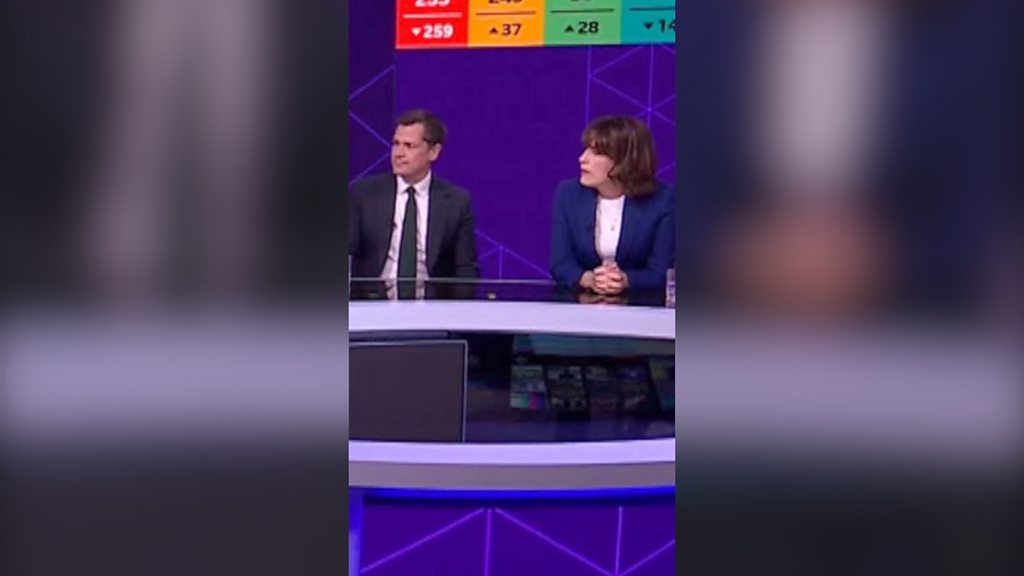

Former Tory Ministers Jenrick and Atkins Reunite in Awkward Election Exchange
In a striking moment underscoring the deepening fissures within the United Kingdom’s Conservative Party, former ministers Robert Jenrick and Victoria Atkins found themselves in an uncomfortable reunion during recent election coverage. The encounter highlighted lingering tensions between two prominent figures who were once allies but now find themselves on opposite sides of the political divide.
Jenrick, who served as immigration minister in the Conservative government led by Boris Johnson, made headlines earlier this year when he defected to the Reform Party, a move that sent shockwaves through Westminster. Atkins, who held the role of health secretary in the same administration, remains a key figure in the Tory shadow cabinet. Their confrontation during the broadcast was marked by an unspoken friction that spoke volumes about the fractures within the party.
“Rob has not spoken to me since he left the Conservative Party—in the way that he did. And I considered us to be very good friends,” Atkins remarked during the exchange. Her candid admission revealed the personal fallout from Jenrick’s departure, underscoring how political defections can strain longstanding relationships.
Jenrick’s move to Reform, a party known for its hardline stance on immigration and Euroscepticism, was seen as a significant blow to the Conservatives. His defection came amid growing dissatisfaction within the party’s right wing over the government’s handling of immigration and other key issues. Atkins, meanwhile, has remained a loyalist, positioning herself as a voice of stability within the shadow cabinet as the party seeks to rebuild its image ahead of the next general election.
The awkward reunion between Jenrick and Atkins has broader implications for the Conservative Party, which is grappling with internal divisions and declining public support. The defection of high-profile figures like Jenrick has fueled concerns about a potential exodus of MPs to Reform, a scenario that could further weaken the Tories’ electoral prospects.
Political analysts suggest that Jenrick’s departure and the publicized fallout with Atkins reflect a deeper crisis within the party. The Conservatives, once known for their unity and discipline, now face the challenge of reconciling competing factions within their ranks. On one side are those advocating for a return to traditional Tory values, while others push for a more centrist approach to regain lost voters.
For Atkins, the encounter with Jenrick highlights the personal toll of political realignments. Her acknowledgment of their fractured friendship serves as a reminder that behind the public personas of politicians are individuals navigating complex relationships and allegiances.
Jenrick, for his part, has not publicly addressed Atkins’ comments, focusing instead on his commitment to Reform’s platform. His decision to leave the Conservatives has positioned him as a prominent figure within Reform, a party that is increasingly seen as a viable alternative for disenchanted Tory voters.
The broader context of this exchange lies in the shifting political landscape of the UK. With the Conservatives trailing Labour in the polls and Reform gaining momentum, the stakes for the next election are high. The Tories must not only contend with a formidable opposition but also manage internal disputes that threaten to undermine their campaign.
For voters, the encounter between Jenrick and Atkins serves as a microcosm of the challenges facing the Conservative Party. As the country prepares for what could be a pivotal election, the question remains whether the party can heal its divisions and present a united front—or whether it will continue to fracture, opening the door for alternative parties like Reform to capitalize on its weaknesses.
Looking ahead, the fallout from Jenrick’s defection and his strained relationship with Atkins could have lasting implications for the Conservatives. The party’s ability to retain its MPs and maintain cohesion will be critical as it seeks to navigate an increasingly polarized political environment.
For now, the awkward reunion between Jenrick and Atkins stands as a poignant reminder of the personal and political tensions shaping the UK’s political landscape—a story of friendships strained by ideology and ambition, and a party grappling with its own identity in the face of uncertainty.
