



European Central Bank Navigates Economic Uncertainty Amid Middle East Tensions
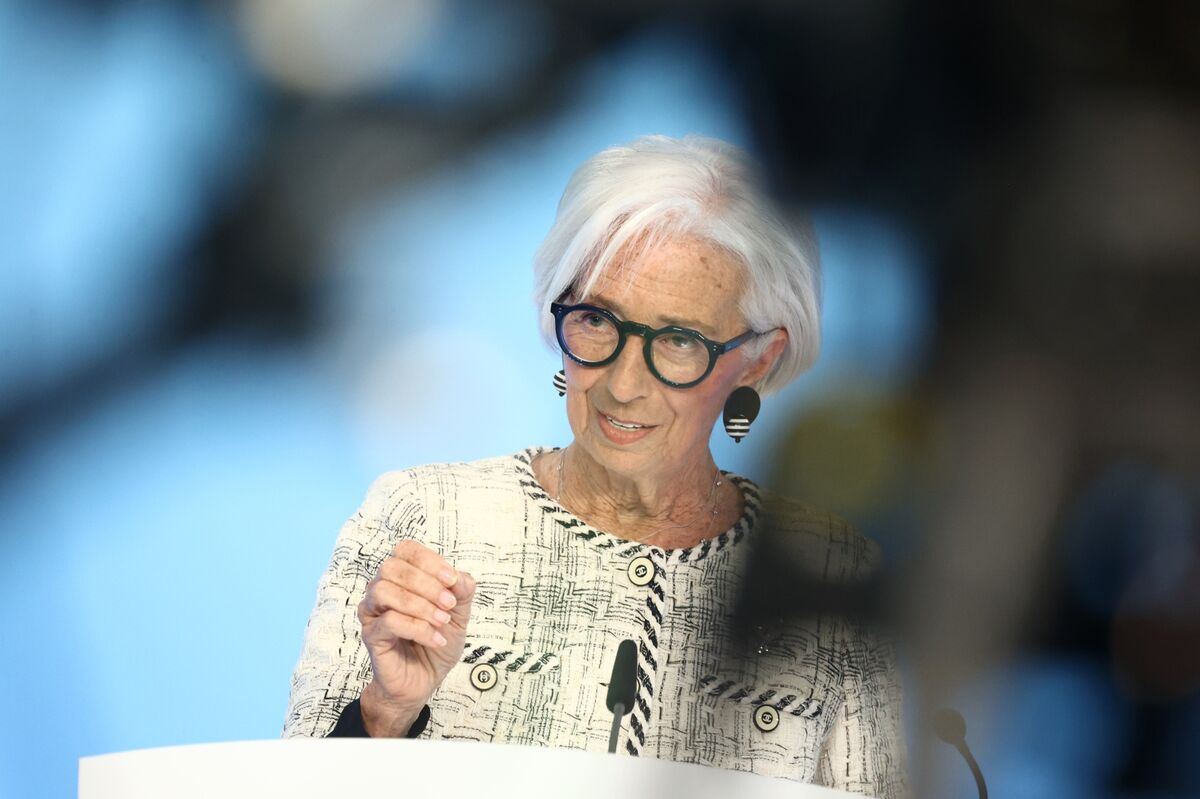
In a world increasingly shaped by geopolitical volatility, the European Central Bank (ECB) finds itself at a critical juncture as it grapples with the economic fallout of escalating tensions in the Middle East. ECB President Christine Lagarde, speaking to Spain’s RTVE, underscored the delicate balance the central bank must strike in responding to the potential inflationary pressures stemming from the conflict in Iran. Her remarks highlight the ECB’s cautious approach to monetary policy in an era where external shocks threaten to destabilize Europe’s fragile economic recovery.
“We are carefully weighing our response to the Iran conflict and its impact on inflation,” Lagarde emphasized. “Our objective is to ensure that we act neither prematurely nor too late. The stakes are high, and the path forward demands vigilance.”
The ECB’s challenge lies in navigating a complex web of uncertainties: the ongoing war in Ukraine, volatile energy markets, and now the prospect of heightened instability in the Middle East. Each of these factors has the potential to drive inflation higher, complicating the central bank’s efforts to stabilize prices across the eurozone.
The Broader Context: Geopolitical Tensions and Inflation
The conflict in Iran has already sent shockwaves through global markets, with oil prices climbing sharply in recent weeks. As one of the world’s largest oil producers, any disruption to Iran’s energy exports could exacerbate existing supply constraints, pushing energy costs higher and fueling inflationary pressures. For Europe, which relies heavily on imports to meet its energy needs, the implications are particularly acute.
This latest crisis comes at a time when inflation in the eurozone, though moderating, remains above the ECB’s 2% target. After peaking at double-digit rates in 2022, inflation has gradually declined, thanks in part to lower energy prices and tighter monetary policy. However, the persistence of core inflation—which excludes volatile items like food and energy—has kept policymakers on edge.
“The ECB’s primary mandate is price stability,” Lagarde noted. “We cannot afford to be complacent, especially when external factors like geopolitical conflicts threaten to undermine our progress.”
The ECB’s Dilemma: Timing and Precision
The ECB’s task is further complicated by the need to calibrate its response with precision. Acting too aggressively risks stifling economic growth, while delaying action could allow inflation to spiral out of control. This balancing act is not new for central banks, but the current environment presents unique challenges.
Historically, central banks have responded to external shocks—such as geopolitical conflicts or commodity price spikes—by tightening monetary policy to curb inflation. However, in today’s interconnected global economy, the interplay of factors is more complex. The ripple effects of the Iran conflict, for instance, could extend beyond energy markets to impact global trade, financial flows, and consumer confidence.
“We are not operating in a vacuum,” Lagarde explained. “Every decision we make must account for the broader economic landscape and the potential cascading effects of our actions.”
Lessons from the Past
The ECB’s cautious approach reflects lessons learned from past crises. During the European debt crisis of the early 2010s, the central bank faced criticism for its delayed response, which some analysts argue exacerbated the region’s economic downturn. More recently, the ECB was accused of being too slow to react to the inflation surge triggered by the COVID-19 pandemic and the war in Ukraine.
“We are acutely aware of the mistakes of the past,” Lagarde acknowledged. “Our goal is to strike the right balance between preemptive action and measured response.”
Market Reactions and Investor Sentiment
Financial markets have been closely monitoring the ECB’s stance, with investors wary of potential policy missteps. Bond yields have risen in recent weeks as traders anticipate further tightening, while the euro has fluctuated against the dollar amid heightened uncertainty.
Analysts suggest that the ECB’s next moves will hinge on incoming economic data, including inflation figures, growth indicators, and labor market trends. However, geopolitical developments—particularly in the Middle East—could overshadow these domestic metrics.
“The ECB is walking a tightrope,” said Laura Han, chief economist at Stonebridge Financial. “While domestic economic conditions may warrant a pause in rate hikes, the external environment could compel the bank to stay hawkish.”
The Global Implications
The ECB’s deliberations have implications beyond Europe. As one of the world’s largest central banks, its policies influence global financial conditions, affecting everything from currency markets to borrowing costs in emerging economies.
Moreover, the ECB’s response to the Iran conflict could set a precedent for other central banks facing similar dilemmas, including the U.S. Federal Reserve and the Bank of England. Coordination among major central banks will be critical to mitigating the spillover effects of geopolitical instability.
A Long-Term View
Looking ahead, Lagarde emphasized the importance of maintaining a long-term perspective. While geopolitical crises may dominate headlines in the short term, the ECB’s mandate requires it to focus on sustained price stability and economic resilience.
“Our job is not to react to every twist and turn in the geopolitical landscape,” she said. “Rather, it is to ensure that our policies are robust enough to withstand shocks and support the eurozone economy over the long term.”
Conclusion: A Test of Resilience
As the ECB navigates the uncharted waters of a new geopolitical era, its decisions will have far-reaching consequences for Europe and the global economy. The conflict in Iran serves as a stark reminder of the interconnectedness of modern economies and the challenges facing policymakers in an increasingly unpredictable world.
For now, the ECB’s measured approach underscores its commitment to stability in uncertain times. Yet, as Lagarde herself acknowledged, the path ahead is fraught with risks—and the central bank’s ability to respond with precision will determine its success.
In a world where uncertainty is the only certainty, the ECB’s resolve faces its ultimate test.
