


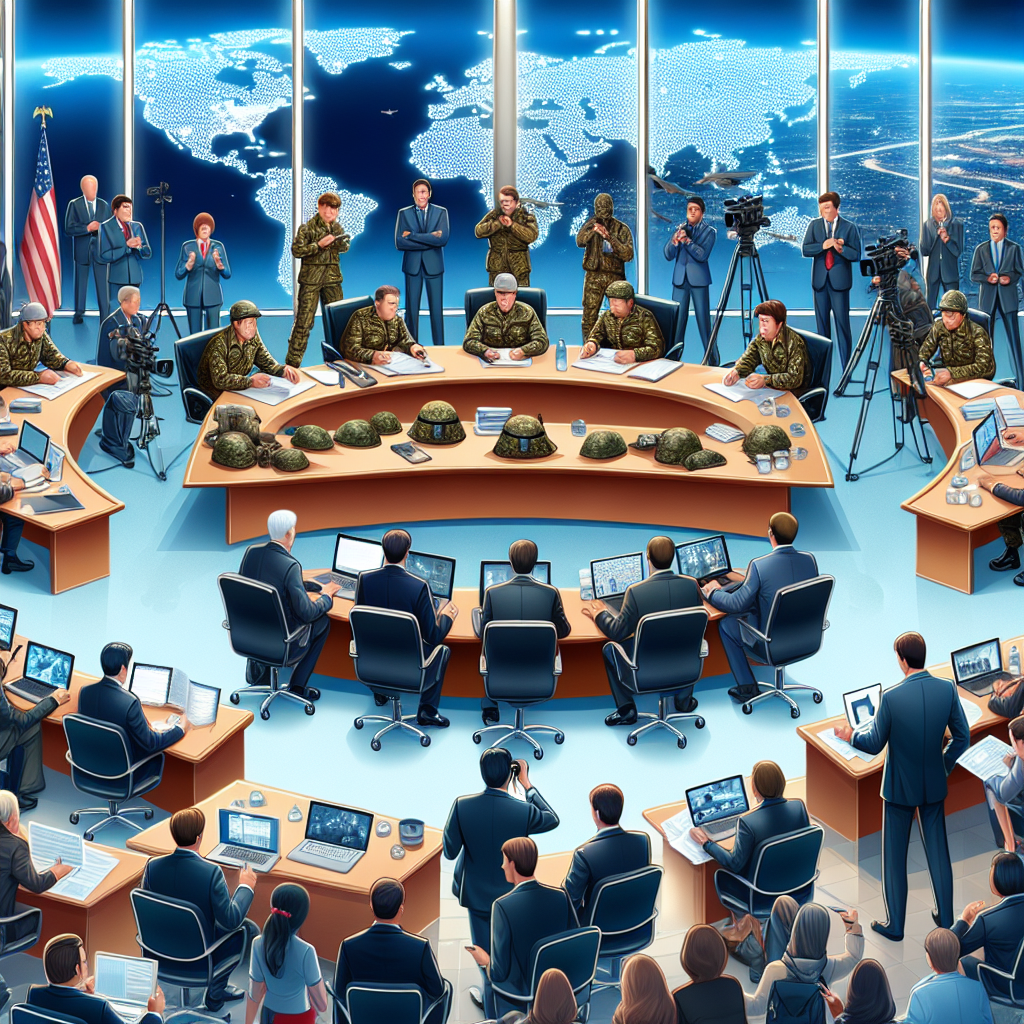

North Korean Leadership Solidified at Party Congress
In a development that has been both anticipated and closely scrutinized by global observers, North Korea’s ruling Workers’ Party convened its latest congress this week, affirming the continued dominance of the Kim family dynasty. This escalation of power solidifies the regime’s authoritarian control, further shaping not only the nation’s internal landscape but also significantly impacting international relations, particularly among neighboring countries and global powers.
Historical Context: The Kim Dynasty
The Kim family’s grip on power in North Korea extends back to the aftermath of World War II. Kim Il-sung, the founder of the state, took control in 1948, establishing a fundamental ideology of Juche, or self-reliance. His reign was marked by the Korean War and subsequent political purging that cemented his authoritarian rule. Kim Jong-il succeeded his father in 1994, further entrenching dynastic rule. The current leader, Kim Jong-un, has been in power since 2011 and has recently consolidated his authority through a series of purges and strategic alliances.
The dynamics within the North Korean regime are critical not just for the Korean Peninsula but also for international stability in East Asia. The nation is often at the center of geopolitical tensions, particularly in relation to South Korea, Japan, and the United States, resulting in an international focus on every significant development within its political framework.
Recent Developments at the Party Congress
The recent congress of the Workers’ Party—a well-orchestrated event from which dissenting voices are notably absent—was designed to showcase the regime’s unity and strength. Analysts had expected announcements that would reinforce Kim Jong-un’s leadership and solidify his influence over party cadres. Indeed, the congress reaffirmed previously set policies on military development and economic self-sufficiency amid ongoing sanctions and global isolation.
During the event, Kim stressed the need to modernize North Korea’s military capabilities, a move that raises alarms in the region. The regime’s persistent investments in nuclear arsenals and ballistic missile technology signal a commitment to deterrent capabilities, emphasizing the state’s resolve amidst what it perceives as external threats.
Global Implications
The ramifications of North Korea’s internal consolidations extend beyond its borders. As diplomatic tensions persist, particularly with the United States, the decisions made at this congress may lead to escalations in military activity. North Korea’s advancements in arms technology pose a significant challenge to the security architectures in the Asia-Pacific region.
Furthermore, the reaffirmation of Kim’s leadership sends a message to China and Russia, both of whom have maintained strategic interests in North Korea. The dynamics within the regime affect trilateral relations, as these nations must navigate challenges as allies to North Korea while managing their own vexing relationships with the United States.
Economic Challenges and Global Isolation
North Korea’s ongoing struggle with economic difficulties—exacerbated by stringent international sanctions—remains a pressing concern. The focus on military advancements over economic reform not only illustrates the regime’s priorities but also indicates potential repercussions for global markets. As North Korea continues to prioritize military investment, significant resources are diverted from economic development, aggravating an already fragile situation.
The implications of this dual focus on military might and economic survival also extend to humanitarian issues within North Korea. As the international community contemplates sanctions and responses, the plight of civilians in a nation plagued by food shortages and economic instability often falls by the wayside. This humanitarian angle demands global discourse and consideration even as political and military tensions escalate.
The Way Forward
As global leaders assess North Korea’s latest developments, the path forward remains fraught with uncertainty. Diplomatic avenues have been limited, with previous negotiations yielding minimal results. The international community faces intense pressure to forge a comprehensive strategy that balances deterrence with diplomatic engagement while advocating for humanitarian needs.
In conclusion, the consolidation of power displayed at the Workers’ Party congress suggests a firm commitment to the status quo under Kim Jong-un’s rule, raising significant concerns for regional security and global stability. As the world watches closely, the need for a collaborative international response becomes increasingly clear. The future of North Korea, along with its implications for global security, depends not just on the actions of the Kim regime but also on how the international community chooses to engage with this enigmatic and often volatile state.
Source: https://www.bbc.com/news/articles/cvg18588mdko?at_medium=RSS&at_campaign=rss
