


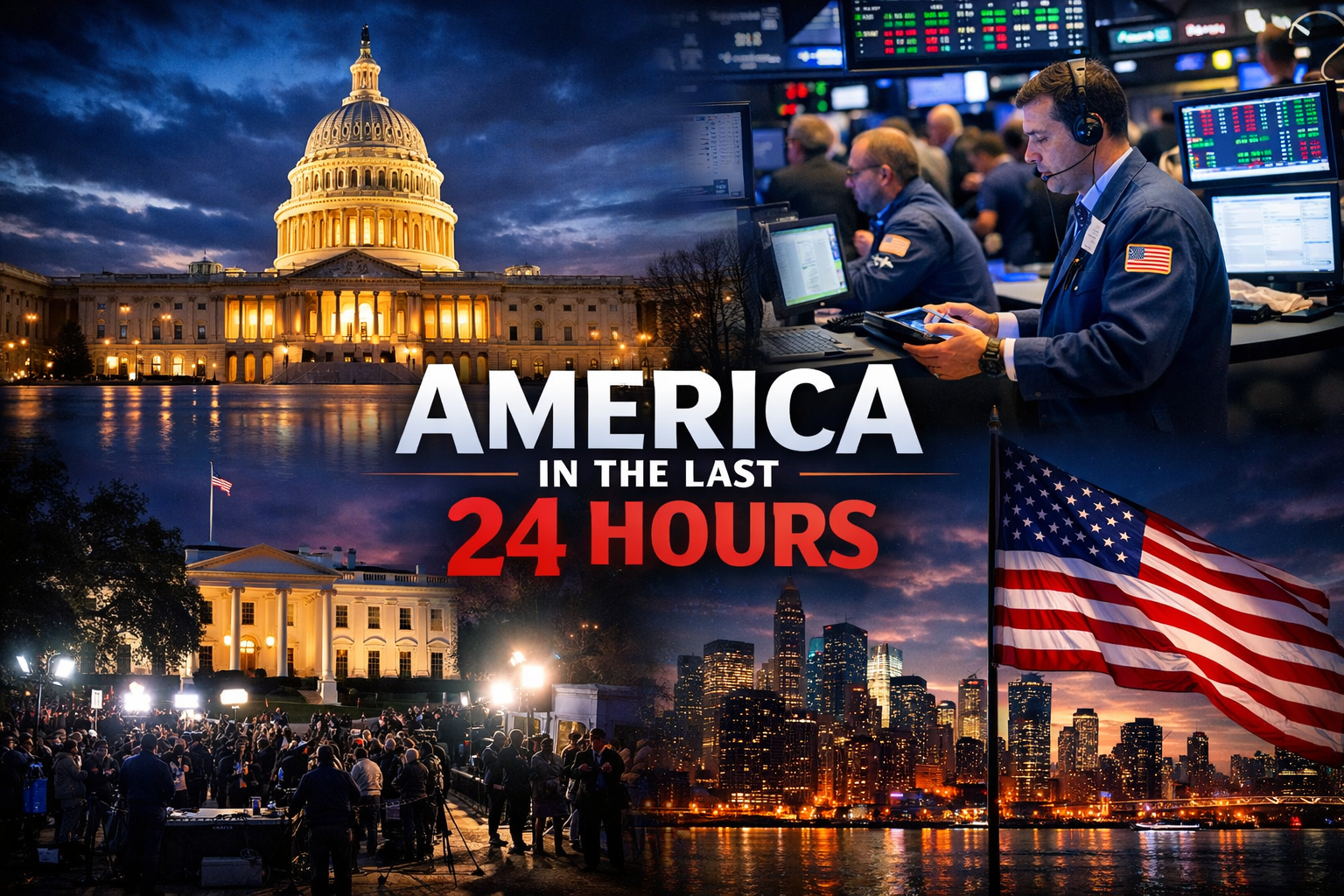

The United States movedthrough another defining 24 hours marked by political confrontation, economic signals and growing global scrutiny as fallout from the State of the Union address collided with fresh warnings about tariffs, federal spending and long-term economic stability.
From Washington’s policy battles to Wall Street’s cautious optimism and international institutions weighing in on America’s economic path, February 25 presented a snapshot of a nation balancing confidence with uncertainty.
State of the Union fallout dominates Washington
Political reaction to President Donald Trump’s State of the Union address continued to dominate national conversation throughout the day.
The president’s speech, one of the longest in modern history, laid out an agenda centered on economic nationalism, aggressive trade policy and a promise of what he called a new American “golden age.” Supporters praised the address as assertive and forward-looking, while critics said it painted an overly optimistic picture that does not reflect everyday realities for many Americans.
Democratic leaders maintained sharp criticism of the administration’s economic claims, arguing that rising costs and policy uncertainty remain major concerns for households and small businesses. The contrasting narratives from both parties are now shaping the political landscape heading into upcoming legislative battles and election positioning.
Analysts say the address effectively launched a new phase of political messaging, with both sides emphasizing economic credibility and cost-of-living concerns as central themes.
IMF warns U.S. on debt and tariff risks
A major economic development came as the International Monetary Fund issued a mixed but cautionary outlook on the U.S. economy.
The IMF described American growth as steady and resilient but warned that rising federal debt and aggressive tariff policies could pose long-term risks. The organization noted that while the U.S. remains a dominant global economic force, its current account deficit and debt levels are becoming increasingly difficult to sustain without policy adjustments.
Tariffs were singled out as a potential drag on growth if trade tensions escalate. Economists say tariffs can disrupt global supply chains, increase production costs and trigger retaliatory measures from trading partners.
The IMF’s assessment has intensified debate in Washington over fiscal discipline and trade strategy, with policymakers divided on whether protectionist measures strengthen or weaken the economy.
Markets rise on tech optimism but uncertainty lingers
Despite political and policy tensions, U.S. stock markets closed higher on February 25, led by gains in technology shares and optimism around artificial intelligence-driven growth.
Investors responded positively to strong earnings expectations from major tech firms and continued consumer activity. The rally suggested underlying confidence in the resilience of the U.S. economy even as broader policy debates continue.
However, analysts caution that market optimism remains fragile.
Uncertainty surrounding tariffs, federal spending and global trade relationships continues to influence investor behavior. Many businesses are adopting a wait-and-see approach, particularly those dependent on imports and exports.
Financial experts say sustained clarity on trade and fiscal policy will be critical for maintaining investor confidence through the rest of the year.
Federal-state tensions rise over healthcare funding
Another political flashpoint emerged as several state leaders accused the federal government of withholding or delaying critical funding tied to healthcare programs.
The dispute centers on Medicaid allocations, with some governors arguing that funding decisions are being used as leverage in broader political disagreements. While federal officials have not confirmed such claims, the issue has heightened tensions between Washington and several state governments.
Healthcare funding remains one of the most sensitive issues in domestic policy, affecting millions of low-income Americans. Any disruption or perceived politicization of funding could have significant social and political consequences.
Policy analysts say the clash underscores deeper disagreements over federal authority and state autonomy in administering public programs.
Global partners monitor U.S. policy direction
International allies and economic institutions continue to watch developments in Washington closely.
Trade partners in Europe and Asia are assessing how U.S. tariff strategy and fiscal policy may affect global markets. Some nations are exploring alternative trade arrangements to hedge against uncertainty, while others are seeking assurances that existing agreements will remain stable.
Diplomatic observers note that consistency in economic policy plays a major role in maintaining strong alliances. Prolonged unpredictability can influence investment decisions and strategic partnerships across regions.
Despite concerns, the United States remains a central pillar of the global economic system, and most countries are proceeding cautiously rather than taking drastic steps.
Public sentiment mixed as economic signals vary
Across the country, public opinion remains divided.
Some Americans express confidence in market performance and job opportunities, while others remain concerned about inflation, housing costs and long-term economic security.
Consumer confidence data released this week shows modest improvement, suggesting cautious optimism among households. Still, many families continue to prioritize affordability and stability when evaluating national economic performance.
Political analysts say this mixed sentiment reflects a broader national mood: hopeful about opportunities but wary of volatility and policy shifts.
Congress faces ongoing gridlock
On Capitol Hill, lawmakers are struggling to find consensus on key economic and fiscal issues.
Efforts to advance major tariff legislation or comprehensive fiscal reforms have made little progress, leaving many decisions concentrated within the executive branch and subject to legal review. This dynamic has reinforced a pattern of governance shaped by executive actions and court challenges rather than bipartisan legislation.
Experts say the gridlock reflects deep political polarization and may persist as both parties focus on strategic positioning ahead of future elections.
Looking ahead
The developments of the past 24 hours highlight a nation at a crossroads.
Economic indicators show resilience and potential for growth, yet policy disputes and global reactions underscore ongoing uncertainty.
Key questions remain:
Will tariff tensions escalate into broader trade conflicts?
Can federal and state leaders resolve funding disputes?
Will markets maintain confidence amid policy debates?
As the United States navigates these challenges, the coming days will likely bring further tests of economic strategy, political leadership and global influence.
For now, February 25 stands as another chapter in a fast-moving period for the nation — one defined by competing visions of prosperity, caution from global observers and a public watching closely as leaders shape the path forward.
