


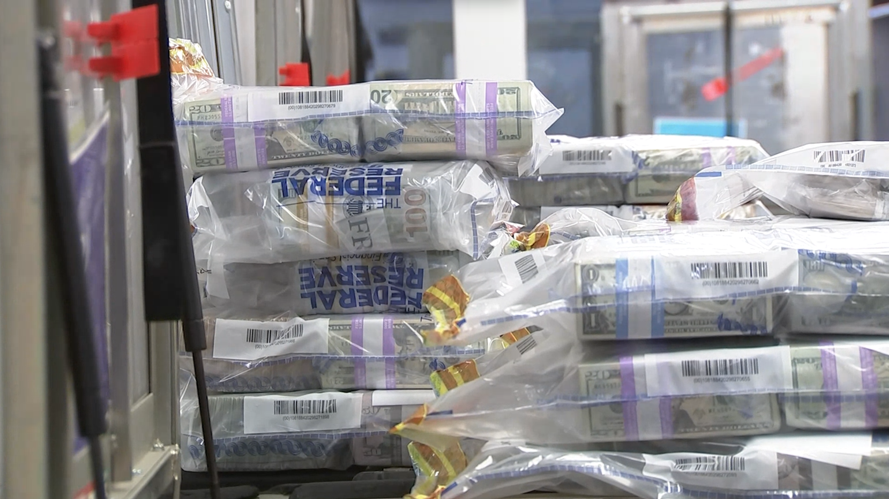

Federal Reserve Dismantles $19 Million in Unfit Currency in Cleveland
CLEVELAND — In a striking routine performed within the confines of the Cleveland Federal Reserve on Wednesday, federal workers were engaged in the meticulous task of shredding $19 million in currency deemed unfit for circulation. This operation serves as a vital function in the monetary ecosystem, ensuring that the integrity of the nation’s currency remains intact. The same process is set to continue tomorrow, further highlighting the ongoing commitment of the Federal Reserve to uphold financial standards.
For the Cleveland branch of the Federal Reserve, this activity isn’t an unusual sight. The Federal Reserve System, which functions as the central bank of the United States, is responsible for regulating the nation’s currency supply. With an extensive network of branches, including the one in Cleveland established in 1914, the System undertakes the critical role of administering both the introduction of new currency into the economy and the identification and disposal of damaged or unfit bills.
Wednesday’s shredding event exemplifies the commitment to maintaining financial health in a rapidly evolving economic landscape. The $19 million worth of paper notes, now shredded into irretrievable fragments, represents a portion of older currency that has lost its utility due to wear and age. Bill denominations that have outlived their practical use, or those significantly damaged, are collected, inspected, and ultimately destroyed in a process that emphasizes both security and sustainability.
The significance of this operation goes beyond mere logistics. Currency that is too worn or damaged not only poses challenges for consumers and businesses but also risks undermining public confidence in the monetary system. An unfit circulation can lead to increased fraud and confusion, which is why the Federal Reserve places such a high premium on maintaining the quality of the currency that circulates among banks and businesses.
Cleveland’s Federal Reserve branch undertakes this task with a resolute adherence to standards established by the Federal Reserve Board of Governors, which oversees the determination of what constitutes ‘fit’ currency. The meticulous process involves evaluating the physical condition of notes, with criteria including tears, discoloration, or overall degradation.
The ongoing practice of destroying unfit currency has been particularly relevant in today’s economy, where digital transactions are on the rise. As more individuals and businesses opt for electronic payments, the reliance on physical money diminishes. However, the need for a robust and reliable paper currency system remains essential as millions still use cash for everyday transactions.
In recent years, the Federal Reserve has faced increasing scrutiny over its open-market policies and interest rate decisions, which impact inflation and employment rates. While not directly connected to the currency destruction process, these broader economic factors play a critical role in shaping public perception and confidence in the nation’s financial institutions.
As the Cleveland Federal Reserve continues its shredding operations, a parallel narrative unfolds regarding the importance of monetary policy and fiscal responsibility. The decisions made by the Federal Reserve not only influence the immediate financial environment but also carry long-term implications for economic stability and growth potential in the United States.
In an age of increasing digitalization, the ability of organizations like the Federal Reserve to adapt is crucial. The Federal Reserve’s ongoing management of currency quality underscores a commitment to integrity in financial systems, but it also raises questions about the future role of physical currency in a continually digitizing economy.
As consumers increasingly transition to digital means of payment, the question remains: how will the Federal Reserve evolve its services in tandem with these changing behaviors? As shredding operations conclude, so too does an era of reliance on physical cash for many. The Federal Reserve’s vigilance in maintaining the standard of unfit currency may be the last bastion of a once-dominant physical medium, carry implications for future monetary policy too.
The shredding of $19 million in Cleveland serves as a reminder of the delicate balance within the monetary system and the continued need for oversight in maintaining public confidence. The Federal Reserve’s responsibility extends far beyond mere currency management; it embodies the very principles of economic stability and trust that are essential in an ever-evolving financial landscape. As we look ahead, understanding these dynamics will be critical as policymakers navigate the terrain of an increasingly digital future.
