



US-Iran Relations Escalate Following Controversial Airstrike
CLEVELAND – In a shocking development early Saturday morning, news broke that the United States, in collaboration with Israel, launched an attack on Iran, marking a significant escalation in tensions between the two nations. The airstrike, which reportedly targeted a school, resulted in the deaths of over 60 individuals, primarily children, igniting outrage and condemnation worldwide.
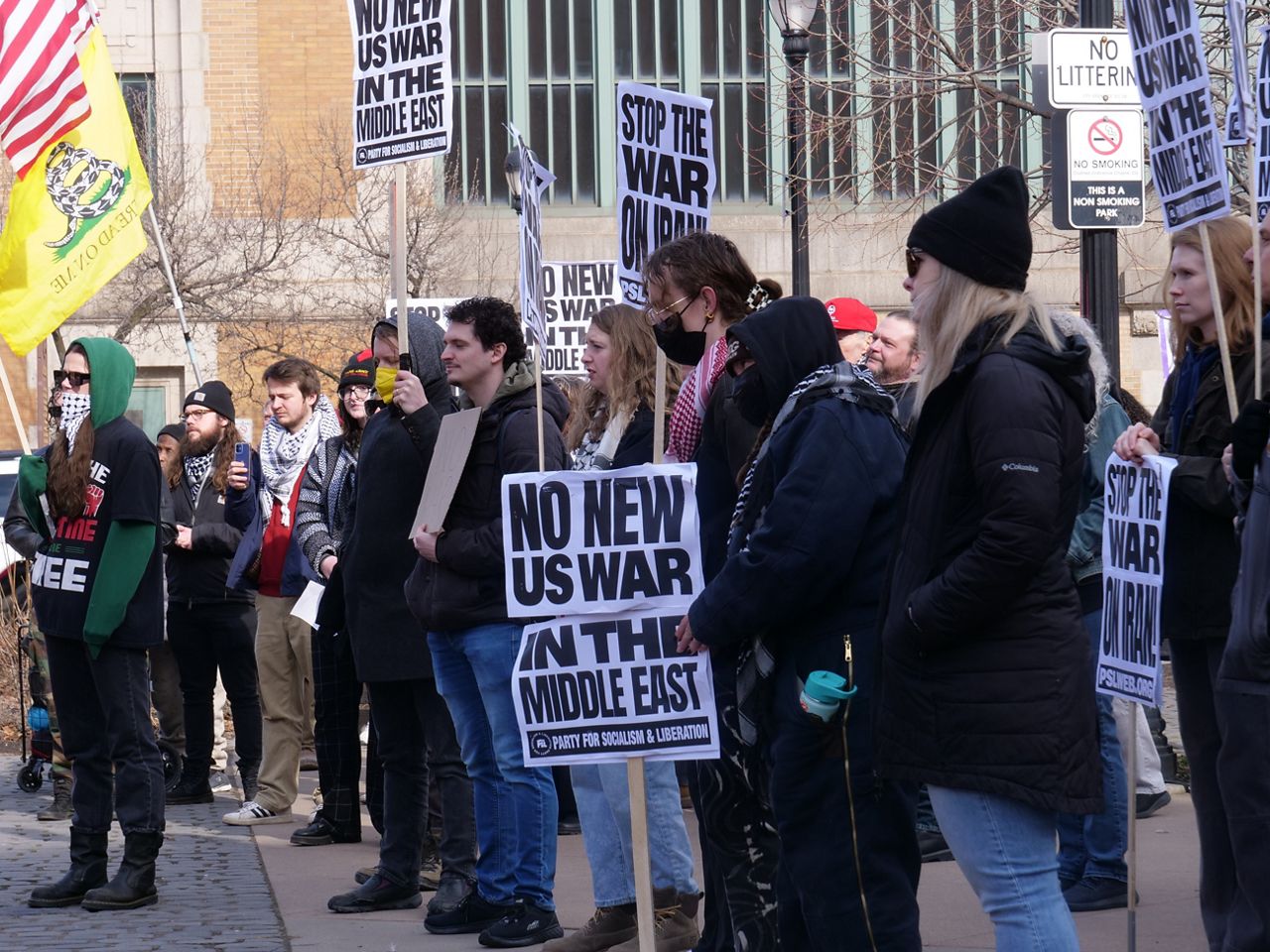
Protesters gathered in response to the attack, voicing their concerns at a rally in downtown Cleveland. The crowd, made up of activists and community members, expressed deep unease regarding the recent shift in U.S. foreign policy, highlighting the human toll of military interventions. “My immediate reaction was initial shock. For Iran, their people there. We saw an attack at a school that killed over 60 people, mainly children,” said Chance Zurub, an organizer with the Palestinian Youth Movement. “This continues harmful U.S. intervention in the Middle East, which will lead to further destabilization in the region.”
The airstrike comes at a time when international discussions surrounding Iran’s nuclear capabilities are fraught with tension. The Biden administration has been attempting to navigate a complex relationship with Iran while managing pressures both domestically and from allies in the region. However, this latest military action has drawn sharp criticism for potentially jeopardizing ongoing diplomatic efforts.
Zurub emphasized the long-term repercussions of such military actions, stating, “My main concern looking at this war is that the United States and Israel are attempting to pursue a regime change in Iran, which will only lead to further death and destruction within Iran and throughout the broader region.” The ramifications of these actions may not only affect Iran but could also instigate wider conflict throughout the Middle East, as regional players react to perceived U.S. aggression.
Adding to the outcry, protesters condemned the recent military actions in both Venezuela and Iran, characterizing them as part of a troubling trend in U.S. foreign policy. They argued that these interventions reflect an imperialistic mindset that prioritizes military solutions over diplomatic negotiations. Many protesters called for a reevaluation of the U.S. approach to foreign relations, emphasizing respect for sovereign nations’ rights to self-determination.
“I don’t think the United States is in a position to use our tax dollars to bomb sovereign countries and attempt our own regime change. I think that destiny should be determined by the Iranian people,” Zurub stated, echoing sentiments shared by many at the protest. As opponents of the military strike rallied on the streets, they carried signs reading “End U.S. Imperialism” and “No More War.”
The U.S. government’s justification for the airstrike has been met with skepticism, with critics arguing that civilian casualties, especially among children, starkly contrast with the administration’s stated commitment to humanitarian values. This incident serves as a grim reminder of the cost of military intervention and raises important questions about the ethical implications of such actions.
Political analysts suggest that the airstrike could have far-reaching consequences, not only for U.S.-Iran relations but also for international diplomacy in general. As nations reassess their standing with the U.S., the prospect of a renewed arms race or increased hostilities in the region looms large. The strike may embolden hardliners in Iran, potentially leading to an escalation of tensions that could spiral into wider conflict.
Coming in the wake of a stalled nuclear agreement, this military action risks further alienating Iran while complicating the Biden administration’s efforts to re-engage diplomatically. Many fear that the cycle of violence may increase as Iran may retaliate in various forms, including cyberattacks or support for proxy groups in neighboring countries.
As the situation continues to develop, the international community is grappling with the implications of America’s military actions. Calls for accountability, diplomacy, and a reevaluation of foreign policy strategies are growing louder as people around the world respond to what they perceive as America’s misguided trajectory in the Middle East.
The protests in Cleveland may just be the beginning of a larger movement advocating for peace and questioning U.S. military actions abroad. As voices unite against perceived injustices, the future will determine whether a course correction in U.S. foreign policy is on the horizon, or whether the nation will remain entrenched in cycles of conflict. The outcome of these tensions could shape the geopolitical landscape for years to come, with the potential for either reconciliation or further discord hanging in the balance.
