



Central Ohioans React to U.S.-Israel Attacks in Iran: Divided Opinions Emerge
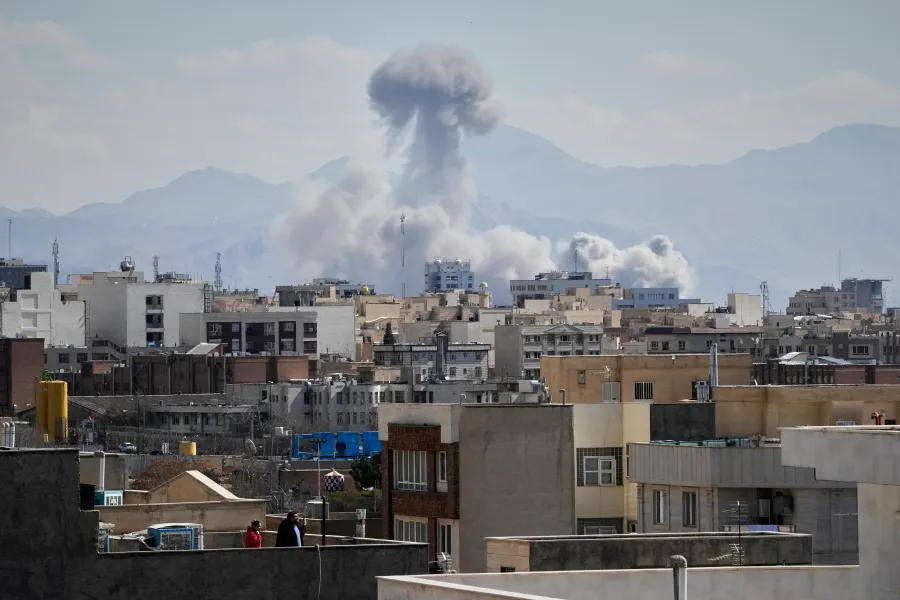
COLUMBUS, Ohio – The recent military strikes conducted by the United States and Israel against Iran have ignited strong reactions among communities in Central Ohio. As reports of the attacks emerged on Saturday, some residents expressed solidarity with the military actions while others voiced their concerns through protests.
The conflict has intensified following long-standing tensions centered around Iran’s nuclear ambitions and its involvement in regional conflicts. The U.S. and Israel’s coordinated strikes are seen by some as necessary measures to curb what they perceive as a growing threat, while opponents caution that this could lead to further instability in the already volatile Middle Eastern region.
In the heart of Columbus, an Iranian expatriate, speaking on the condition of anonymity, shared his perspective on the attacks. “Millions of Iranians are celebrating today because it’s a really happy day for us,” he stated. His remarks reflect the sentiments of those who believe that the military actions could signal a turning point for regime change in Iran, which has faced internal dissent and international isolation.
Conversely, a significant number of Central Ohioans gathered in various locations to rally against what they view as an unnecessary escalation of violence. Protesters gathered outside the Ohio Statehouse, waving banners that read “Peace, Not War” and chanting slogans calling for diplomatic solutions. “Warfare does not solve our problems; it complicates them,” said Maria Tanaka, a spokesperson for the Ohio Coalition for Peace. “We need to advocate for dialogue, not bombs.”
The dichotomy of opinions has created a palpable tension in the community, as families and friends find themselves on opposite sides of the debate. “It’s hard to see people I care about celebrate violence,” said Amelia Johnson, a local college student who participated in the protest. “We should be seeking ways to connect, not divide ourselves further.”
The strikes come amid a complex web of alliances and enmities in the region. The U.S. has long positioned itself as an adversary to Iran, citing its human rights abuses and destabilizing activities in neighboring countries. Israel has similarly viewed Iran as an existential threat, particularly given its nuclear program and support for militant groups like Hezbollah.
As the international community watches closely, the implications of the U.S.-Israel actions could have far-reaching effects. Political analysts warn that while the immediate aim of these military operations may be to diminish Iran’s military capabilities, they also risk igniting wider conflicts, potentially involving various factions across the Middle East.
The unity observed among some local Iranian-Americans is noteworthy. Various cultural organizations in Central Ohio have organized events to discuss the broader implications of the conflict and to commemorate those affected by violence, both in Iran and within the immigrant community.
Amid the tumult, the Biden administration is facing criticism on multiple fronts. Critics argue that military responses lack a comprehensive strategy and question whether the strikes will lead to sustainable peace or further conflict. The administration asserts that the strikes were necessary to protect U.S. interests and allies in the region. Secretary of State Antony Blinken described the military operations as part of a broader strategy to stabilize the Middle East.
The ongoing discussions around the recent developments indicate a deep division, not only within the local Columbus community but also across the nation. The divide raises questions about how U.S. foreign policy is perceived domestically, especially at a time when global diplomacy seems increasingly precarious.
Looking ahead, the futures of both U.S.-Iran relations and the geopolitical landscape in the Middle East remain uncertain. As further diplomatic efforts are anticipated, Central Ohioans – along with the rest of the nation – will be left to ponder the ramifications of these military actions on both the local and international stage.
The situation not only underscores the complexity of international relations but also highlights the urgent need for community dialogue amid dissenting opinions. As Columbus reflects the broader American landscape, the debates sparked by these actions will likely continue, influencing public discourse and policy decisions in the weeks and months to come.
