


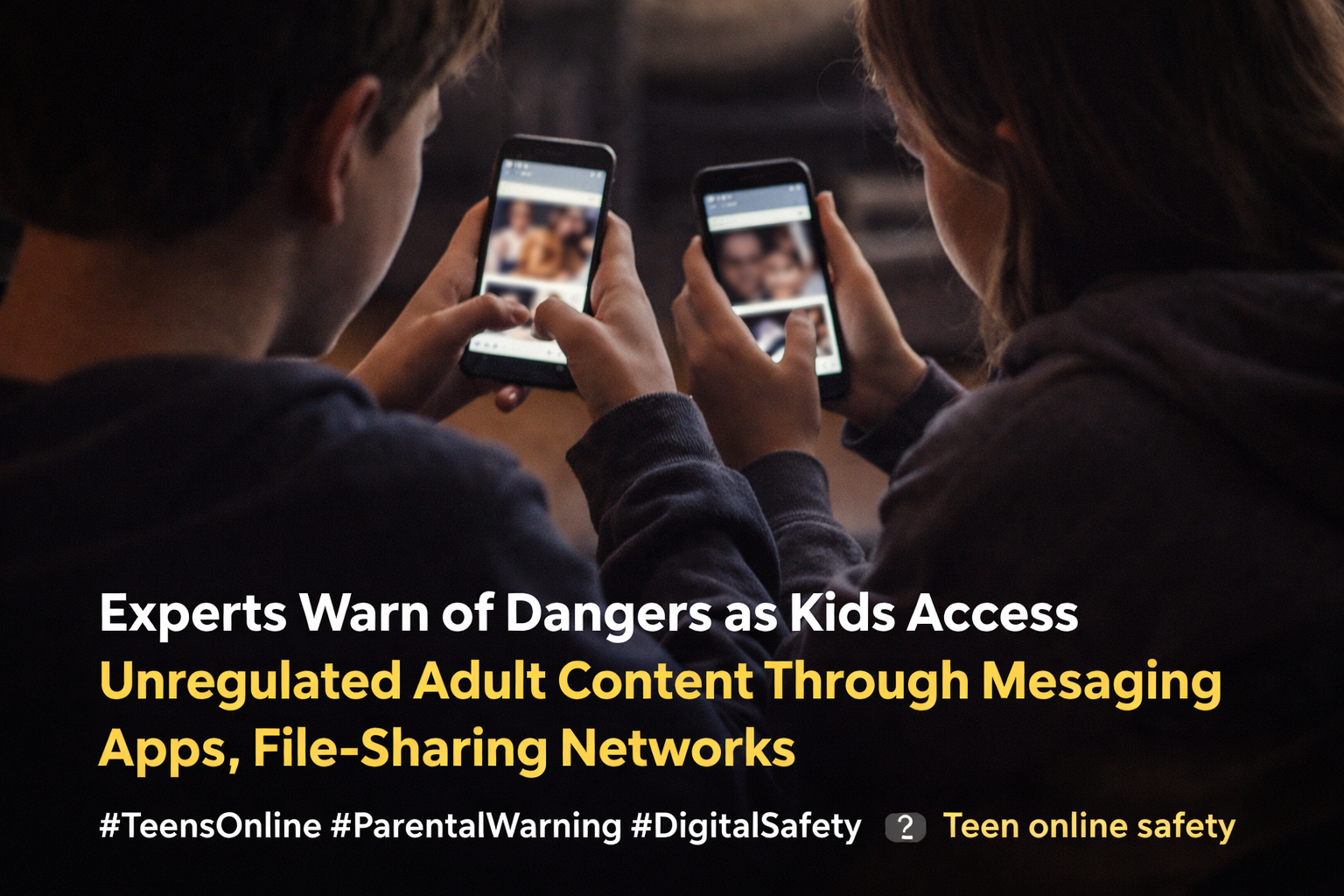

The Hidden Battlefront: How Unregulated Online Spaces Are Shaping the Next Generation
In the shadows of the digital age, a silent war is being waged—one that could shape the minds and futures of the next generation. As governments grapple with overt threats like cyberattacks and misinformation, a quieter, yet equally insidious challenge has emerged: the unchecked proliferation of explicit and harmful content in unregulated corners of the internet. Experts warn that young people, increasingly tech-savvy and curious, are venturing into these darker digital spaces, raising alarm about the long-term consequences for global security and societal stability.
The Rise of Unregulated Digital Havens
The internet, once heralded as a tool for universal education and connection, has become a double-edged sword. While platforms like YouTube, Instagram, and TikTok implement measures to filter harmful content, vast swathes of the web remain unmonitored. Peer-to-peer file-sharing networks, private messaging apps such as Telegram, Discord, and WhatsApp, and overseas adult websites operate with minimal oversight, making them attractive destinations for those seeking anonymity.
These platforms often lack robust age-verification systems, allowing minors to access explicit material with ease. According to cybersecurity expert Masood Ahmed, “Young people are increasingly drawn to these darker corners of the web, where regulation is scarce and boundaries are blurred.” This trend is not confined to any single region; it is a global phenomenon, with implications for societies from Asia to the Americas.
The Global Context
The issue of unregulated online content is not merely a moral or ethical concern—it is a security risk with far-reaching consequences. Across the globe, governments are struggling to balance the need for internet freedom with the imperative to protect vulnerable populations. In Europe, the European Union’s Digital Services Act aims to hold tech companies accountable for harmful content, but enforcement remains uneven. In the United States, debates over Section 230 of the Communications Decency Act highlight the tension between regulation and free speech.
Meanwhile, in countries with less stringent internet governance, the problem is exacerbated. In regions like Southeast Asia and Sub-Saharan Africa, where internet penetration is rapidly increasing, young people are often left exposed to unregulated content due to a lack of local safeguards. This global disparity creates fertile ground for exploitation, radicalization, and the erosion of societal norms.
Why It Matters
The consequences of unregulated online spaces extend far beyond individual harm. Research has shown that early exposure to explicit or violent content can lead to distorted perceptions of relationships, gender roles, and violence. On a broader scale, this can contribute to societal instability, fostering environments where exploitation and abuse thrive.
Moreover, the issue intersects with larger security concerns. Terrorist organizations and extremist groups have long exploited unregulated platforms to recruit and radicalize young people. The same spaces that host explicit content can also serve as breeding grounds for hate speech, disinformation, and other forms of digital extremism.
The psychological and societal impacts of this phenomenon are profound. As young people navigate these unregulated spaces, they risk normalizing harmful behaviors and attitudes, which can perpetuate cycles of violence and inequality. The stakes are particularly high for developing nations, where limited resources and infrastructure make it difficult to combat these threats effectively.
The Need for Global Action
Addressing this issue requires a coordinated, multi-faceted approach. Governments, tech companies, and civil society must work together to establish universal standards for online safety. Age-verification technologies, improved content moderation, and digital literacy programs are essential tools in this fight.
However, the challenge lies in implementing these measures without infringing on privacy or stifling innovation. Striking this balance is no easy task, but the alternative—a generation shaped by unchecked exposure to harmful content—is far more dire.
A Call to Arms for a Safer Digital Future
The battle for the digital frontier is not one that can be fought in isolation. It requires global cooperation, innovative solutions, and a commitment to protecting the most vulnerable among us. As Masood Ahmed aptly notes, “The internet is a reflection of humanity—both its potential for good and its capacity for harm.”
The unregulated spaces of the web are not just a technical problem; they are a moral imperative. The choices we make today will determine the kind of world the next generation inherits. Will it be one of safety, opportunity, and connection—or one fractured by exploitation, extremism, and despair? The answer lies in our collective ability to rise to this challenge and secure the digital landscape for generations to come.
In this era of rapid technological advancement, the line between progress and peril is thinner than ever. The time to act is now—before the shadows of the internet grow too dark to penetrate.
Source: https://www.bbc.com/news/articles/cwy92qpv424o?at_medium=RSS&at_campaign=rss
