


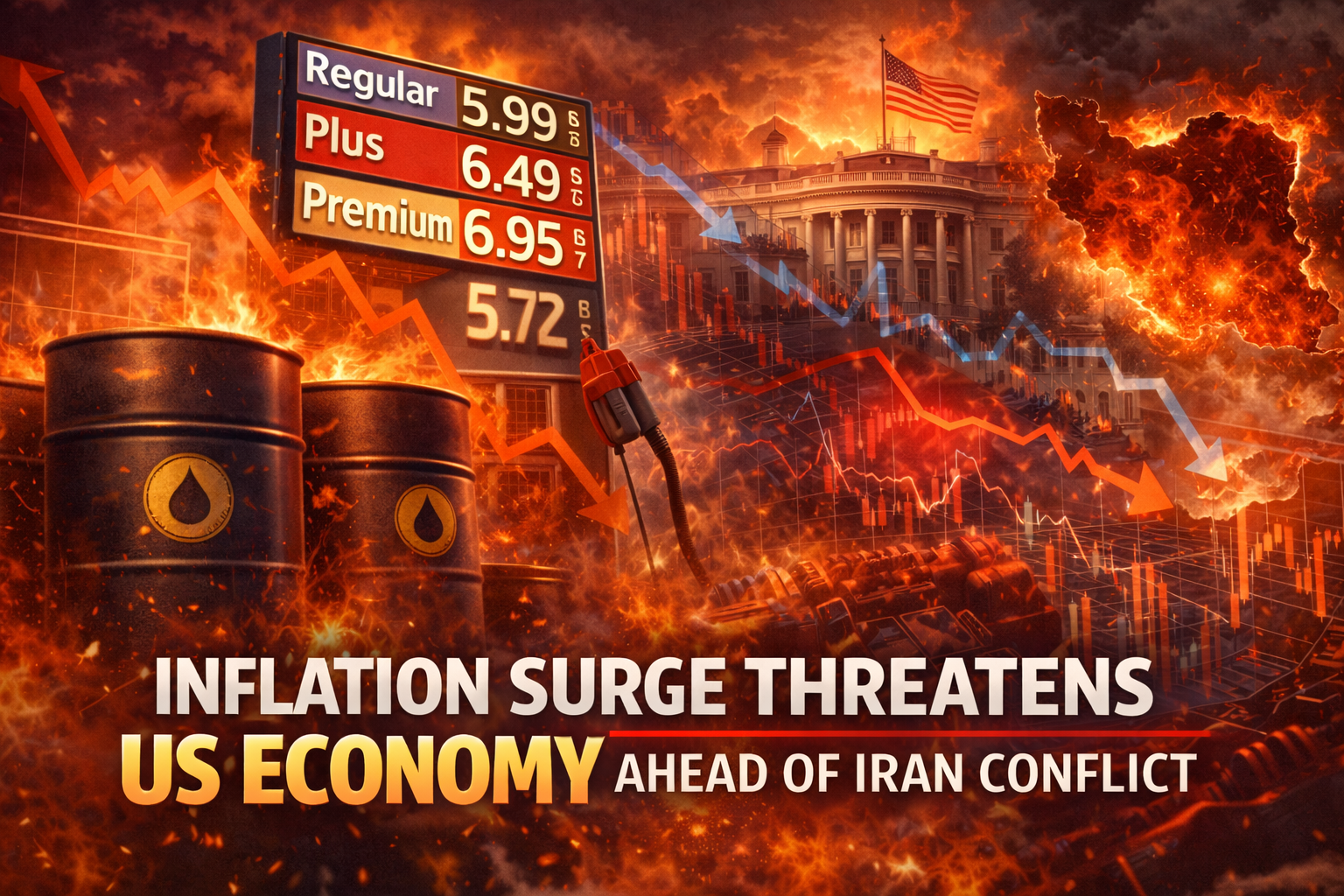

Resurgent Inflation Threatens Global Economic Recovery, Sparks Concerns Over Growth and Unemployment
As the world cautiously emerges from the economic turbulence of recent years, a renewed surge in inflation is casting a shadow over hopes for sustained recovery. While the current uptick in prices pales in comparison to the dramatic spikes witnessed during the Ukraine war, economists and policymakers warn that even modest inflationary pressures could stifle consumer spending, undermine economic growth, and exacerbate unemployment. The situation is further complicated by the potential impact on central banks’ monetary policies, as the prospect of delayed interest rate cuts looms large, threatening to destabilize fragile financial markets.
The Inflationary Uptick in Context
Inflation, once dismissed as a temporary phenomenon in the wake of the COVID-19 pandemic, has proven resilient. The war in Ukraine, which began in February 2022, unleashed a perfect storm of supply chain disruptions, energy shortages, and food price volatility, sending inflation rates soaring to multi-decade highs across much of the globe. Central banks responded with aggressive interest rate hikes, aiming to cool overheated economies and rein in rising prices. By 2023, these measures appeared to be bearing fruit, with inflation rates gradually easing and offering a glimmer of hope for stabilization.
However, the latest data suggests that inflationary pressures are far from defeated. While the current rise in prices is moderate compared to the dramatic surges of 2022, it nonetheless poses significant risks. Economists attribute the resurgence to a combination of factors, including lingering supply chain bottlenecks, rising labor costs, and geopolitical tensions that continue to disrupt global trade. Additionally, higher energy prices, driven by renewed instability in oil-producing regions, have added to the upward pressure on inflation.
Implications for Growth and Employment
The ripple effects of inflation are already being felt across the global economy. Consumer spending, a key driver of growth, is particularly vulnerable. As prices rise, households are forced to allocate more of their income to essentials like food and energy, leaving less discretionary spending for other goods and services. This shift in consumption patterns threatens to dampen demand, particularly in sectors such as retail, hospitality, and tourism, which are still recovering from the pandemic’s impact.
Unemployment, another critical concern, is also at risk of rising. Businesses facing higher input costs may cut back on hiring or even reduce their workforce to maintain profitability. This trend is particularly worrying in economies where labor markets are already showing signs of strain. For instance, in the United States and parts of Europe, job creation has slowed in recent months, and wage growth has failed to keep pace with inflation, squeezing household budgets further.
Central Banks’ Dilemma
The resurgence of inflation presents a complex challenge for central banks, which must balance the need to control prices with the imperative of supporting economic growth. Many had signaled their intention to pivot toward interest rate cuts in early 2024, aiming to provide relief to borrowers and stimulate investment. However, the latest inflationary data has cast doubt on the feasibility of such moves.
“Central banks are walking a tightrope,” said Dr. Elena Martinez, chief economist at the Global Economic Institute. “Cutting rates too soon could reignite inflationary pressures, but delaying cuts risks stifling growth and exacerbating unemployment. It’s a delicate balancing act, and the stakes are incredibly high.”
Market reactions have been mixed. While some investors remain optimistic that inflation will moderate, others are bracing for prolonged uncertainty. Stock markets have shown heightened volatility in recent weeks, reflecting the conflicting signals from economic data and central bank commentary.
Global Disparities in Impact
The inflationary resurgence is not uniform across the globe. Advanced economies, such as the United States and the Eurozone, are experiencing relatively modest price increases, though even these are enough to unsettle policymakers. Emerging markets, however, face a more acute challenge. Countries grappling with weaker currencies and higher debt burdens are particularly vulnerable to external shocks, including rising global energy prices and tighter financial conditions.
In regions such as Sub-Saharan Africa and South Asia, inflationary pressures are exacerbating existing economic inequalities, pushing millions deeper into poverty. The United Nations has warned that the combination of rising food prices and sluggish growth could trigger social unrest and deepen humanitarian crises in some of the world’s most vulnerable nations.
The Road Ahead
As stakeholders grapple with the evolving economic landscape, the path forward remains uncertain. Analysts emphasize the need for a coordinated global response to address the root causes of inflation, including supply chain resilience and energy security. Governments are also under pressure to implement targeted fiscal measures, such as subsidies and social safety nets, to protect low-income households from the brunt of rising costs.
For businesses, the focus is on adaptability. Companies that can navigate the challenges of higher input costs and shifting consumer demand will be best positioned to thrive in the months ahead. Meanwhile, investors are advised to remain vigilant, diversifying their portfolios to mitigate risks associated with market volatility.
While the current inflationary pressures are nowhere near the crisis levels of recent years, their persistence serves as a stark reminder of the fragility of the global economic recovery. As central banks, governments, and businesses continue to navigate these uncertain waters, the world watches with cautious optimism—and a growing sense of urgency.
In the words of Nobel laureate economist Paul Krugman, “Inflation is always and everywhere a monetary phenomenon, but its impact is deeply human. The challenge lies not just in controlling prices, but in safeguarding livelihoods.” The months ahead will test whether the global economy can strike that balance.
Source: https://www.bbc.com/news/articles/cn0z7971r4zo?at_medium=RSS&at_campaign=rss
