



Chile’s Immigration Crackdown Sparks Fear Among Undocumented Workers as Government Targets Employers
Santiago, Chile – A wave of anxiety has swept through Chile’s undocumented immigrant communities as the country’s new government signals a hardline stance on illegal employment, vowing to penalize businesses that hire workers without proper documentation. The policy shift, part of President Gabriel Boric’s broader immigration reforms, has left thousands of foreign nationals—many from Venezuela, Haiti, and Peru—grappling with uncertainty over their livelihoods and futures in a nation long seen as a regional haven for migrants.
A Sudden Shift in Policy
Chile, once celebrated for its relatively open immigration policies, has undergone a dramatic transformation in recent years. The country’s foreign-born population surged from just 1% of the total population in the early 2000s to nearly 8% today, driven by economic crises in neighboring nations. However, the rapid influx has strained public services and fueled political backlash, prompting the government to adopt stricter controls.
Under the new measures, authorities will ramp up workplace inspections and impose heavy fines—or even criminal charges—on employers who hire undocumented workers. Labor Minister Jeannette Jara emphasized that the crackdown aims to “protect labor rights” by ensuring all workers are formally registered, but critics argue it will push vulnerable migrants further into the shadows.
The Human Cost of Enforcement
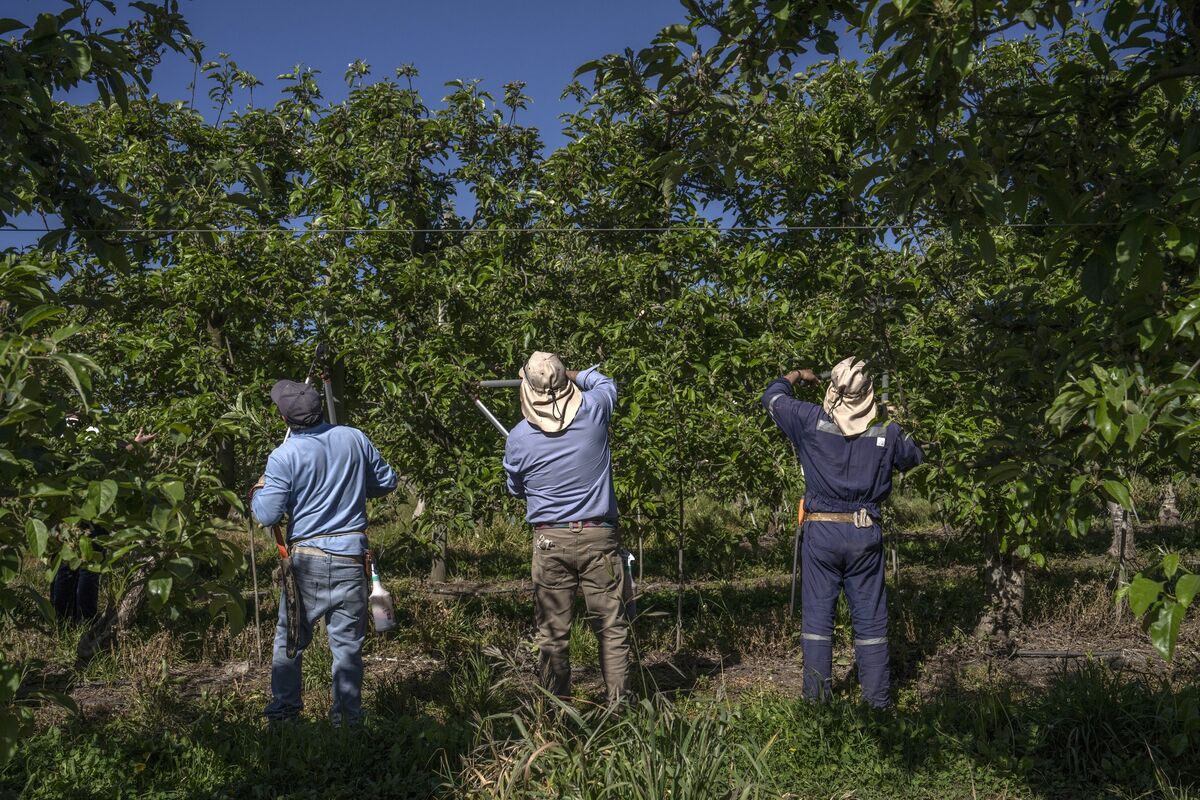
For many immigrants, the policy spells disaster. María González*, a Venezuelan mother of two who has worked informally as a cleaner in Santiago for three years, told reporters, “If they take this job from me, I have no way to feed my children. We can’t go back—there’s nothing left for us in Venezuela.” Stories like hers are common among Chile’s estimated 500,000 undocumented migrants, who often fill low-wage roles in agriculture, construction, and domestic work.
Human rights groups warn that punitive measures could exacerbate exploitation. “Without legal protections, undocumented workers are already at risk of abuse,” said Felipe Ramírez of the Chilean Migrants’ Rights Network. “This policy may force them into even more precarious situations, where employers underpay or threaten them with deportation.”
Economic and Social Tensions
The crackdown reflects broader tensions in a country where immigration has become a polarizing issue. While migrants contribute significantly to Chile’s economy—accounting for nearly 5% of GDP, according to some estimates—resentment has grown amid rising living costs and housing shortages. Far-right politicians have capitalized on these frustrations, framing immigration as a drain on public resources.
Yet economists caution against scapegoating foreigners. “Migrants often take jobs locals avoid and pay taxes through consumption,” noted Claudia Sanhueza, a labor economist at the University of Chile. “The real issue isn’t immigration—it’s the lack of a coherent system to integrate them.”
Regional Implications
Chile’s stance mirrors a broader Latin American trend, where governments from Mexico to Argentina are tightening borders amid post-pandemic economic strains. The region hosts over 20 million displaced people, many fleeing Venezuela’s collapse or Central America’s violence. As doors close elsewhere, Chile’s policies could set a precedent for how neighboring nations balance humanitarian concerns with domestic pressures.
What Comes Next?
The government insists its approach is balanced, pairing enforcement with pathways to regularization. A newly announced visa program aims to help some undocumented migrants gain legal status, but eligibility criteria remain narrow, excluding many long-term residents.
For now, the mood among immigrants is one of fearful waiting. “We just want stability,” said Jean Baptiste, a Haitian construction worker. “But every day, it feels like the ground is shifting under our feet.”
As Chile navigates this complex issue, the world watches—a test case for how nations reconcile compassion with control in an era of unprecedented migration.
*Name changed for privacy.
—Reported by [Your Name], with additional research from Santiago and regional bureaus.
