



West Bank Settler Violence Escalates Amid Regional Tensions, UN Reports Six Palestinian Deaths
A Wave of Violence Ignites After Teen’s Death
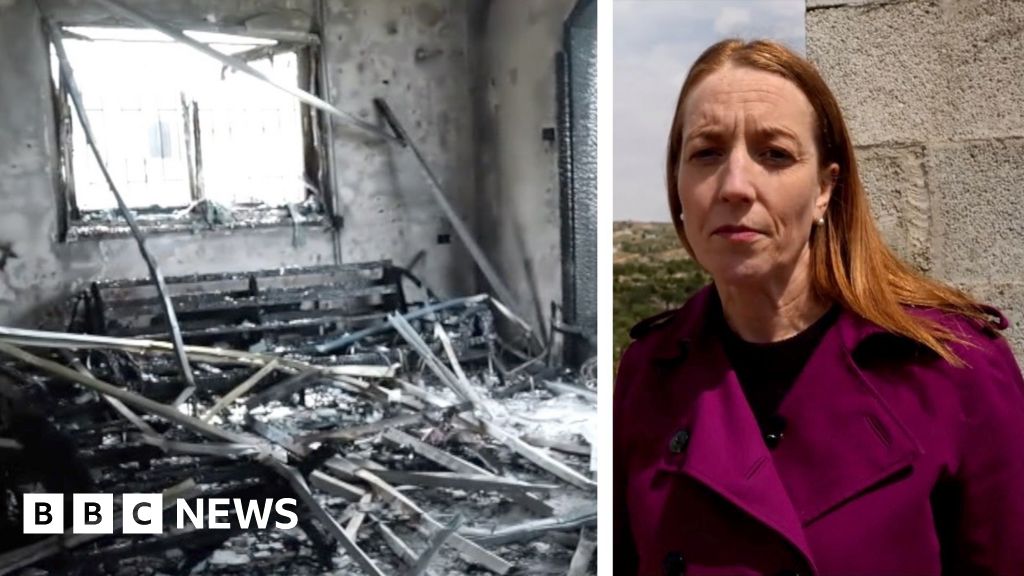
Flames engulfed homes in the Palestinian village of Deir al-Hatab as extremist Jewish settlers launched a series of retaliatory attacks, marking another grim chapter in the escalating violence across the occupied West Bank. The unrest erupted after a 17-year-old Israeli settler was killed on Saturday, allegedly struck by a Palestinian driver—an incident that has since triggered a wave of reprisals. According to the United Nations, at least six Palestinians have been killed since March 1, underscoring a dangerous surge in hostilities at a time when regional tensions are already at a boiling point.
The latest violence comes against the backdrop of heightened instability in the Middle East, following recent U.S. and Israeli strikes on Iranian-linked targets. Analysts warn that the West Bank, already a tinderbox of long-standing grievances, risks becoming a secondary front in a broader regional conflict.
Settler Attacks and Retaliatory Violence: A Cycle with Global Implications
The attacks on Palestinian villages, including arson assaults on homes and vehicles, have drawn condemnation from human rights groups and foreign governments. Eyewitnesses in Deir al-Hatab described scenes of chaos as masked settlers, some armed, descended on the village, leaving destruction in their wake. The UN Office for the Coordination of Humanitarian Affairs (OCHA) has documented a sharp rise in settler-related violence this year, with over 400 incidents reported since January—a 40% increase compared to the same period in 2023.
The killing of the Israeli teenager, whose funeral drew hundreds of mourners, has further inflamed tensions. While Israeli authorities have pledged to investigate the incident, far-right settler groups have taken matters into their own hands, launching what they call “price tag” attacks—a strategy of collective punishment against Palestinian communities.
This cycle of violence has far-reaching consequences. The West Bank, already under Israeli military occupation since 1967, is home to nearly three million Palestinians and around 500,000 Jewish settlers. The international community widely considers Israeli settlements illegal under international law, though Israel disputes this. With each new wave of violence, prospects for a negotiated two-state solution grow dimmer, raising fears of a protracted conflict with spillover effects across the region.
Global Context: A Region on the Edge
The surge in West Bank violence coincides with heightened military activity elsewhere in the Middle East. In recent weeks, the U.S. and Israel have conducted strikes against Iranian-backed militias in Syria and Iraq, while Houthi rebels in Yemen continue to target Red Sea shipping lanes. Iran, a key supporter of Palestinian militant groups like Hamas and Islamic Jihad, has vowed retaliation, further complicating an already volatile situation.
Experts warn that the West Bank could become another flashpoint, particularly if extremist elements on both sides exploit the chaos. “When settler violence escalates, it often leads to Palestinian armed factions retaliating, which then prompts Israeli military crackdowns,” says Dr. Amira Hass, a veteran Israeli journalist covering Palestinian affairs. “This creates a feedback loop of violence that becomes increasingly difficult to contain.”
The Biden administration, while reaffirming its support for Israel’s security, has expressed growing concern over settler attacks. Last month, the U.S. imposed sanctions on several extremist settlers accused of violence against Palestinians—a rare move signaling Washington’s unease. However, critics argue that without stronger diplomatic pressure, the bloodshed will continue.
Why This Matters Beyond the Middle East
The instability in the West Bank is not just a regional issue—it has global ramifications. First, the conflict fuels extremism on both sides, providing recruitment fodder for militant groups. Second, it strains diplomatic relations, particularly between the U.S. and Arab allies who view unconditional support for Israel as a barrier to peace. Third, the violence risks derailing fragile normalization efforts between Israel and Saudi Arabia, a process seen as key to stabilizing the region.
Moreover, the humanitarian toll is mounting. The UN reports that over 1,000 Palestinians have been displaced due to settler violence since 2022, with many more living under constant threat. Aid organizations warn that without international intervention, the situation could deteriorate into a full-scale uprising.
A Grim Outlook with No Easy Solutions
As night falls over Deir al-Hatab, the smell of smoke lingers in the air—a stark reminder of the fragility of life in the West Bank. With no political solution in sight and regional tensions at their highest in years, the risk of further escalation looms large.
The international community faces a critical test: Will it act decisively to curb the violence, or will the West Bank become another forgotten crisis in a world already overwhelmed by conflict? For now, the people caught in the crossfire can only brace for what comes next.
