



First Lady Melania Trump Unveils Vision for AI-Driven Education at Global Summit Amid Mixed Reactions
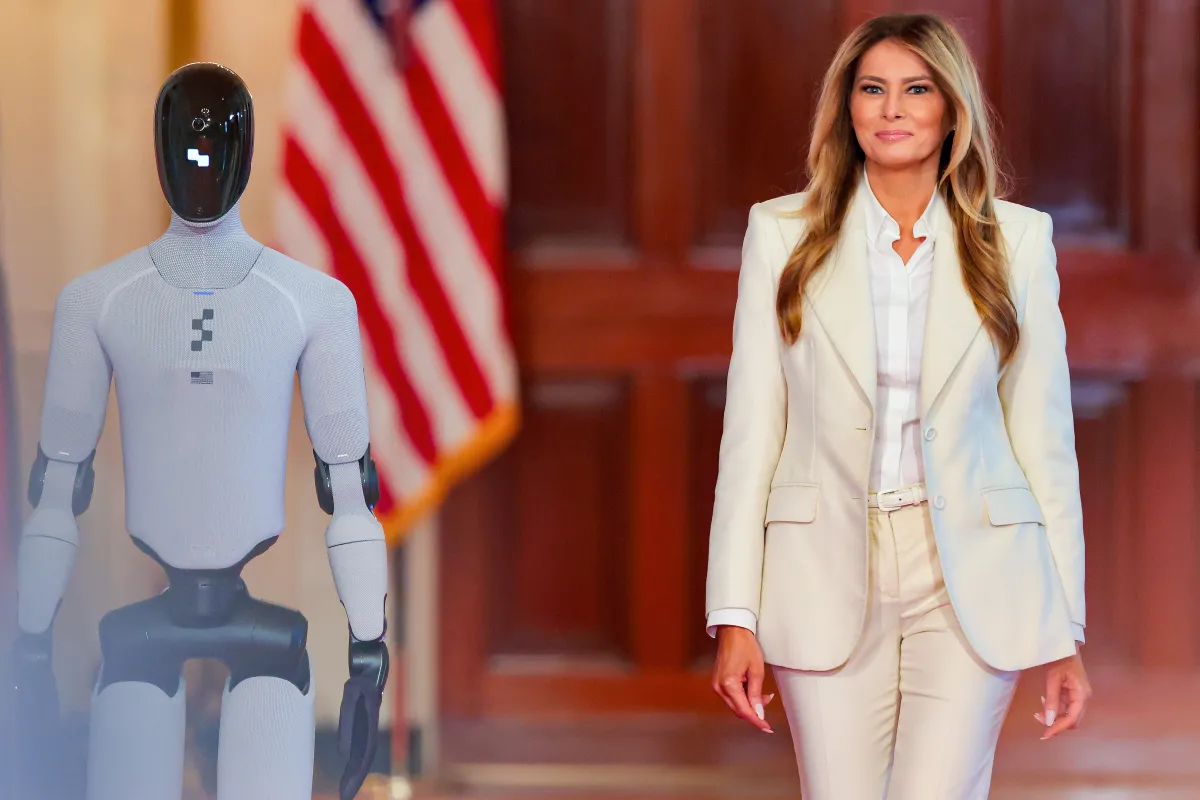
In a scene that seemed lifted from a science fiction novel, First Lady Melania Trump on Wednesday took center stage at the White House alongside a humanoid robot developed by Figure AI, a prominent robotics firm. The event, part of her newly launched global initiative Fostering the Future Together, aimed to spark discussions on leveraging technology, particularly artificial intelligence (AI), to revolutionize education for children worldwide. As the robot gracefully waltzed down the red carpet with the First Lady, it delivered a brief but resonant speech: “I am grateful to be part of this historic movement to empower children with technology and education.” Moments later, the machine exited the room, leaving attendees to grapple with the implications of a future where AI could play a pivotal role in shaping young minds.
The event, attended by leaders from 45 nations, underscored the Trump administration’s enthusiastic embrace of technological innovation as a cornerstone of educational reform. However, it also ignited a wave of both fascination and skepticism, as critics questioned the feasibility and ethical concerns of replacing human educators with AI-driven systems.
A Visionary—or Dystopian?—Future
During her keynote address, Melania Trump painted a vivid picture of a future where humanoid robots like the one showcased could transform education. She introduced an imagined educator named “Plato,” capable of delivering instantaneous access to classical studies—literature, science, art, philosophy, mathematics, and history—tailored to each student’s individual needs. “Plato is always patient, always available,” she said. “Predictably, our children will develop deeper critical thinking and independent reasoning abilities.”
Her remarks, while aspirational, struck a chord with those who view AI as a tool to democratize education and bridge resource gaps. Yet they also evoked dystopian anxieties about the erosion of human interaction in learning environments. Critics argue that the warmth, empathy, and nuanced understanding provided by human teachers cannot be replicated by machines, no matter how advanced.
The Rise of AI in Education
The First Lady’s initiative aligns with broader trends in the tech industry, where AI-driven education models are gaining traction. Over the past year, experiments like Alpha School, a network of private institutions using AI to teach students at an accelerated pace, have garnered significant attention. Last January, U.S. Secretary of Education Linda E. McMahon visited an Alpha School campus, praising its potential to equip students with practical AI skills and prepare them for a technology-driven workforce.
However, the Trump administration’s enthusiasm for such initiatives has been met with resistance from educators and advocates of traditional public schools. Critics argue that the push for AI-driven education risks exacerbating existing inequalities, as not all students will have equal access to cutting-edge technology. Moreover, the administration’s simultaneous efforts to dismantle the Department of Education have raised concerns about its commitment to supporting public education systems.
The Role of the Private Sector
The Fostering the Future Together summit also highlighted the administration’s reliance on the private sector to drive educational innovation. In her remarks, Melania Trump acknowledged the “participation of leading American technology companies,” emphasizing their role in fostering safe and effective advancements in education.
This approach reflects a broader trend in U.S. policy, where tech giants like Meta’s Mark Zuckerberg, Oracle’s Larry Ellison, and NVIDIA’s Jensen Huang have been appointed to influential advisory panels. While these collaborations aim to harness Silicon Valley’s expertise, they have also sparked debates about the appropriate balance between public oversight and private-sector influence in shaping educational priorities.
Global Implications
The summit’s international audience signaled a growing recognition of AI’s potential to address global educational challenges. Leaders from around the world gathered to exchange ideas on how technology can be harnessed to improve access to quality education, particularly in underserved communities. However, the event also raised questions about the ethical implications of deploying AI in classrooms, including issues of data privacy, algorithmic bias, and the potential for widening digital divides.
A Polarized Debate
Reactions to the First Lady’s initiative have been sharply divided. Proponents laud its forward-thinking approach, arguing that AI can complement traditional teaching methods and provide personalized learning experiences that cater to diverse student needs. Detractors, however, warn against over-reliance on technology, cautioning that it could undermine the human elements of education and lead to unintended consequences.
“The idea of AI replacing human educators is both thrilling and terrifying,” said Dr. Emily Carter, an education policy analyst at Georgetown University. “While technology can undoubtedly enhance learning, we must ensure it serves as a tool rather than a substitute for the invaluable role of teachers.”
Looking Ahead
As the Trump administration continues to champion AI-driven education, the debate over its role in shaping the future of learning shows no signs of abating. Melania Trump’s Fostering the Future Together initiative marks a bold step toward reimagining education in the digital age. Yet, as the world grapples with the rapid pace of technological advancement, it remains to be seen whether this vision will lead to a brighter future—or a cautionary tale.
For now, the First Lady’s waltz with a humanoid robot stands as a powerful symbol of the possibilities and pitfalls of blending education with artificial intelligence. Whether this marks the dawn of a new era or a step too far into the unknown, one thing is certain: the conversation is just beginning.
