


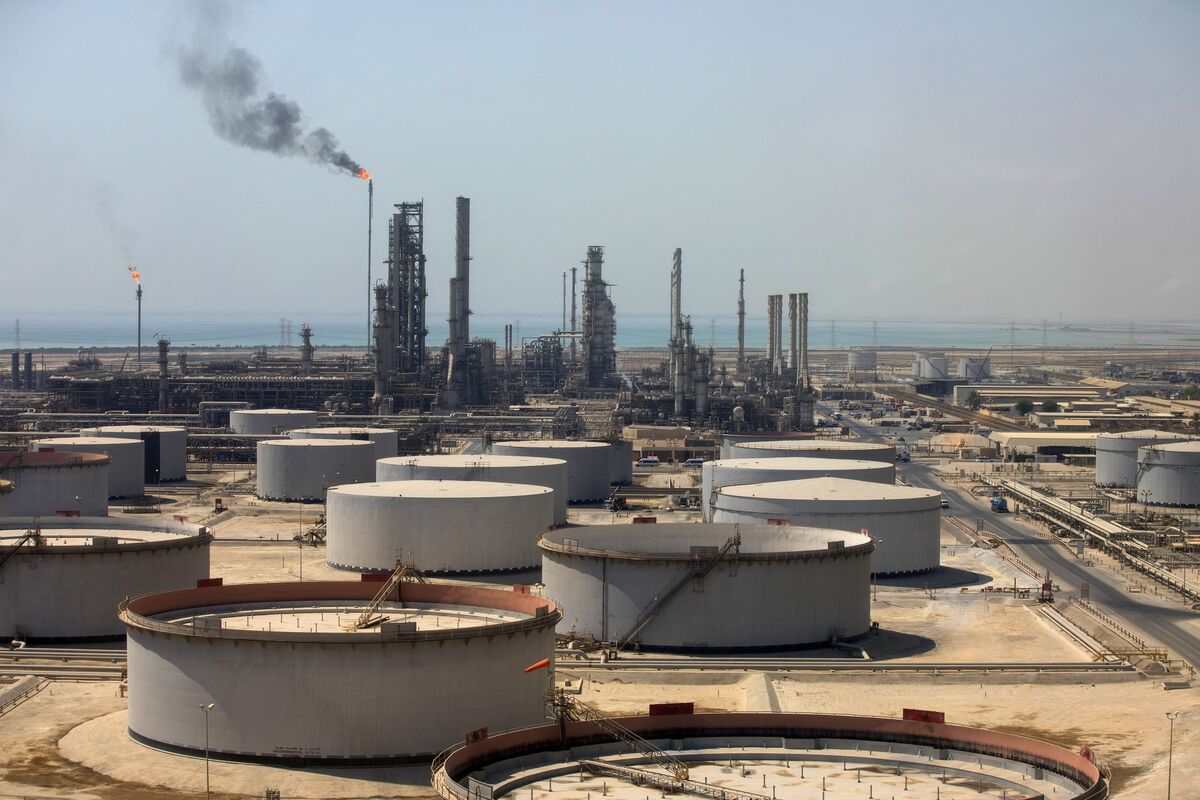

Saudi Arabia’s Oil Exports to Asia’s Top Importers Dip Amid Middle East Turmoil
In a significant development for global energy markets, Saudi Arabia’s oil shipments to China and India—Asia’s two largest crude importers—are expected to decline sharply next month, as escalating conflict in the Middle East disrupts supply chains and forces recalibrations in trade flows. The reduction comes at a critical juncture for the oil-rich kingdom, which has long been a linchpin in global energy security, and underscores the far-reaching economic and geopolitical consequences of instability in the region.
The anticipated drop in exports, first reported by industry insiders and corroborated by shipping data, highlights the fragility of global energy networks in the face of geopolitical tensions. Saudi Arabia, the world’s largest oil exporter, has historically been a reliable supplier to Asia, which accounts for the majority of its crude sales. However, the ongoing conflict—widely referred to as the region’s most volatile in decades—has introduced unprecedented challenges, from logistical bottlenecks to heightened security risks.
The Roots of the Disruption
The Middle East has been engulfed in a complex web of conflicts in recent months, with clashes intensifying across multiple fronts. While Saudi Arabia itself has not been directly involved in the fighting, the broader instability has impacted its ability to maintain smooth oil exports. Key shipping routes, including the Strait of Hormuz—a narrow passage through which a third of the world’s seaborne oil passes—have seen increased military activity, forcing some carriers to reroute or delay shipments.
Additionally, infrastructure disruptions in neighboring countries, such as damaged pipelines and port facilities, have further complicated Saudi Arabia’s export logistics. These challenges come as Saudi Aramco, the kingdom’s state-owned oil giant, grapples with operational hurdles, including questions about storage capacity and the need to prioritize domestic energy needs amid the crisis.
Impact on Asia’s Energy Giants
For China and India, the reduced supply from Saudi Arabia could have significant economic ramifications. Both nations are heavily reliant on imported oil to fuel their rapidly growing economies, and Riyadh has traditionally been one of their top suppliers. China, the world’s largest crude importer, sources nearly 20% of its oil from Saudi Arabia, while India, the third-largest global consumer, imports approximately 18% of its crude from the kingdom.
Industry analysts warn that a sustained reduction in Saudi exports could lead to higher oil prices, exacerbating inflationary pressures in both countries. This scenario is particularly concerning for India, which has been grappling with rising fuel costs and a depreciating currency. China, meanwhile, is already facing economic headwinds, including a sluggish post-pandemic recovery and strained trade relations with Western nations.
To mitigate the impact, both countries are reportedly exploring alternative supply sources. China has ramped up imports from Russia and Iran, while India has turned to the United States and Iraq. However, these shifts are not without complications. Russian oil, for instance, remains subject to Western sanctions, and Iranian exports are frequently hampered by geopolitical tensions.
Global Market Repercussions
The disruption in Saudi Arabia’s oil exports to Asia is likely to reverberate across global energy markets. Brent crude, the international benchmark for oil prices, has already seen upward momentum in recent weeks, driven by fears of supply constraints and heightened geopolitical risks. Analysts predict that if the situation worsens, prices could climb further, potentially exceeding $100 per barrel—a threshold not seen since the aftermath of Russia’s invasion of Ukraine in 2022.
Higher oil prices would have cascading effects on the global economy, particularly in energy-importing countries grappling with inflationary pressures. The European Union, which has been working to reduce its reliance on Russian energy, could face renewed challenges in securing affordable alternatives. Similarly, emerging markets in Africa and Latin America, many of which are already struggling with debt and currency instability, could be pushed further into economic turmoil.
Saudi Arabia’s Strategic Balancing Act
For Saudi Arabia, the situation presents a delicate balancing act. On one hand, the kingdom remains committed to its role as a leading global energy supplier, a position central to its economic and geopolitical influence. On the other hand, it must navigate the complexities of regional conflicts, protect its own infrastructure, and manage domestic energy demands.
In recent years, Saudi Arabia has sought to diversify its economy through ambitious initiatives like Vision 2030, which aims to reduce the kingdom’s reliance on oil revenues. However, hydrocarbons still account for the majority of government income, making the sector’s stability crucial for the country’s fiscal health.
The kingdom has also been working to strengthen ties with Asian nations, viewing the region as a cornerstone of its long-term economic strategy. The current disruption could strain these relationships, particularly if buyers perceive Riyadh as an unreliable partner.
The Road Ahead
The coming months will be critical for Saudi Arabia and global energy markets. While the kingdom has not yet issued an official statement on the export reductions, industry experts suggest that Riyadh may need to take proactive measures to restore confidence among its key customers. Potential steps include increasing production, investing in alternative shipping routes, and leveraging diplomatic channels to de-escalate regional tensions.
At the same time, the international community faces mounting pressure to address the root causes of instability in the Middle East. The United States, China, and other major powers have a vested interest in ensuring the region’s energy flows remain uninterrupted, but their competing geopolitical agendas could complicate efforts to broker peace.
As the world watches closely, the situation serves as a stark reminder of the interconnectedness of global energy markets and the profound impact of regional conflicts on the broader economy. For now, the implications of Saudi Arabia’s reduced oil exports to Asia remain uncertain—but their consequences will undoubtedly be felt far beyond the Middle East.
Balancing supply and demand in an increasingly volatile world remains one of the defining challenges of our time.
