


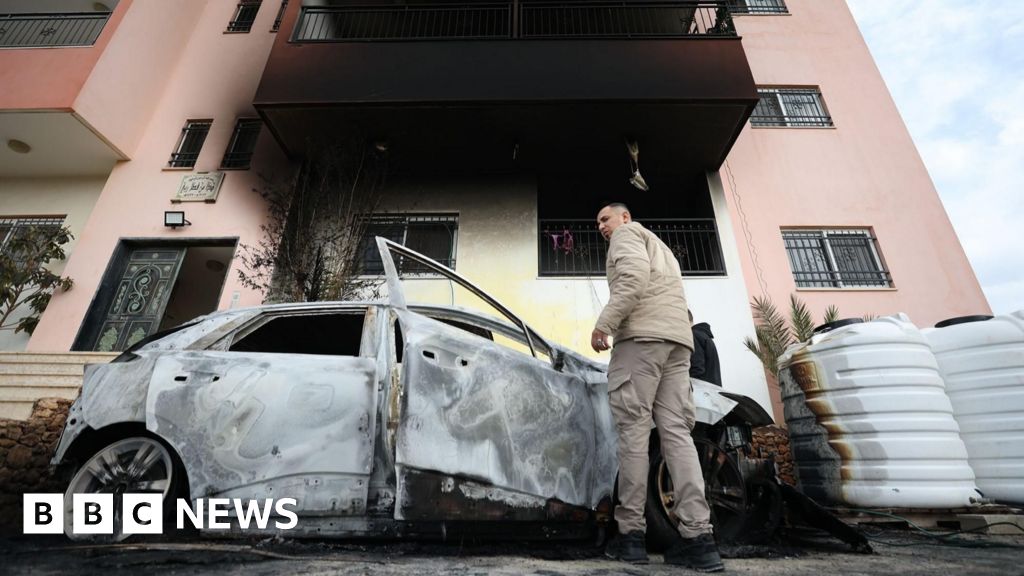

Rising Tensions in the West Bank: Settler Violence Displaces Thousands Amid Escalating Conflict
Date: [Insert Current Date]
The West Bank, a region already simmering with decades of tension, has witnessed a stark escalation in violence over the past year, with alarming humanitarian consequences. According to the United Nations Office for the Coordination of Humanitarian Affairs (OCHA), at least 4,765 Palestinians from 97 communities have been displaced due to settler violence between January 2023 and mid-February 2024. The majority of those displaced belong to Bedouin and herding communities in Area C, a region under full Israeli control according to the Oslo Accords. One of the most harrowing incidents occurred in January 2024, when 600 residents of the Bedouin village Ras Ein al-Auja in the Jordan Valley were forced to flee their homes. This surge in displacement has not only deepened the humanitarian crisis in the region but also reignited fears of a broader conflict with global ramifications.
The Context of Settler Violence in the West Bank
The West Bank, a territory claimed by both Israelis and Palestinians, has long been a flashpoint in the Israeli-Palestinian conflict. Since the 1967 Six-Day War, Israel has occupied the region, establishing settlements that are widely considered illegal under international law. These settlements, home to over 700,000 Israeli settlers, have been a source of persistent friction, with settler-related violence against Palestinians escalating in recent years.
Area C, which comprises over 60% of the West Bank, has been particularly affected. Under the Oslo Accords, Area C is designated as under Israeli administrative and security control, leaving Palestinian communities vulnerable to land confiscations, demolitions, and violence. The Bedouin and herding communities, who rely on the land for their livelihoods, are disproportionately impacted, often facing forced evictions and attacks on their property.
The UN’s latest figures highlight a disturbing trend: 2023 marked one of the highest recorded years for settler violence, with incidents increasing by nearly 40% compared to the previous year. This surge has been attributed to the rise of far-right groups within Israel, as well as a perceived lack of accountability for perpetrators.
Global Implications of the Crisis
The displacement of thousands of Palestinians in the West Bank is not merely a regional issue; it has far-reaching implications for global peace and security. The Israeli-Palestinian conflict remains one of the most enduring and volatile disputes in the world, with the potential to destabilize the broader Middle East.
The recent escalation in settler violence has drawn condemnation from international organizations and governments alike. The UN has repeatedly called for an end to the displacement of Palestinians and for Israel to uphold its obligations under international humanitarian law. However, with diplomatic efforts to resolve the conflict stalled, concerns are mounting that the situation could spiral into a wider confrontation.
Moreover, the humanitarian crisis in the West Bank exacerbates existing tensions in the region, particularly in neighboring Jordan, which hosts a large Palestinian refugee population. The displacement of Bedouin communities also raises questions about the future of Palestinian statehood, as Area C is viewed as a critical component of any potential Palestinian state.
Why This Matters
The displacement of Palestinians in the West Bank is emblematic of a broader struggle over land, identity, and sovereignty. For the affected communities, it represents the loss of homes, livelihoods, and cultural heritage. For the international community, it underscores the failure of diplomatic efforts to address the root causes of the Israeli-Palestinian conflict.
The situation also highlights the growing divide between Israel and the Palestinian population, which threatens to undermine any prospects for a two-state solution. As settler violence continues unchecked, the likelihood of renewed violence in the region increases, with potential repercussions for global security.
The Human Cost of Displacement
Behind the statistics lie stories of profound human suffering. Families in Ras Ein al-Auja and other villages have been forced to abandon their homes, often with little warning or recourse. Many have sought refuge in overcrowded urban areas, where they face uncertain futures.
For Bedouin communities, displacement disrupts centuries-old traditions of herding and farming, severing their connection to the land. Children are pulled out of schools, and families are left without access to basic services such as water and healthcare. The psychological toll of displacement is immense, with many experiencing trauma and despair.
A Call for Accountability and Action
As the crisis in the West Bank continues to unfold, there is an urgent need for accountability and action. The international community must pressure Israel to halt the displacement of Palestinians and investigate acts of settler violence. At the same time, diplomatic efforts must be reinvigorated to address the underlying issues driving the conflict.
For the Palestinians affected by this crisis, the stakes could not be higher. Their displacement is not just a humanitarian tragedy but a stark reminder of the fragility of peace in the region. As the world watches, the question remains: will the international community rise to the challenge, or will the cycle of violence and displacement continue unabated?
Conclusion
The displacement of thousands of Palestinians in the West Bank is a grim testament to the enduring volatility of the Israeli-Palestinian conflict. With settler violence on the rise and diplomatic efforts at a standstill, the region stands on the precipice of deeper instability. The international community must act swiftly to address this crisis, not only to alleviate the suffering of those affected but to prevent the conflict from escalating further. The stakes are high, and the cost of inaction is too great to ignore. The world cannot afford to look away.
