



UK Police Warn Against Supporting Banned Groups as Crackdown Intensifies
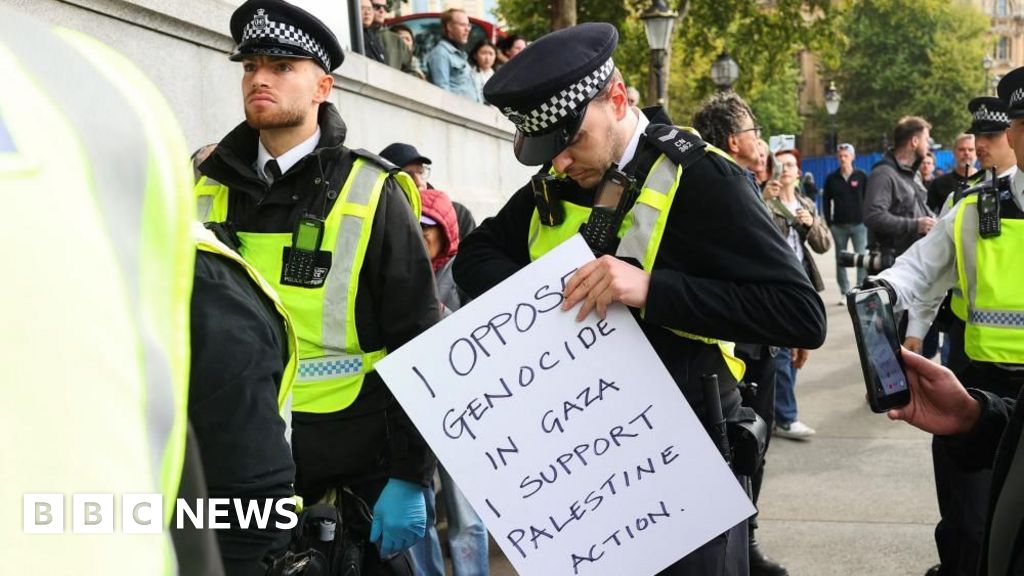
LONDON — The Metropolitan Police has issued a stern warning that supporting banned organizations remains a criminal offense, emphasizing that the force “must enforce the law.” The statement comes amid heightened scrutiny of activities linked to proscribed groups and follows a series of recent arrests tied to alleged affiliations with such organizations.
The Met’s declaration underscores the UK’s stringent approach to countering extremism and maintaining national security. Under the Terrorism Act 2000, it is illegal to be a member of or to support groups designated as terrorist organizations by the UK government. Penalties for violations can include lengthy prison sentences, reflecting the severity with which such offenses are treated.
The Met’s renewed focus on enforcing these laws highlights the ongoing challenges faced by law enforcement in tackling extremist activities. Authorities have increasingly relied on surveillance, intelligence gathering, and community engagement to identify and disrupt networks associated with banned groups.
“The law is clear: supporting organizations that are proscribed is a criminal offense,” a Metropolitan Police spokesperson said. “Our duty is to protect the public, and we will not hesitate to take action against those who flout these rules.”
This warning follows a series of high-profile cases involving individuals accused of promoting or financing banned groups. Earlier this year, several arrests were made in connection with fundraising activities allegedly linked to extremist organizations. These cases have sparked debates about the balance between freedom of expression and national security.
Contextually, the UK has a long history of grappling with extremism, both domestically and internationally. The government has proscribed dozens of organizations over the years, ranging from far-right groups to Islamist extremist networks. The list includes well-known entities such as Al-Qaeda, ISIS, and National Action, a UK-based neo-Nazi group banned in 2016.
Critics argue that the government’s approach risks stifling legitimate dissent and unfairly targeting specific communities. However, supporters contend that such measures are necessary to safeguard public safety and prevent radicalization.
The Met’s latest statement also coincides with broader efforts to combat online extremism. Social media platforms have faced increasing pressure to remove content linked to proscribed groups and to cooperate with law enforcement agencies. Earlier this year, the UK government introduced the Online Safety Bill, which seeks to hold tech companies accountable for harmful content on their platforms.
“Extremism thrives in the shadows, and the internet has become a breeding ground for radicalization,” said a security analyst. “By enforcing the law offline and online, authorities are sending a clear message that there is no safe haven for these activities.”
The issue of supporting banned groups is particularly sensitive in multicultural cities like London, where diverse communities coexist. Reports of young people being drawn into extremist ideologies remain a significant concern for policymakers and community leaders alike.
Community organizations have called for greater investment in education and social programs to address the root causes of radicalization. “Policing alone is not enough,” said a local activist. “We need to tackle the underlying issues that make individuals vulnerable to extremism in the first place.”
The Met’s statement also raises questions about the future of counter-terrorism efforts in the UK. With the evolving nature of extremism and the increasing use of technology by banned groups, authorities face an uphill battle in staying ahead of the curve.
Experts suggest that law enforcement agencies will need to adopt more sophisticated strategies, including leveraging artificial intelligence and enhancing international cooperation, to effectively combat the threat.
As the debate over extremism and national security continues, the Met’s warning serves as a stark reminder of the legal and societal consequences of supporting banned groups. For now, the message to the public is unequivocal: any form of support for proscribed organizations will not be tolerated.
Looking ahead, the UK’s approach to countering extremism will likely remain a contentious issue, with policymakers navigating the delicate balance between safeguarding civil liberties and ensuring public safety. As the global threat landscape evolves, the pressure on law enforcement to adapt and respond effectively will only intensify.
For now, the Metropolitan Police’s firm stance signals that the crackdown on banned groups is far from over—and neither is the broader fight against extremism.
