


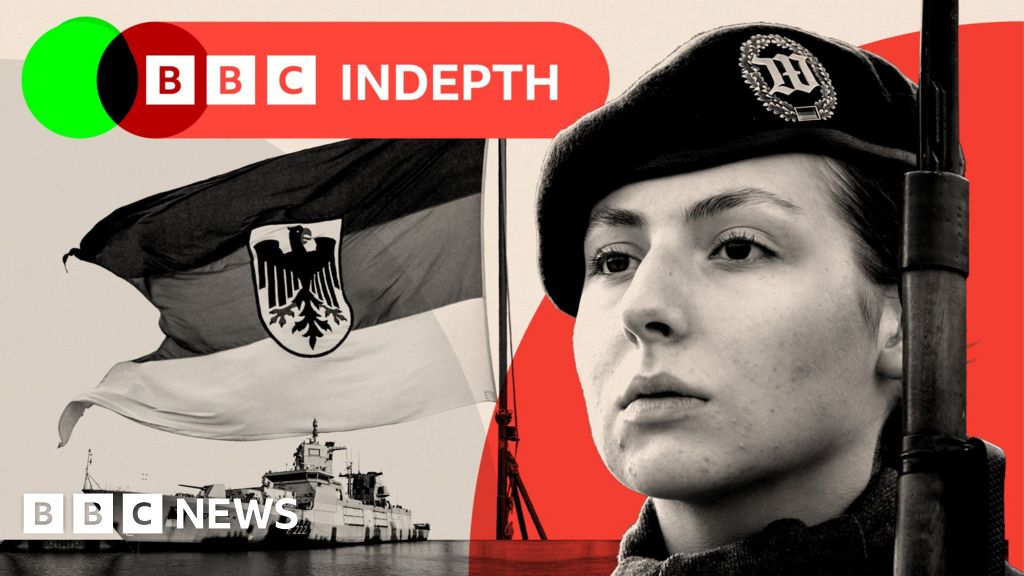

The Fragile Axis: How Russia’s War in Ukraine is Reshaping Germany’s Global Role
Berlin, Germany – In the shadow of a conflict that has redrawn the geopolitical map of Europe, Germany stands at a crossroads, grappling with an identity crisis that strikes at the very heart of its post-war existence. The war in Ukraine, now in its second year, has not only destabilized Eastern Europe but has also forced Germany to confront uncomfortable truths about its place in the world. Once the bastion of a rules-based international order, Germany now finds itself caught between a fracturing West and an assertive East, questioning the foundations of its foreign policy and its role as a stabilizing force in Europe.
Germany’s Post-War Identity Under Strain
For decades, Germany’s foreign policy has been anchored in the principles of multilateralism, pacifism, and a commitment to a rules-based international order. Emerging from the ashes of World War II, the country sought to redefine itself as a nation committed to peace, economic cooperation, and European integration. This ethos was embodied in its leadership within the European Union (EU) and its reliance on the transatlantic alliance with the United States.
However, Russia’s invasion of Ukraine in February 2022 has shattered this carefully constructed identity. The war has exposed the fragility of the international order Germany championed and called into question its reliance on American security guarantees. “Germany’s post-war identity was built on the idea of starting afresh—on rejecting nationalism and embracing a rules-based system,” said Dr. Klaus Müller, a political analyst at Berlin’s Free University. “But the war in Ukraine has forced Germans to confront the limitations of this approach.”
The conflict has also highlighted Germany’s unique vulnerability. Unlike France and the United Kingdom, which have long histories of nationhood and military assertiveness, Germany’s post-war identity has been defined by restraint. The absence of a unifying national narrative, combined with its dependence on Russian energy and American security, has left the country feeling particularly exposed.
A Fractured Transatlantic Alliance
The war in Ukraine has not only reshaped Germany’s internal dynamics but has also strained its relationship with the United States. For years, Germany viewed the U.S. as its primary ally and the guarantor of European security. However, recent shifts in American foreign policy—from the withdrawal from Afghanistan to the growing focus on China—have sown doubts about Washington’s commitment to Europe.
This uncertainty has been compounded by domestic political challenges in the U.S., including the rise of isolationist sentiment and the unpredictability of future administrations. For Germany, which has historically relied on the transatlantic alliance as a cornerstone of its security, this has been a sobering wake-up call.
“The transatlantic relationship is not what it once was,” said Dr. Müller. “Germany feels that the overseer it relied upon for decades may no longer be there in the same capacity. This has forced Berlin to rethink its approach to defense and security.”
The Global Implications of Germany’s Dilemma
Germany’s struggle to navigate this new geopolitical landscape has far-reaching implications. As Europe’s largest economy and a key player in the EU, Germany’s actions—or inaction—could shape the future of the continent. The war in Ukraine has already prompted Berlin to abandon its long-standing policy of military restraint, approving significant increases in defense spending and sending arms to Kyiv.
However, these steps have not been without controversy. Domestically, there is a growing divide between those who support a more assertive foreign policy and those who fear a return to militarism. Internationally, Germany’s hesitation to act decisively has drawn criticism from Eastern European nations, which view Berlin as too cautious in its response to Russian aggression.
“If Germany fails to adapt to this new reality, it risks undermining the unity of the EU and NATO,” said Dr. Müller. “At a time when the international order is under strain, Germany’s leadership—or lack thereof—could determine the fate of Europe.”
A New Era for German Foreign Policy?
The war in Ukraine has forced Germany to confront questions it has long avoided: What is its role in a world where the rules-based order is crumbling? Can it reconcile its commitment to pacifism with the need to defend its interests and allies?
For now, there are no easy answers. Germany’s leaders have acknowledged the need for change, promising to invest in defense and reduce reliance on Russian energy. But transforming these promises into action will require overcoming deep-seated cultural and political resistance.
“The war in Ukraine is not just a crisis for Eastern Europe—it’s a crisis for Germany,” said Dr. Müller. “It’s forcing the country to rethink everything it thought it knew about itself and its place in the world.”
Conclusion: A Pivotal Moment for Germany and the World
As the war in Ukraine continues to unfold, Germany finds itself at a pivotal moment in its history. The conflict has exposed the limitations of its post-war identity and challenged its reliance on a rules-based international order. At the same time, it has provided an opportunity for Germany to redefine its role in a rapidly changing world.
The stakes could not be higher. If Germany can adapt to this new reality, it has the potential to emerge as a stronger, more assertive leader in Europe. If it fails to act decisively, it risks undermining the unity of the West and ceding influence to authoritarian powers.
In a world increasingly defined by uncertainty and conflict, Germany’s response to this crisis will resonate far beyond its borders. The question is not just what Germany will do—it’s what kind of world it wants to shape.
