



Plaid Cymru Leader Launches Senedd Election Campaign, Draws Parallels to Historic Caerphilly Victory
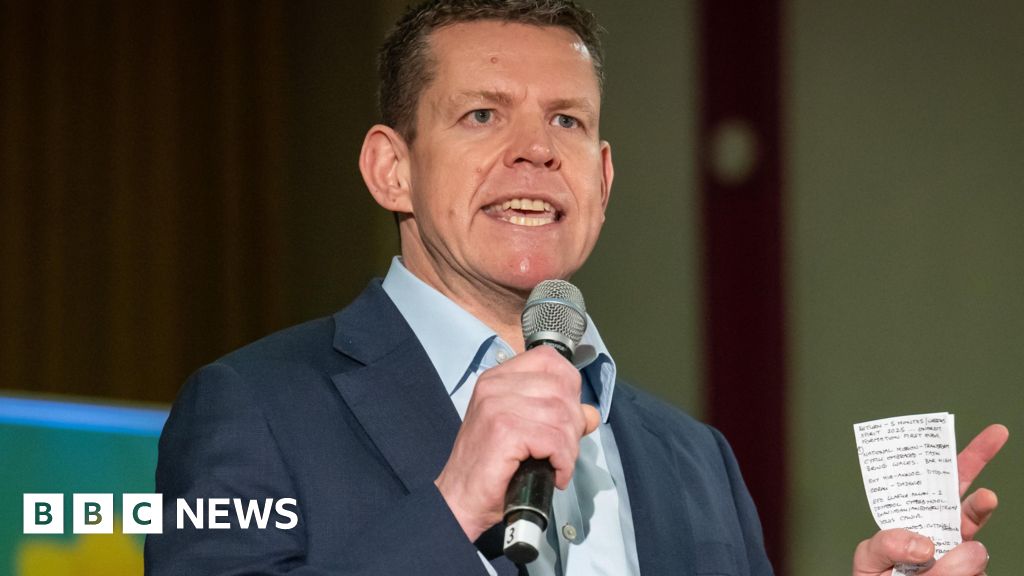
The leader of Plaid Cymru, Rhun ap Iorwerth, has officially launched the party’s campaign for the upcoming Senedd elections, drawing a striking comparison to the party’s historic victory in the Caerphilly by-election last October. Speaking to a rally of supporters in Cardiff, ap Iorwerth framed the 2024 Welsh Parliament elections as a defining moment for the party’s vision of an independent Wales and social justice reforms.
The Caerphilly by-election, which saw Plaid Cymru secure a stunning win against Labour in a traditionally stronghold seat, has become a rallying point for the party’s resurgence. Ap Iorwerth emphasized that the same energy, determination, and grassroots mobilization that propelled the Caerphilly triumph would be crucial in securing a stronger Plaid presence in the Senedd.
“Caerphilly showed us what’s possible when we unite around a shared vision for Wales—a Wales that puts people first, that champions fairness, and that isn’t afraid to dream big,” ap Iorwerth declared. “This election is our chance to take that vision to every corner of our nation.”
A Shifting Political Landscape
The launch comes amid a period of significant political change in Wales. Labour, which has dominated Welsh politics for decades, is facing mounting criticism over its handling of the NHS, education, and the economy. Plaid Cymru, which positions itself as the party of Welsh self-determination, sees this as an opportunity to challenge Labour’s longstanding dominance.
The party’s platform centers on ambitious policies, including increased investment in public services, a push for renewable energy projects, and a renewed focus on securing greater autonomy for Wales within the UK. Ap Iorwerth also reiterated Plaid’s commitment to achieving independence, framing it not as a distant dream but as a pragmatic response to the challenges of Brexit, austerity, and Westminster’s centralization of power.
“Westminster doesn’t work for Wales,” he said. “We need the tools to build our own future—a future where decisions about Wales are made in Wales.”
Caerphilly as a Catalyst
The Caerphilly victory has become a cornerstone of Plaid Cymru’s campaign narrative. The by-election, triggered by the resignation of Labour MP Wayne David, saw Plaid’s candidate, Lindsay Whittle, win with a significant majority, marking the first time the party had secured the seat in over 80 years.
The win was seen as a testament to Plaid’s ability to connect with voters on issues like housing, healthcare, and local representation. It also demonstrated the party’s capacity to mobilize a diverse coalition of supporters, including younger voters and those disillusioned with Labour.
Ap Iorwerth’s focus on Caerphilly underscores the party’s strategy of leveraging local successes to build momentum on a national scale. “Caerphilly proved that when we listen to communities, when we fight for their priorities, we can win,” he said. “That’s the spirit we’re bringing to this campaign.”
Challenges Ahead
Despite the optimism, Plaid Cymru faces significant hurdles in its quest to expand its influence in the Senedd. The party currently holds 13 of the 60 seats, making it the third-largest party in the Welsh Parliament. Closing the gap with Labour, which has 30 seats, will require not only consolidating its existing support base but also winning over voters in traditionally Labour-held areas.
The party’s independence agenda remains a polarizing issue, with polls showing mixed levels of support among Welsh voters. While Plaid’s leadership argues that independence is essential for Wales’ long-term prosperity, critics contend that it could distract from pressing issues like the cost-of-living crisis and NHS funding.
Ap Iorwerth, however, remains undeterred. “Independence isn’t about dividing people—it’s about empowering them,” he said. “It’s about giving Wales the freedom to chart its own course.”
Broader Implications
The Senedd elections are not just a battleground for Plaid Cymru; they are also a litmus test for the broader political direction of Wales. With Labour’s dominance increasingly under scrutiny, the elections could reshape the political landscape, potentially paving the way for a coalition government or even a shift away from the status quo.
For Plaid Cymru, the stakes are particularly high. A strong showing in the elections could position the party as a credible alternative to Labour, both in Wales and on the UK stage. Conversely, a disappointing result could raise questions about the viability of its independence agenda and its ability to connect with voters beyond its traditional base.
As the campaign unfolds, ap Iorwerth’s message is clear: Plaid Cymru is ready to fight for Wales, just as it fought for Caerphilly. “This is our moment,” he said. “Together, we can build a Wales that works for everyone.”
Looking Ahead
The Senedd elections, scheduled for May 2024, will undoubtedly be one of the most consequential in Wales’ recent history. Plaid Cymru’s campaign, buoyed by the momentum of its Caerphilly victory, seeks to capitalize on a shifting political climate and growing discontent with the status quo.
Whether the party can translate its localized successes into a broader national mandate remains to be seen. But one thing is certain: the elections will serve as a critical test for Wales’ political future, with implications that extend far beyond the borders of Caerphilly.
