


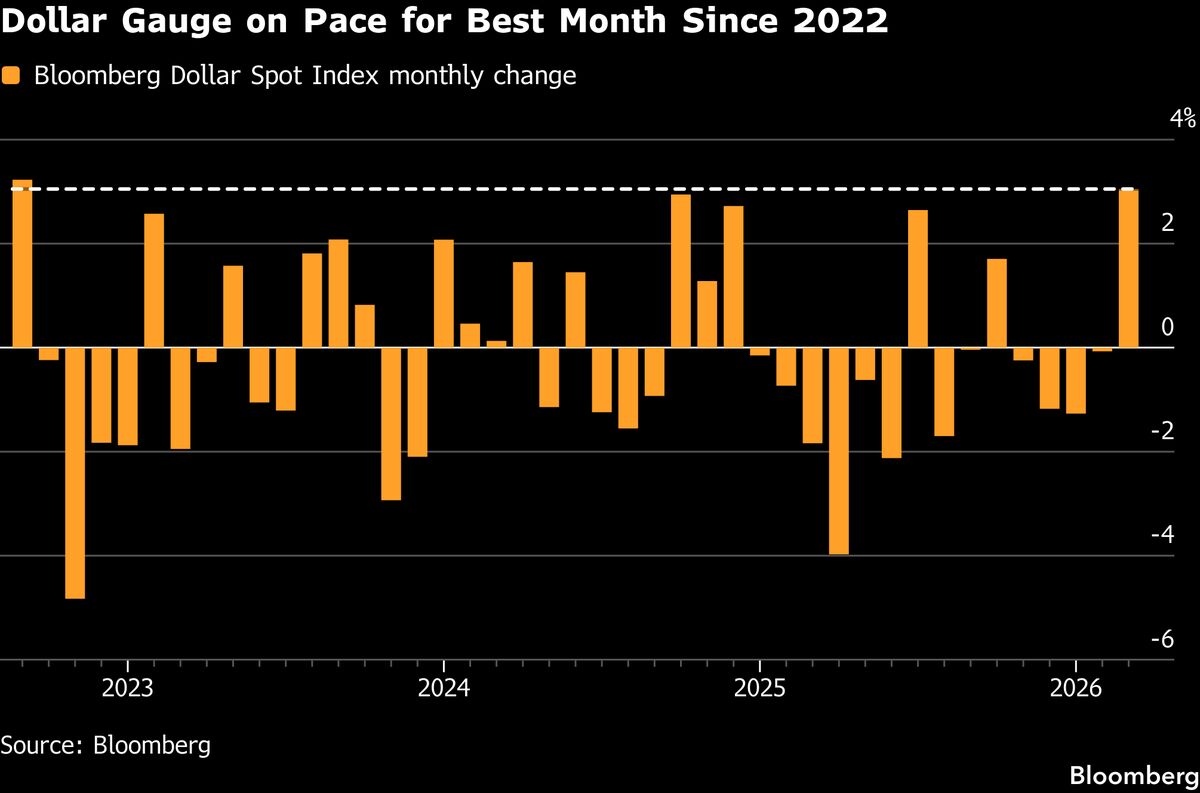

The U.S. Dollar Surges to Near One-Year High Amid Middle East Turmoil and Energy Market Volatility
The U.S. dollar is poised for its strongest monthly performance in nearly a year, driven by escalating geopolitical tensions in the Middle East and subsequent upheaval in global energy markets. As investors flock to the safety of the world’s primary reserve currency, the greenback has emerged as a critical hedge against uncertainty, reshaping economic forecasts and influencing financial markets worldwide.
According to market analysts, the Dollar Index—a measure of the dollar’s strength against a basket of six major currencies—has climbed over 2% in October, marking its most significant monthly gain since September 2022. This resurgence underscores the dollar’s enduring status as a haven asset during times of global instability. The recent conflict between Israel and Hamas, coupled with broader regional tensions, has fueled fears of prolonged Middle East unrest, sending shockwaves through energy markets and triggering a flight to safety among investors.
Geopolitical Tensions Fuel Market Volatility
The ongoing conflict in the Middle East has introduced a new layer of complexity into an already fragile global economic landscape. The October 7 attack by Hamas on Israel and Israel’s subsequent military response have heightened concerns about broader regional instability. Analysts warn that any escalation involving major oil-producing nations, particularly Iran, could disrupt global energy supplies and send oil prices soaring.
Crude oil prices have already experienced sharp fluctuations, with Brent crude briefly surging above $90 per barrel earlier this month—a level not seen since October 2022. While prices have since moderated, the underlying uncertainty continues to weigh on markets. Energy-dependent economies, particularly in Europe and Asia, are bracing for potential supply disruptions, which could exacerbate inflationary pressures and hinder economic recovery efforts.
Against this backdrop, investors have sought refuge in the U.S. dollar, leveraging its stability and liquidity in volatile times. The dollar’s appeal is further bolstered by its status as the world’s dominant reserve currency, accounting for nearly 60% of global foreign exchange reserves.
Economic Forecasts Under Pressure
The resurgence of the dollar is also reshaping global economic forecasts. A stronger dollar typically exerts downward pressure on commodity prices, making imports cheaper for U.S. consumers but increasing costs for foreign buyers. For emerging markets, this dynamic can be particularly challenging, as many nations rely on dollar-denominated debt and imports. Countries such as Argentina, Turkey, and Egypt, which are already grappling with inflation and currency depreciation, face heightened risks.
Moreover, the dollar’s strength complicates the efforts of central banks worldwide to manage inflation. While the Federal Reserve has signaled a cautious approach to further rate hikes, other central banks may feel compelled to tighten monetary policy to defend their currencies. This divergence in monetary policy could exacerbate global economic imbalances, with far-reaching implications for trade and growth.
The Fed’s Role in Dollar Strength
The Federal Reserve’s monetary policy has played a pivotal role in the dollar’s recent ascent. The Fed’s aggressive interest rate hikes over the past 18 months have widened the yield gap between U.S. Treasuries and government bonds in other developed markets, attracting foreign capital and supporting the dollar.
While the Fed has indicated that it may pause its rate-hiking cycle, inflation remains stubbornly above its 2% target, keeping the door open for potential future increases. This uncertainty has reinforced the dollar’s appeal among investors seeking higher returns and stability.
Impact on Global Markets
The dollar’s rally has had ripple effects across global financial markets. U.S. equities have faced headwinds, as a stronger dollar can erode the earnings of multinational corporations by making their exports more expensive. Conversely, European and Asian markets have felt the pinch of weaker local currencies, which inflate the cost of dollar-denominated imports and raw materials.
Emerging markets, in particular, are under pressure. Many nations have seen their currencies depreciate against the dollar, raising the cost of servicing dollar-denominated debt. This has prompted some governments to intervene in currency markets or implement capital controls to stabilize their economies.
Energy Markets in Focus
Energy markets remain a critical factor in the dollar’s trajectory. The Middle East accounts for approximately one-third of global oil production, and any disruption to supply could have profound implications for the global economy. Analysts are closely monitoring developments, particularly the potential for Iran’s involvement in the conflict.
Iran, a key supporter of Hamas, is also a major oil exporter. Western nations, led by the U.S., have imposed stringent sanctions on Iran’s energy sector, but any escalation in tensions could force the issue back into the spotlight. The U.S. has signaled its commitment to maintaining energy market stability, including the possibility of releasing additional crude from its Strategic Petroleum Reserve.
Looking Ahead
As October draws to a close, the dollar’s rally shows no signs of abating. The interplay between geopolitical risks, energy market volatility, and monetary policy will likely shape the currency’s trajectory in the coming months. While a stronger dollar provides a sense of security for U.S. investors, it also poses challenges for the global economy, particularly emerging markets and energy-dependent nations.
Economic policymakers and central bankers face a delicate balancing act as they navigate these uncertainties. The Federal Reserve’s upcoming meetings will be closely watched for any hints of future rate adjustments, which could influence investor sentiment and currency markets.
For now, the dollar’s dominance underscores its enduring role as a global financial anchor. As markets grapple with the fallout from Middle East turmoil and economic headwinds, the greenback remains a beacon of stability in an increasingly uncertain world.
The question remains whether this surge is a temporary reaction to geopolitical shocks or the beginning of a longer-term trend. Only time will tell, but one thing is clear: the dollar’s resilience continues to shape the global economic landscape in profound and lasting ways.
