


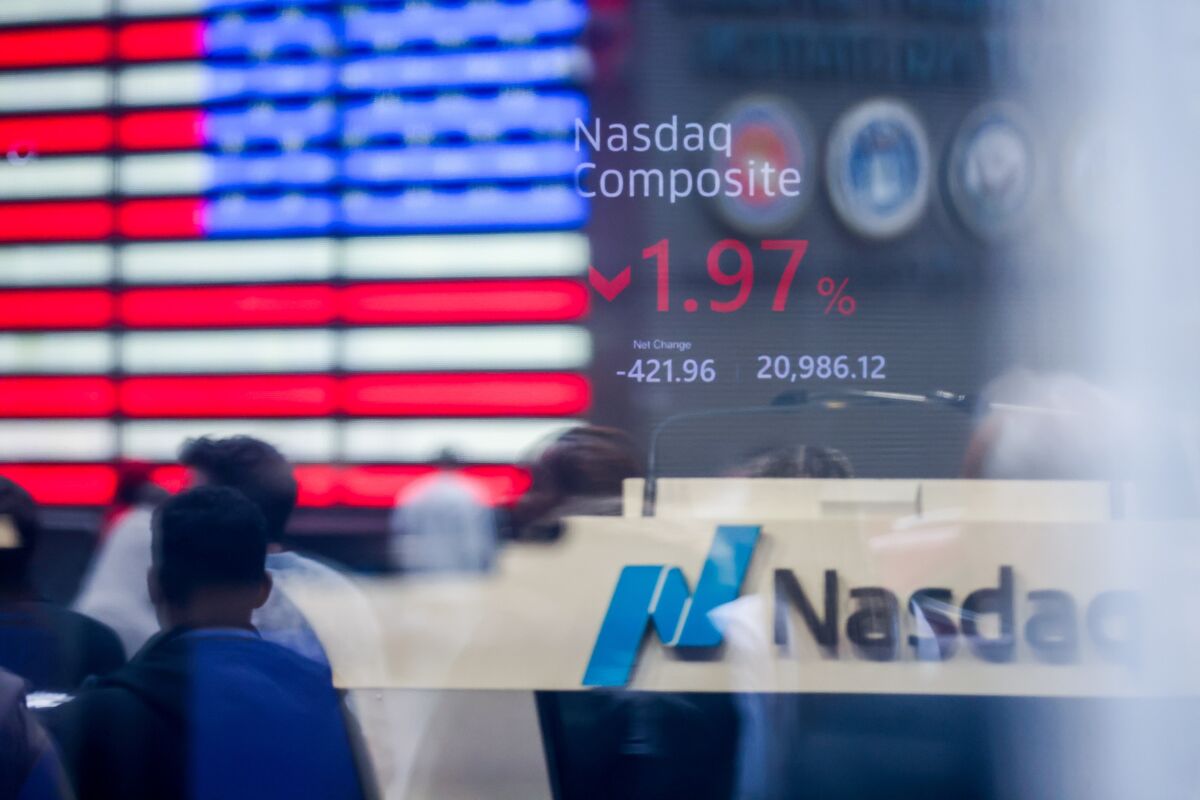

Nasdaq 100 Valuation Hits Lowest Point Relative to S&P 500 Since 2018: A Sign of Shifting Investor Sentiment?
In a striking development that underscores the evolving dynamics of the U.S. equity market, the valuation gap between the Nasdaq 100 and the S&P 500 has narrowed to its lowest level since 2018. This shift marks a significant departure from the tech-driven rally that dominated much of the past decade, raising questions about whether investor confidence in high-growth technology stocks is waning. As the Federal Reserve continues its aggressive monetary tightening campaign to combat inflation, the divergence between these two indices offers a fascinating glimpse into the changing priorities of global investors.
The Numbers Behind the Trend
The Nasdaq 100, which tracks the performance of the 100 largest non-financial companies listed on the Nasdaq exchange, has long been synonymous with high-growth technology stocks such as Apple, Microsoft, and Amazon. Historically, these companies have commanded premium valuations due to their rapid revenue growth and dominant market positions. However, recent data reveals that the Nasdaq 100’s price-to-earnings (P/E) ratio relative to the S&P 500 has fallen to its lowest point in five years.
As of the latest market close, the Nasdaq 100’s valuation premium over the S&P 500 has evaporated, with both indices now trading at roughly comparable multiples. This narrowing gap reflects a broader trend of investor caution toward technology stocks, which have been particularly sensitive to rising interest rates and macroeconomic uncertainty.
The Role of Rising Interest Rates
The Federal Reserve’s aggressive interest rate hikes have been a key driver of this shift. Since March 2022, the central bank has raised its benchmark federal funds rate by more than 5 percentage points, marking one of the most rapid tightening cycles in recent history. Higher interest rates increase borrowing costs for companies, particularly those in the technology sector that rely heavily on debt financing for growth initiatives.
Moreover, rising rates reduce the present value of future earnings, which disproportionately impacts high-growth companies with long-duration cash flows. As a result, investors have increasingly sought refuge in more stable, value-oriented sectors such as energy, healthcare, and industrials, which are well-represented in the S&P 500.
A Reversal of Pandemic-Era Dynamics
The current trend represents a sharp reversal from the market dynamics that prevailed during the COVID-19 pandemic. In 2020 and 2021, pandemic-induced lockdowns accelerated the adoption of digital technologies, driving unprecedented gains for technology stocks. The Nasdaq 100 soared to record highs, with its valuation premium over the S&P 500 peaking in late 2020.
However, as the global economy began to reopen and inflationary pressures emerged, the narrative shifted. Concerns about slowing growth, supply chain disruptions, and geopolitical tensions have weighed heavily on technology stocks, prompting investors to reassess their portfolios.
Sector Rotation and Investor Sentiment
The narrowing valuation gap also reflects a broader rotation within equity markets. Over the past year, sectors such as energy and utilities have outperformed technology, benefitting from higher commodity prices and a flight to safety. This rotation has been particularly pronounced among institutional investors, who have reallocated capital to sectors with more predictable earnings and lower volatility.
Retail investors, who played a significant role in driving the tech rally during the pandemic, have also tempered their enthusiasm. With many facing losses in speculative tech stocks and cryptocurrencies, there has been a noticeable shift toward more conservative investment strategies.
Implications for the Tech Sector
For technology companies, the current environment presents both challenges and opportunities. On one hand, the sector faces headwinds from rising interest rates, weakening consumer demand, and heightened regulatory scrutiny. Companies that rely on advertising revenue, such as Alphabet and Meta Platforms, are particularly vulnerable to a slowdown in global economic activity.
On the other hand, the sector’s long-term growth prospects remain compelling. Innovations in artificial intelligence, cloud computing, and electric vehicles continue to drive demand, while many tech companies boast strong balance sheets and dominant market positions. For investors with a long-term horizon, the current pullback may represent an attractive entry point.
The Global Context
The narrowing valuation gap between the Nasdaq 100 and the S&P 500 is not occurring in isolation. Across global markets, technology stocks have underperformed relative to broader indices, reflecting a synchronized shift in investor sentiment. In Europe, for example, the STOXX Europe 600 Technology Index has lagged behind the broader STOXX Europe 600, while in Asia, technology-heavy markets such as South Korea and Taiwan have experienced similar trends.
This global underperformance highlights the interconnected nature of financial markets and the influence of macroeconomic factors on investor behavior. As central banks worldwide continue to tighten monetary policy, the pressure on technology stocks is likely to persist in the near term.
Looking Ahead: A Market in Transition
The current divergence between the Nasdaq 100 and the S&P 500 underscores a broader theme of market transition. After a decade of dominance by technology stocks, investors are increasingly focused on fundamentals such as earnings stability, cash flow generation, and resilience to macroeconomic shocks.
While this shift has created headwinds for the tech sector, it also reflects a maturing market that is adapting to new realities. As the Federal Reserve’s tightening cycle approaches its peak, the focus will shift to the trajectory of inflation, interest rates, and corporate earnings. For now, the narrowing valuation gap serves as a reminder that no sector is immune to macroeconomic forces, and that investor priorities can shift swiftly in response to changing conditions.
As markets navigate this period of uncertainty, one thing is clear: the era of unchallenged tech dominance may be giving way to a more balanced and diversified investment landscape. Whether this represents a temporary pause or a lasting change remains to be seen, but for now, the stage is set for a new chapter in the ongoing evolution of global equity markets.
