


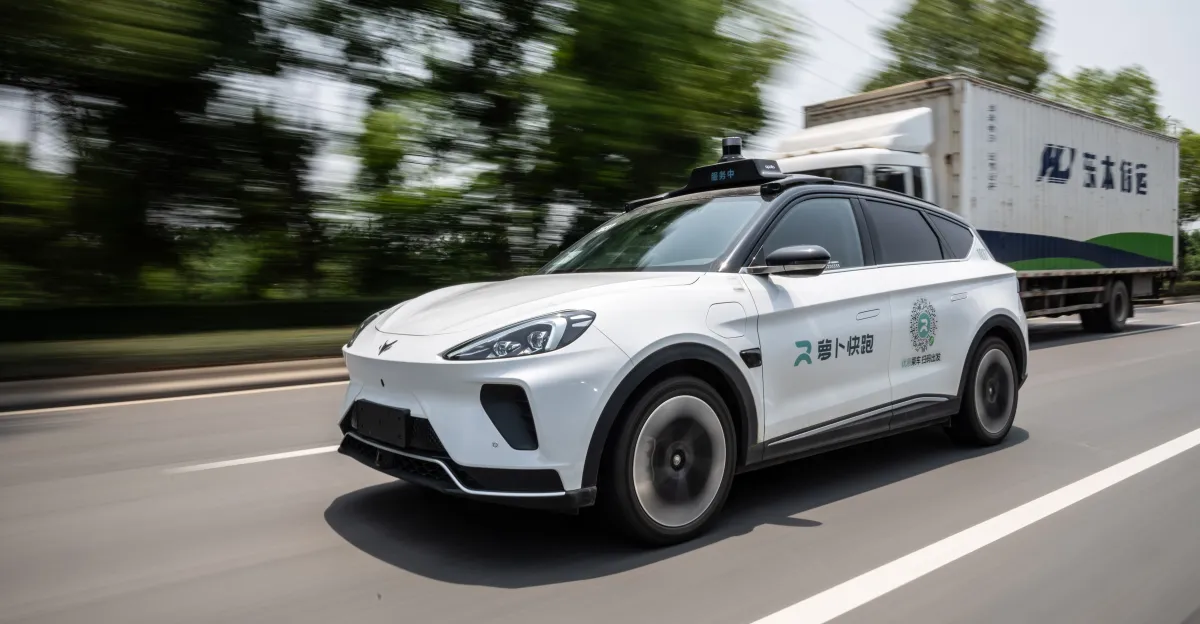

Baidu’s Robotaxi Fleet Crippled by System Failure in Wuhan, Raising Safety Concerns
Massive Outage Leaves Passengers Stranded on Highways as China Grapples with Autonomous Vehicle Risks
Wuhan, China – A major system failure in Baidu’s autonomous ride-hailing fleet left dozens of robotaxis immobilized across Wuhan on Tuesday, trapping passengers inside, disrupting traffic, and triggering renewed scrutiny over the safety of self-driving technology in one of the world’s most aggressive adopters of autonomous vehicles.
Eyewitnesses and local authorities reported scenes of chaos as Baidu’s Apollo Go vehicles—normally a symbol of China’s technological prowess—suddenly halted mid-journey, some on busy highways, forcing passengers to wait for emergency assistance. Police confirmed receiving multiple distress calls but reported no injuries. Preliminary investigations pointed to an unspecified “system failure” as the root cause, though neither Baidu nor local officials have disclosed technical details.
The incident has cast a shadow over China’s rapid push into autonomous mobility, raising critical questions about infrastructure readiness, regulatory oversight, and public trust in a sector where Baidu has positioned itself as a global leader.
Wuhan: A Robotaxi Hub Paralyzed
Wuhan, a central Chinese metropolis of over 12 million people, has been a flagship testing ground for Baidu’s autonomous ambitions. The company has deployed more than 500 driverless cars in the city, making it one of the largest robotaxi operations in the world. While the exact number of affected vehicles remains unclear, local media, citing sources close to the matter, estimated that at least 100 robotaxis were rendered inoperable during the outage.
Videos circulating on Chinese social media showed stranded passengers inside motionless vehicles, some on major thoroughfares, while others blocked intersections, exacerbating rush-hour congestion. In one instance, a stationary robotaxi was rear-ended by a human-driven car, though authorities confirmed only minor damage.
Baidu, often dubbed “China’s Google,” has yet to issue a detailed public statement. The company did not respond to immediate requests for comment from international media outlets, leaving passengers and industry observers searching for answers.
A Global Expansion Under Scrutiny
The Wuhan debacle comes at a pivotal moment for Baidu’s autonomous driving division, Apollo Go, which has aggressively expanded beyond China. The company operates robotaxis in 26 cities worldwide, including high-profile partnerships with Uber in London and Dubai.
China has positioned itself at the forefront of autonomous vehicle adoption, with supportive government policies and heavy investment in smart city infrastructure. However, Tuesday’s incident underscores the vulnerabilities of even the most advanced systems. Unlike isolated glitches reported by competitors like Waymo or Cruise in the U.S., Baidu’s fleet-wide failure suggests a systemic breakdown—raising alarms about scalability and fail-safe mechanisms.
“This wasn’t just one or two cars malfunctioning—it was a widespread outage,” said Li Wei, a Beijing-based transportation analyst. “When you have hundreds of vehicles freezing simultaneously, it points to a deeper issue, whether in software, connectivity, or centralized control.”
Public Trust and Regulatory Challenges
While no injuries were reported, the psychological impact on passengers could be lasting. Many riders, accustomed to seamless autonomous rides, described feeling helpless as their vehicles locked down without explanation.
“The car just stopped, and the screen went blank,” said one passenger, who asked not to be named. “There was no warning, no way to manually override it. We were stuck for nearly 20 minutes before help arrived.”
Chinese regulators have so far taken a measured stance, avoiding immediate punitive action but signaling the need for a thorough review. The Ministry of Transport has yet to issue an official response, though industry insiders expect tighter scrutiny on real-time monitoring and emergency protocols.
Internationally, the incident may embolden critics of rapid autonomous vehicle deployment. In the U.S. and Europe, where skepticism remains high following high-profile accidents involving self-driving cars, Baidu’s stumble could fuel calls for more rigorous stress-testing before large-scale rollouts.
The Road Ahead for Autonomous Mobility
Despite the setback, most analysts believe China’s push for autonomous dominance will continue unabated. Baidu and rivals like Pony.ai and WeRide are backed by substantial government and private investment, with robotaxis seen as a key component of future smart cities.
However, the Wuhan outage serves as a stark reminder that technological ambition must be matched by resilience. Experts suggest that redundancy systems—such as remote human oversight or manual override options—may need reinforcement to prevent similar incidents.
For now, Baidu faces the dual challenge of restoring confidence among passengers and reassuring global partners that its technology remains reliable. As cities worldwide watch closely, the incident may prove a pivotal moment—not just for Baidu, but for the future of autonomous transportation.
The promise of self-driving cars remains undimmed, but as Tuesday’s chaos in Wuhan showed, the road to full autonomy is still fraught with unexpected obstacles.
