


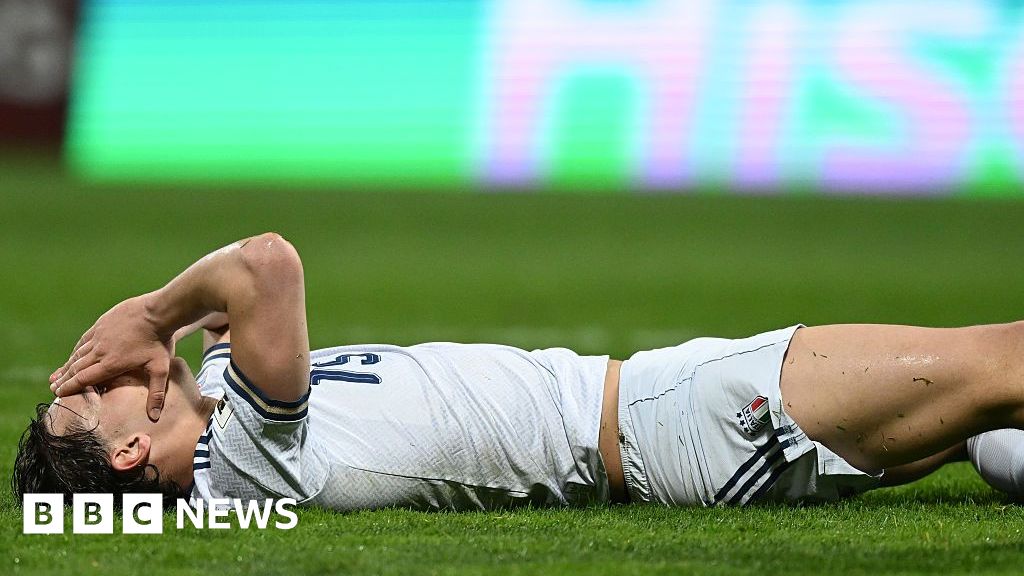

Italy’s World Cup Absence: A Crisis of Identity in Global Football
The roar of the Azzurri faithful has been silenced once more. For the third time in a row, Italy, a nation synonymous with footballing greatness, has failed to qualify for the FIFA World Cup. The humiliation of their latest defeat in the European playoffs has sent shockwaves through the footballing world, raising urgent questions about the decline of a once-dominant force in the sport. This isn’t just a setback for Italy—it’s a seismic event in the global football landscape, with implications that stretch far beyond the borders of Europe.
A Legacy in Crisis
Italy’s footballing history is laden with glory. Four-time World Cup winners, the Azzurri have long been a cornerstone of international football, boasting legendary players like Paolo Maldini, Francesco Totti, and Gianluigi Buffon. Their tactical nous, defensive mastery, and flair for dramatic moments have made them a perennial contender on the global stage. However, the past decade has been marked by a startling fall from grace.
The failure to qualify for the 2018 World Cup was seen as a historic low, but the repetition of this failure in 2022 and now 2026 suggests a deeper crisis. This isn’t merely a blip—it’s a systemic issue that has left fans, analysts, and officials scrambling for answers. The loss to North Macedonia in the 2022 playoffs was a bitter pill to swallow, and the latest defeat in the 2026 qualifiers has only compounded the pain. Italy, once a titan of the sport, is now a shadow of its former self.
Global Context: The Shifting Sands of Football Power
Italy’s decline mirrors broader shifts in the global football landscape. The traditional powerhouses of Europe—Italy, Germany, and Spain—are no longer the invincible forces they once were. Meanwhile, emerging nations like Morocco, Croatia, and Japan have proven their ability to compete at the highest level, signaling a democratization of the sport.
The rise of club football’s dominance, particularly in Europe, has also played a role. Leagues like the Premier League and Serie A have become lucrative hubs for international talent, but this has come at the expense of national teams. Young Italian players often struggle to break into top-tier clubs, leading to a talent drain that has weakened the national squad. Additionally, the increasing physicality and pace of modern football have exposed Italy’s reliance on outdated tactical approaches.
Why This Matters Globally
Italy’s absence from the World Cup sends ripples across the footballing world. The tournament thrives on the participation of historic teams, whose rivalries and star power draw millions of viewers. Without Italy, the World Cup loses a key narrative thread, diminishing its cultural and commercial appeal.
For FIFA, this raises concerns about the competitiveness of its flagship event. The governing body has already introduced expanded formats and intercontinental playoffs to ensure broader participation, but Italy’s absence underscores the unpredictability of modern football. It also highlights the challenges faced by traditional powers in adapting to a rapidly evolving sport.
On a broader level, Italy’s failure is a cautionary tale for other footballing nations. It serves as a reminder that no team, no matter how storied its history, is immune to decline. The pressures of maintaining excellence in an increasingly competitive environment are immense, and Italy’s struggles offer valuable lessons for the global football community.
The Human Cost: A Nation’s Disappointment
Beyond the statistics and strategic implications lies the human element. For Italian fans, the World Cup is more than just a tournament—it’s a source of national pride and identity. The Azzurri’s successes have united the country in moments of joy, while their failures have left a profound sense of loss.
The emotional toll on players and management is equally significant. Figures like coach Luciano Spalletti and captain Gianluigi Donnarumma now bear the weight of this disappointment. Spalletti, who took over the team in the wake of their Euro 2020 triumph, faces mounting pressure to reverse the nation’s fortunes. Meanwhile, Donnarumma, once heralded as the heir to Buffon’s legacy, must grapple with the reality of leading a team in crisis.
The Road Ahead: Can Italy Rebuild?
The path forward for Italian football is fraught with challenges. Immediate priorities include overhauling the youth development system, fostering greater tactical flexibility, and ensuring that young Italian players have opportunities to shine at home and abroad. The Italian Football Federation (FIGC) must also address internal issues, from governance to financial stability, that have hindered progress.
There are glimmers of hope. Italy’s triumph at Euro 2020 demonstrated that the team remains capable of brilliance, even if it struggles with consistency. The emergence of young talents like Nicolò Zaniolo and Giorgio Scalvini offers a foundation for renewal. However, rebuilding the Azzurri’s reputation will require sustained effort and a shift in mindset, both on and off the pitch.
Conclusion: A Wake-Up Call for Football’s Elite
Italy’s failure to qualify for the 2026 World Cup is more than just a national tragedy—it’s a global wake-up call. It underscores the fragility of sporting dominance and the need for constant evolution in an ever-changing landscape. For Italy, the road to redemption will be long and arduous, but the lessons learned from this crisis could shape the future of football worldwide.
As the dust settles on another painful exit, one thing is clear: the beautiful game waits for no one. Italy’s absence from the World Cup is a stark reminder that even the mightiest can fall—and that rebuilding requires humility, vision, and an unwavering commitment to excellence. The Azzurri’s journey back to the summit of football will be watched closely by the world, not just as a story of struggle, but as a testament to the enduring spirit of the sport.
