


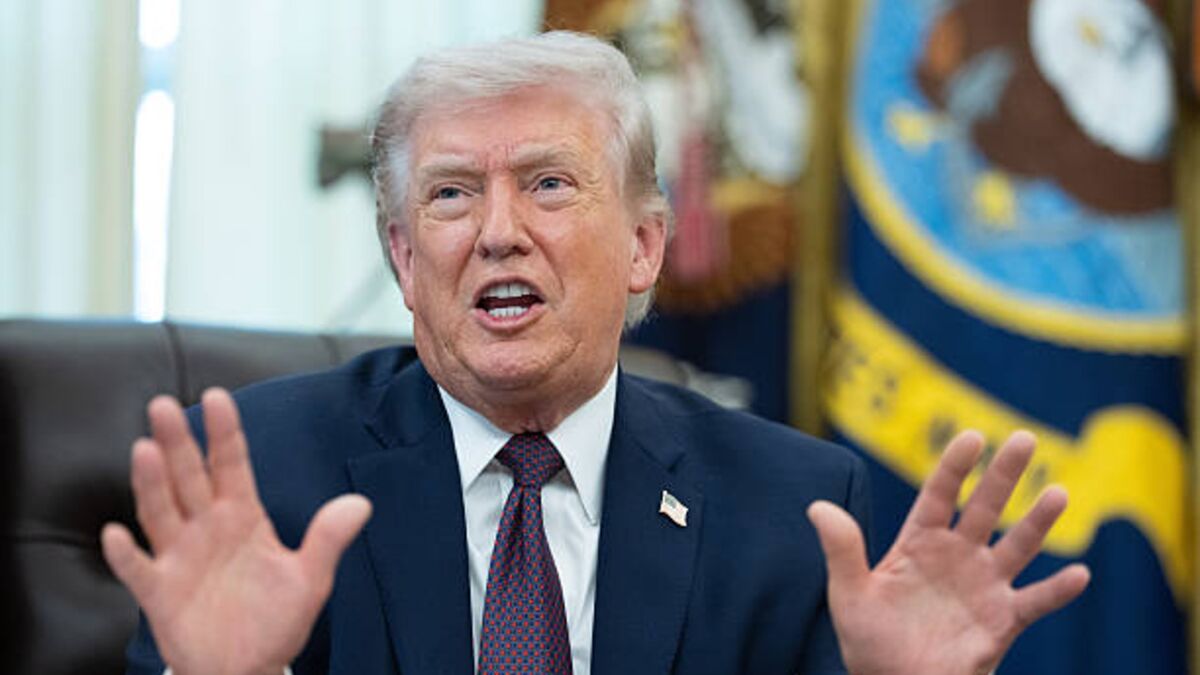

President Trump to Address Nation on Iran Crisis: What to Expect
Washington, D.C. — In a high-stakes moment for U.S. foreign policy, President Donald Trump is set to address the nation at 9 p.m. ET from the Oval Office on the escalating tensions with Iran. This primetime speech comes at a critical juncture in the Middle East, where recent military actions have raised fears of a broader conflict. The President is expected to provide an operational and tactical update on Operation Epic Fury, a U.S. military campaign targeting Iranian-backed forces in the region. As the world watches, questions loom over the administration’s next steps and the potential geopolitical fallout.
The backdrop to this address is a series of dramatic events that have unfolded over the past week. On January 3rd, a U.S. drone strike killed Qasem Soleimani, Iran’s top military commander and head of the Islamic Revolutionary Guard Corps’ elite Quds Force. Soleimani’s death marked a significant escalation in the longstanding animosity between Washington and Tehran. The Iranian government vowed severe retaliation, and on January 8th, it launched missile strikes on two Iraqi military bases housing U.S. troops. While no American casualties were reported, the attack underscored the volatility of the situation.
President Trump’s speech is anticipated to address these developments and outline the administration’s strategy moving forward. Senior officials have described the address as a “comprehensive update” on the U.S. military’s actions in the region, with a focus on Operation Epic Fury. The operation, launched in the wake of Soleimani’s killing, aims to degrade Iranian-backed militia groups and prevent further attacks on U.S. interests. However, details remain scarce, and the President’s remarks will likely shed light on the scope and objectives of the mission.
The Middle East has long been a flashpoint for geopolitical tensions, and the current crisis underscores the fragile balance of power in the region. Iran, a key player in the Middle East, has cultivated a network of proxy groups across Iraq, Syria, Lebanon, and Yemen. These militias have been instrumental in advancing Tehran’s strategic interests, often at odds with U.S. allies like Israel and Saudi Arabia. The killing of Soleimani, who was seen as the architect of Iran’s proxy warfare, has disrupted this dynamic but also heightened the risk of retaliation.
Meanwhile, the U.S. has faced criticism from both allies and opponents for its handling of the crisis. Some experts argue that the drone strike on Soleimani was a precipitous move that could lead to unintended consequences. Others contend that it was a necessary measure to counter Iran’s destabilizing activities in the region. The Trump administration has defended its actions, stating that Soleimani was planning imminent attacks on U.S. personnel and embassies. However, the lack of publicly available evidence has fueled skepticism and debate.
Domestically, President Trump’s approach to Iran has also drawn mixed reactions. Supporters praise his willingness to take decisive action against a regime they view as a threat to global security. Critics, however, warn that his administration’s aggressive posture could drag the U.S. into another protracted conflict in the Middle East. The upcoming address will be closely scrutinized for its tone and substance, as it could shape public opinion and influence the trajectory of U.S. foreign policy.
Internationally, the crisis has reverberated far beyond the Middle East. Key allies in Europe, including the United Kingdom and Germany, have called for de-escalation and urged both sides to exercise restraint. The United Nations Secretary-General, António Guterres, has expressed deep concern over the potential for a wider war and emphasized the need for dialogue. Meanwhile, China and Russia have seized the opportunity to criticize U.S. actions, positioning themselves as vocal opponents of American interventionism.
As President Trump prepares to speak, analysts are weighing the possible scenarios that could unfold. Some argue that the administration may use this moment to reaffirm its commitment to countering Iranian influence, potentially signaling further military action. Others speculate that the President could pivot toward a more conciliatory approach, offering an olive branch in the form of diplomatic negotiations. The address could also serve as a platform for Trump to rally domestic support and frame the conflict in the context of his broader foreign policy agenda.
This crisis comes at a pivotal time for President Trump, who is entering an election year and faces growing scrutiny over his handling of foreign affairs. His administration’s approach to Iran will undoubtedly be a key issue on the campaign trail, with opponents likely to seize on any missteps or misjudgments. The President’s ability to navigate this complex geopolitical landscape could have far-reaching implications, not only for U.S. national security but also for his political future.
As the world awaits President Trump’s address, the stakes could not be higher. The Middle East remains a tinderbox, and any miscalculation could spark a wider conflict with devastating consequences. The President’s words tonight will be dissected for their implications on U.S. strategy, regional stability, and global geopolitics. Whether this moment marks a turning point or a continuation of the status quo remains to be seen, but one thing is certain: the eyes of the world are on Washington tonight.
In a region fraught with tension and uncertainty, the path forward is anything but clear. While President Trump’s address may provide some clarity, it is unlikely to resolve the deep-seated issues at the heart of the U.S.-Iran conflict. As diplomats, military leaders, and citizens alike brace for what comes next, the hope for de-escalation remains tempered by the reality of a volatile and unpredictable landscape.
