


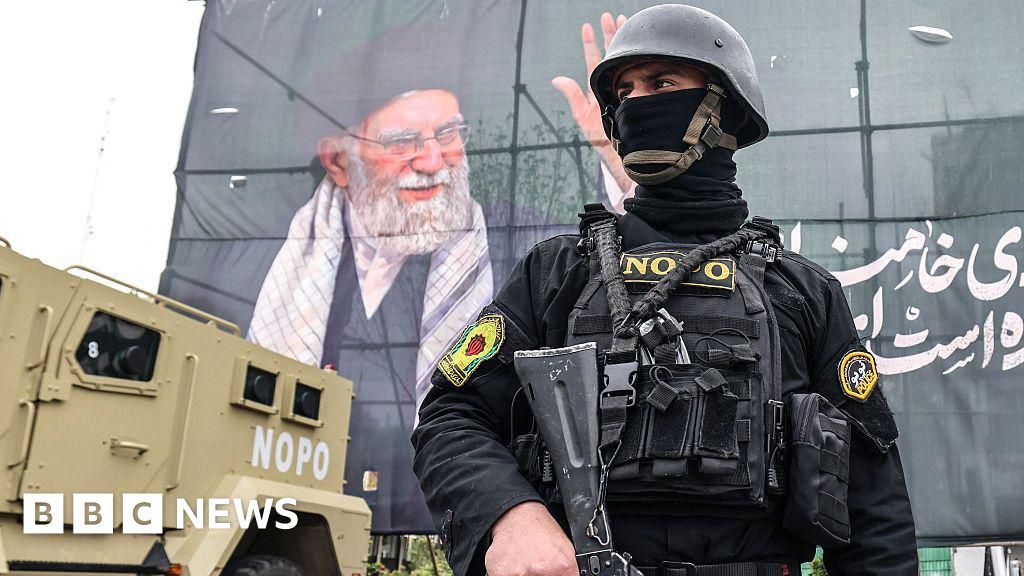

Iran’s Defiance Amid Escalating Geopolitics: A New Chapter in Global Tensions
In the heart of the Middle East, Iran stands as a defiant bulwark against mounting international pressure, shrugging off threats of regime change while navigating a precarious geopolitical landscape. Despite former U.S. President Donald Trump’s bold assertions that Tehran’s leadership would crumble under sanctions and isolation, Iran’s endurance continues to challenge expectations. This unfolding scenario is not just a regional power play; it is a critical chapter in the global narrative of war, security, and diplomacy, with implications that ripple far beyond the Persian Gulf.
The U.S.-Iran Standoff: A Legacy of Escalation
The roots of the current tension trace back to the Trump administration’s “maximum pressure” campaign, which sought to cripple Iran’s economy through sweeping sanctions. The withdrawal from the 2015 Joint Comprehensive Plan of Action (JCPOA), commonly known as the Iran nuclear deal, marked a turning point in U.S.-Iran relations. The deal, which aimed to curb Iran’s nuclear program in exchange for sanctions relief, was hailed as a diplomatic breakthrough under President Obama. However, Trump’s unilateral exit in 2018 reignited hostilities, with Iran gradually ramping up its uranium enrichment and reducing compliance with the agreement.
Since then, the relationship has been marred by provocations, including attacks on oil tankers, the downing of a U.S. drone, and the high-profile assassination of Iranian General Qasem Soleimani by a U.S. drone strike in 2020. These incidents have kept the region on edge, with fears of a full-scale conflict repeatedly surfacing. Yet, Tehran has shown remarkable resilience, adapting to economic pressures and maintaining its strategic influence across the Middle East.
Global Implications: A Test for Diplomacy and Stability
The U.S.-Iran standoff is not merely a bilateral issue; it is a litmus test for global diplomacy and security. Iran’s nuclear program remains a flashpoint, with Western powers and regional rivals like Israel and Saudi Arabia deeply concerned about the potential for a nuclear-armed Iran. The International Atomic Energy Agency (IAEA) has reported escalating uranium enrichment levels, raising alarms about Tehran’s intentions.
Moreover, Iran’s influence in the Middle East—through its support for proxy groups in Yemen, Syria, Lebanon, and Iraq—complicates efforts to achieve regional stability. The ongoing conflict in Gaza and escalating tensions between Israel and Hezbollah, an Iranian-backed militant group, underscore the interconnectedness of these crises. For the international community, Iran’s actions and the responses of Western powers carry significant implications for energy security, global trade routes, and the broader balance of power in the Middle East.
Human Cost: Sanctions and Suffering
While Iran’s leadership remains steadfast, the country’s population bears the brunt of economic sanctions. Inflation, unemployment, and shortages of essential goods have created widespread hardship. The Iranian government has attempted to mitigate these effects through trade partnerships with countries like China and Russia, but the impact on everyday life remains severe.
The sanctions have also deepened mistrust between Iran and the West, complicating diplomatic efforts. Despite calls for renewed negotiations, progress has been slow. The Biden administration has expressed a willingness to re-engage with Tehran, but trust-building remains a significant hurdle. Meanwhile, Iran’s presidential elections in 2021 brought Ebrahim Raisi, a hardline conservative, to power, further complicating the prospect of a détente.
Resilience and Rhetoric: Tehran’s Strategy
Iran’s ability to withstand external pressures can be attributed to a combination of domestic resilience and strategic maneuvering. Domestically, the government has maintained control through a mix of repression and nationalism, leveraging anti-Western sentiment to rally public support. Externally, Tehran has diversified its alliances, deepening ties with China and Russia while engaging in regional diplomacy.
The ongoing negotiations to revive the JCPOA highlight Iran’s dual approach of defiance and diplomacy. While Tehran has demanded the lifting of sanctions as a precondition for any agreement, it has also signaled openness to dialogue. This balancing act reflects Iran’s recognition of the stakes involved—not just for its own survival but for the broader geopolitical order.
Why This Matters: A Global Perspective
The Iran-U.S. conflict is emblematic of broader shifts in global power dynamics. It underscores the challenges of multilateral diplomacy in an era of rising nationalism and great-power competition. For the European Union, the situation poses a dilemma: how to balance transatlantic solidarity with a commitment to peaceful resolution. For China and Russia, Iran serves as a strategic partner in countering U.S. influence, further complicating the geopolitical landscape.
Moreover, the crisis highlights the limits of economic sanctions as a tool of coercion. While sanctions have undoubtedly weakened Iran’s economy, they have failed to achieve their stated objective of regime change. This raises critical questions about the efficacy of such measures in shaping the behavior of adversarial states.
Conclusion: A World Watching Closely
As Iran continues to navigate the storm of sanctions and geopolitical pressure, the world watches closely. The outcome of this protracted standoff will shape not only the future of the Middle East but also the contours of global security and diplomacy. Will diplomacy prevail, or will the cycle of escalation continue? The answer will depend on the willingness of all parties to prioritize restraint over rhetoric and collaboration over confrontation.
In a world grappling with unprecedented challenges—from climate change to the rise of authoritarianism—the Iran-U.S. conflict serves as a stark reminder of the fragility of peace and the enduring importance of dialogue. The stakes are high, and the clock is ticking. The world cannot afford to look away.
