



Microsoft AI Unveils Trio of Cutting-Edge Foundational Models in Bid to Reshape Multimodal AI Landscape
By [Your Name], Global Technology Correspondent
June 6, 2026 — In a bold move signaling its ambitions to dominate the rapidly evolving artificial intelligence sector, Microsoft AI has unveiled three groundbreaking foundational models capable of generating text, speech, and images with unprecedented speed and efficiency. The release marks a significant escalation in the tech giant’s strategy to expand its proprietary AI stack while maintaining its deep-rooted partnership with OpenAI—a balancing act that underscores the fierce competition reshaping the global AI industry.
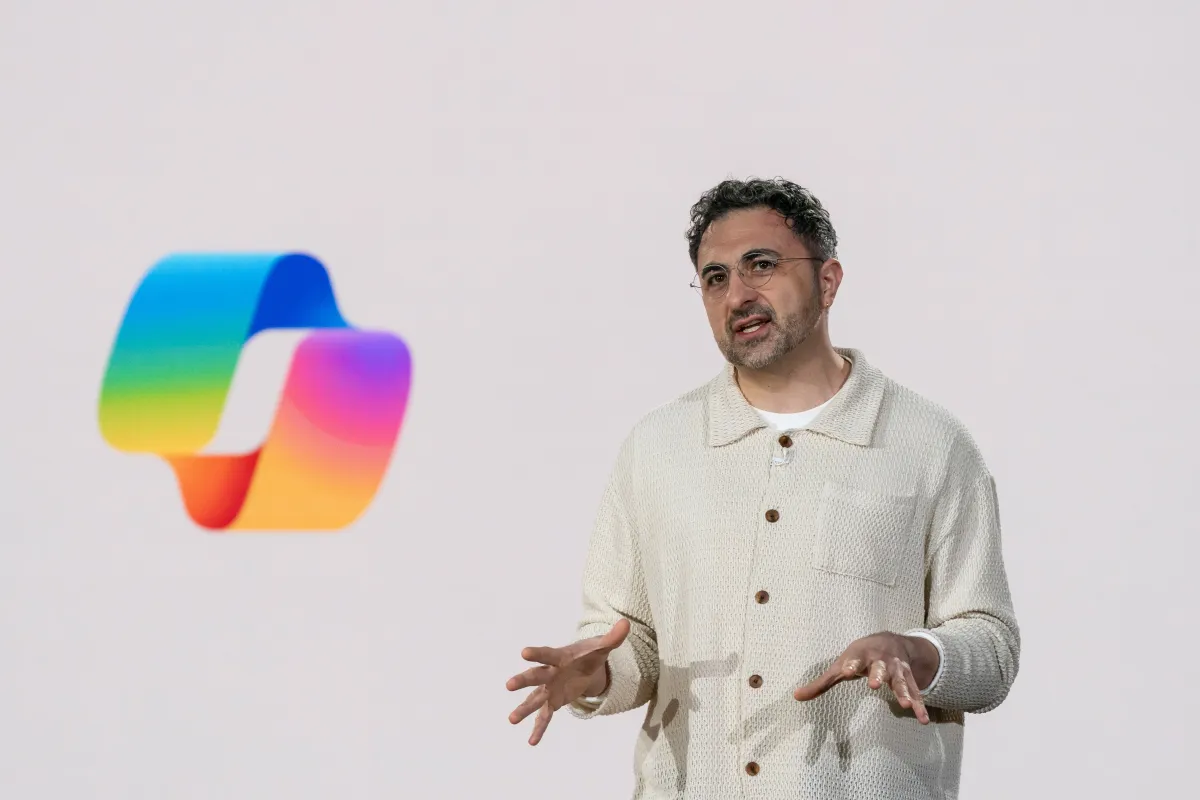
The newly launched models—MAI-Transcribe-1, MAI-Voice-1, and MAI-Image-2—are designed to cater to enterprise and developer needs, offering multimodal capabilities at competitive pricing. Developed by Microsoft’s MAI Superintelligence team, led by CEO Mustafa Suleyman, these tools promise to revolutionize content creation, transcription, and synthetic media generation.
A Leap Forward in AI Performance
At the forefront of the release is MAI-Transcribe-1, a speech-to-text model supporting 25 languages and boasting a processing speed 2.5 times faster than Microsoft’s existing Azure Fast transcription service. This advancement could significantly enhance real-time translation, call center analytics, and accessibility tools for global businesses.
Meanwhile, MAI-Voice-1 introduces a powerful text-to-speech engine capable of generating 60 seconds of high-fidelity audio in just one second, with customization options for unique synthetic voices—a feature poised to disrupt industries from audiobook production to virtual assistants.
The third model, MAI-Image-2, builds on its initial March 2026 debut in MAI Playground, Microsoft’s experimental AI testing platform. Now integrated into Microsoft Foundry, the company’s enterprise AI hub, this image and video generation model offers enhanced fidelity and efficiency, positioning itself as a rival to OpenAI’s DALL·E and Google’s Imagen.
Strategic Pricing and Market Positioning
In a market dominated by costly AI solutions, Microsoft is aggressively undercutting competitors. MAI-Transcribe-1 starts at $0.36 per hour, while MAI-Voice-1 is priced at $22 per million characters. MAI-Image-2 adopts a dual-token system, charging $5 per million tokens for text input and $33 per million tokens for image output—a structure aimed at attracting cost-sensitive developers and enterprises.
“At Microsoft AI, we’re building Humanist AI—models optimized for how people actually communicate, not just raw technical benchmarks,” Suleyman emphasized in a company blog post. The approach reflects Microsoft’s broader vision of practical, human-centric AI, a philosophy that differentiates it from rivals focused purely on scale.
Navigating the OpenAI Partnership
Despite its push for independence, Microsoft remains deeply intertwined with OpenAI, having invested over $13 billion in the research lab. A recent renegotiation of their partnership, however, has granted Microsoft greater flexibility to pursue its own superintelligence initiatives—a move Suleyman described as “liberating” in an interview with The Verge.
Industry analysts suggest this dual-track strategy—leveraging OpenAI’s innovations while developing in-house alternatives—mirrors Microsoft’s approach to hardware, where it both designs its own AI chips and procures from NVIDIA and AMD.
The Broader AI Arms Race
The release intensifies an already cutthroat battle among tech titans. Google’s Gemini, OpenAI’s GPT-6, and Meta’s Llama-4 have all pushed multimodal AI to new heights in recent months. Yet Microsoft’s latest offerings underscore its determination to avoid over-reliance on external partners—a lesson learned after antitrust scrutiny of its OpenAI ties.
Experts warn, however, that differentiation in the crowded large language model (LLM) market will hinge on more than just cost. “Ease of integration, ethical safeguards, and real-world applicability will determine long-term adoption,” said Dr. Elena Rodriguez, an AI ethics researcher at Stanford.
What’s Next for Microsoft AI?
Suleyman hinted at more releases in the pipeline, with future models expected to debut in Foundry and directly within Microsoft’s product ecosystem, including Copilot, Teams, and Azure AI services. The company is also reportedly exploring AI-powered robotics and autonomous systems, though details remain scarce.
As the AI landscape fractures into competing ecosystems, Microsoft’s latest gambit demonstrates its resolve to remain a leader—not just a facilitator—in the AI revolution. Whether this strategy will solidify its dominance or stretch its resources too thin, however, remains an open question.
For now, one thing is clear: The race for AI supremacy is far from over, and Microsoft is playing to win.
