


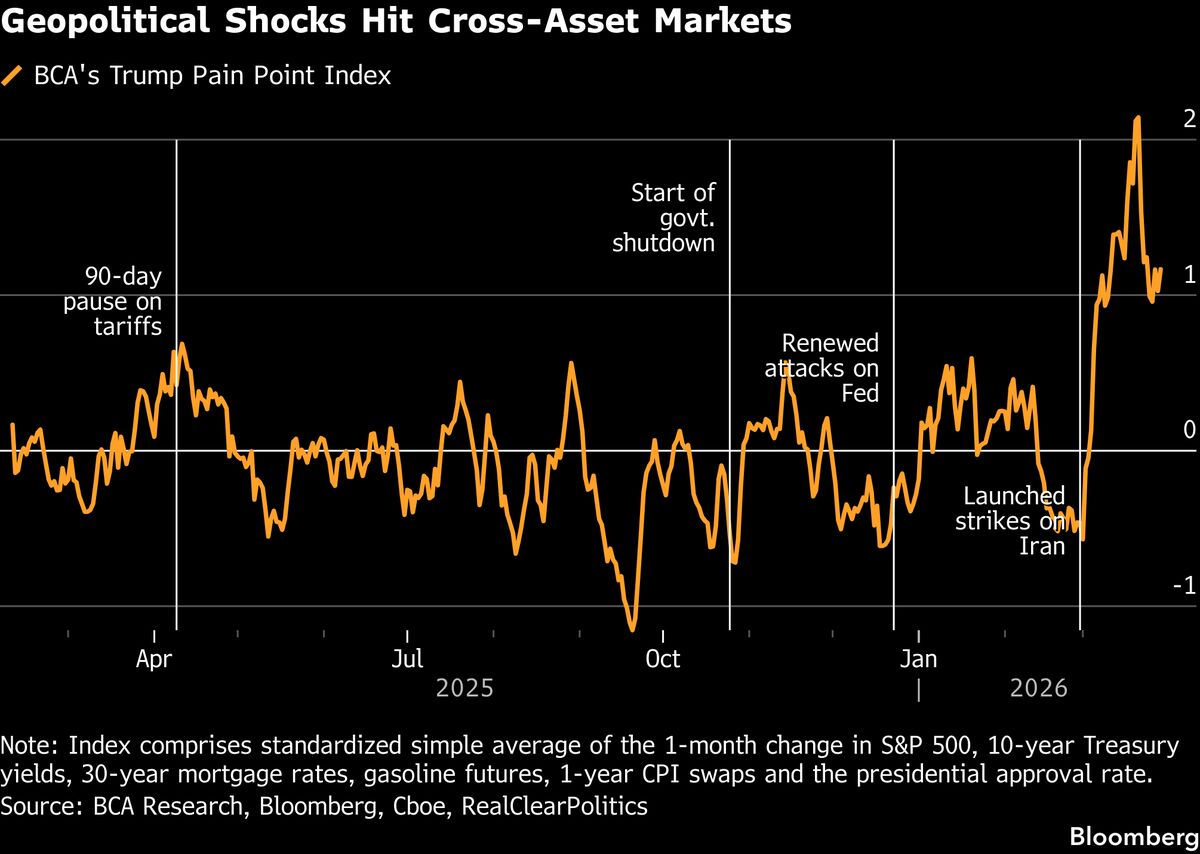

Global Markets in Turmoil as Iran Conflict Sparks Trillion-Dollar Losses, Oil Price Surge, and Inflation Uncertainties
The escalating conflict between Israel and Iran has unleashed chaos across global financial markets, wiping trillions of dollars off stock valuations, pushing oil prices above $100 a barrel, and forcing investors to recalibrate their expectations for inflation and interest rates. What began as a regional geopolitical dispute has rapidly evolved into a full-blown economic crisis, with ripple effects felt across industries and continents. Five weeks into the conflict, the world is grappling with the consequences of a protracted war that shows no signs of abating.
A Deepening Crisis with Global Ramifications
The conflict erupted in early October following a series of targeted strikes by Israel on Iranian-backed militias in Syria and Iraq. Iran retaliated with missile attacks on Israeli military installations, escalating tensions between the two nations. The situation quickly spiraled into a broader regional conflict, drawing in neighboring countries and destabilizing an already volatile Middle East.
As the war intensified, global markets responded with alarm. Over the past five weeks, the MSCI World Index, a benchmark for global equities, has plunged by nearly 15%, erasing approximately $5 trillion in market value. The sell-off has been particularly pronounced in sectors sensitive to geopolitical risks, including energy, technology, and financial services. Investors, fearing prolonged instability, have rushed to safer assets such as gold and U.S. Treasuries, driving bond yields lower.
Oil Prices Soar Past $100, Inflation Fears Mount
One of the most immediate and far-reaching consequences of the conflict has been the surge in oil prices. Brent crude, the international benchmark, breached the $100-per-barrel mark in the second week of the conflict and has remained elevated ever since. This marks the first time since 2014 that oil prices have consistently traded above this threshold.
Iran, a major oil producer and exporter, has seen its output severely disrupted due to sanctions and infrastructure damage caused by Israeli airstrikes. Additionally, fears of a blockade of the Strait of Hormuz—a critical chokepoint for global oil shipments—have further fueled supply concerns. Analysts warn that sustained high oil prices could exacerbate inflationary pressures, complicating efforts by central banks to tame rising prices.
“The conflict has effectively thrown a wrench into the global economic recovery,” said Sarah Thompson, Chief Economist at Global Insights. “Higher energy costs are translating into higher production and transportation expenses, which will inevitably trickle down to consumers.”
Central Banks in a Bind
The Federal Reserve and other major central banks now face a delicate balancing act. Prior to the conflict, policymakers had signaled a gradual easing of interest rate hikes as inflation appeared to be moderating. However, the spike in oil prices and broader economic uncertainty have forced a reassessment of this approach.
“Inflation expectations are being repriced across the board,” noted Michael Chen, Head of Fixed Income at Aurora Capital. “The risk of stagflation—a combination of stagnant growth and high inflation—is now a very real possibility.”
Financial markets are pricing in a higher probability of additional rate hikes in the coming months, which could further dampen economic activity and weigh on corporate earnings. This shift in sentiment has led to a repricing of bonds, with yields on long-term U.S. Treasuries climbing sharply.
Regional and Global Economic Fallout
Beyond the immediate impact on financial markets, the conflict has had profound consequences for regional economies. Israel, a hub for technology and innovation, has seen its GDP forecasts revised sharply downward as businesses grapple with supply chain disruptions and reduced consumer confidence. Neighboring countries, including Jordan and Egypt, have also felt the strain, with tourism revenues plummeting and foreign investment drying up.
For Iran, already reeling from years of economic sanctions, the war has exacerbated its financial woes. The country’s currency, the rial, has hit record lows against the dollar, and inflation has soared past 50%, further eroding living standards for its citizens.
The European Union, heavily reliant on Middle Eastern oil imports, has also been affected. Rising energy costs have added pressure to an economy already struggling with sluggish growth and high debt levels. Meanwhile, emerging markets, particularly those dependent on oil imports, are facing severe balance-of-payments challenges.
A Fragile Global Recovery Under Threat
The conflict has cast a shadow over a global economy still recovering from the shocks of the COVID-19 pandemic and the war in Ukraine. While the U.S. and China have demonstrated resilience in recent months, the latest crisis threatens to derail this momentum.
“The timing couldn’t be worse,” said David Richards, a senior analyst at Brookings Institution. “The global economy was just beginning to regain its footing, but this conflict has introduced a new layer of uncertainty that could take months, if not years, to fully resolve.”
Looking Ahead: Uncertainty and Risks
As the conflict enters its second month, the outlook remains highly uncertain. Diplomatic efforts led by the United Nations and key regional powers have so far failed to broker a ceasefire, raising concerns of a protracted war.
In the meantime, businesses and investors are bracing for further volatility. Analysts caution that the situation could deteriorate further if the conflict spills over into other parts of the Middle East or draws in major global powers.
“The stakes are incredibly high,” said Thompson. “The longer this war continues, the greater the risk of a full-blown global economic crisis.”
As the world watches anxiously, one thing is clear: the ripple effects of this conflict will be felt for years to come, reshaping economies, markets, and geopolitical alliances in profound and unpredictable ways.
The path forward remains unclear, but the need for decisive action—both on the battlefield and in the boardroom—has never been more urgent.
