


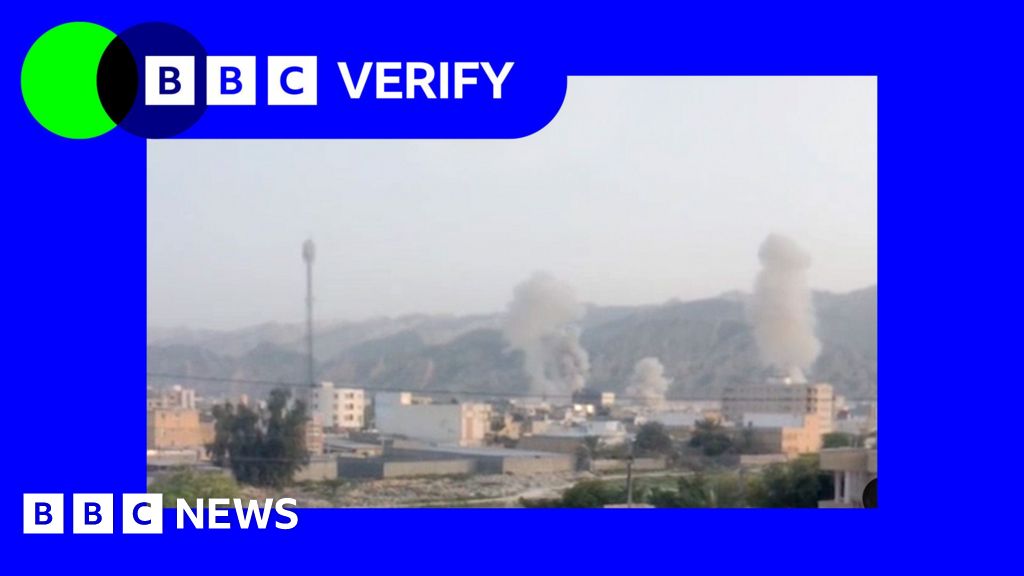

Missile Strike in Iran Sparks Global Tensions Amid Rising Conflict Risks
Explosive Attack in Lamerd Raises Alarms
A missile strike rocked the quiet Iranian town of Lamerd on February 28, sending shockwaves through the region and heightening fears of a broader conflict. Dramatic CCTV footage, verified by BBC Verify, captured the moment an unidentified munition detonated above a residential area, leaving destruction in its wake. Military analysts suggest the weapon may have been a U.S. missile, citing its trajectory, blast radius, and proximity to American military installations in the Middle East. The incident comes at a time of escalating tensions between Iran and Western powers, raising urgent questions about accountability and the potential for further violence.
The Attack: What We Know
The strike occurred without warning, striking a civilian area in Lamerd, a town in southern Iran’s Fars province. Iranian state media released footage showing the projectile mid-flight before impact, with experts analyzing its flight path and explosive yield. While no group has claimed responsibility, initial assessments point to a high-precision missile, possibly launched from a U.S. warship or regional base.
Iranian officials have condemned the attack as an act of aggression, though Washington has yet to issue an official statement. If confirmed as a U.S. operation, the strike could signal a dangerous escalation in covert or retaliatory actions between the two adversaries.
Global Context: A Tinderbox of Geopolitical Rivalries
The Middle East remains a powder keg of competing interests, with Iran at the center of multiple proxy conflicts. The U.S. and its allies have long accused Tehran of destabilizing activities, including support for militant groups in Yemen, Syria, and Lebanon. In response, Washington has maintained a policy of economic sanctions and occasional military strikes, such as the 2020 assassination of Iranian General Qasem Soleimani.
Meanwhile, Iran has bolstered ties with Russia and China, deepening its resistance to Western pressure. The Lamerd strike, if linked to the U.S., could provoke retaliatory measures—ranging from cyberattacks to proxy militia strikes on American assets in Iraq or Syria. The risk of miscalculation is high, with global markets already sensitive to disruptions in the oil-rich Persian Gulf.
Why This Matters Beyond the Middle East
The implications of this attack extend far beyond Iran’s borders. A confirmed U.S. strike inside Iranian territory—without a declared military operation—could strain already fragile diplomatic relations and trigger a new wave of instability. Key concerns include:
- Energy Security: Any major conflict could disrupt oil shipments through the Strait of Hormuz, a critical chokepoint for global energy supplies.
- Nuclear Negotiations: Efforts to revive the Iran nuclear deal (JCPOA) may collapse, pushing Tehran closer to uranium enrichment.
- Alliance Dynamics: U.S. allies in Europe and the Gulf are divided on how to engage with Iran, complicating unified responses.
- Human Cost: Civilian casualties risk inflaming anti-Western sentiment, fueling recruitment for extremist groups.
Unanswered Questions and Future Risks
Despite mounting evidence, key details remain unclear. Was this a targeted operation, or an errant missile? If the U.S. was involved, was it a response to a specific Iranian action, such as recent attacks on American troops? Alternatively, could another actor—such as Israel—have conducted the strike to provoke confrontation?
The lack of transparency increases the danger of unintended escalation. Both Iran and the U.S. have previously engaged in tit-for-tat strikes, but direct attacks on sovereign territory mark a dangerous threshold. With Iran’s presidential election approaching in 2025, hardliners may exploit the incident to justify a more aggressive posture.
Conclusion: A World on Edge
The Lamerd missile strike is more than a localized event—it is a potential flashpoint in an increasingly volatile global landscape. As diplomatic channels remain strained, the risk of a wider conflict looms larger. The international community must demand clarity, restraint, and de-escalation before another spark ignites an uncontrollable fire. In an era where one strike can alter the course of geopolitics, the world watches—and waits—with bated breath.
