


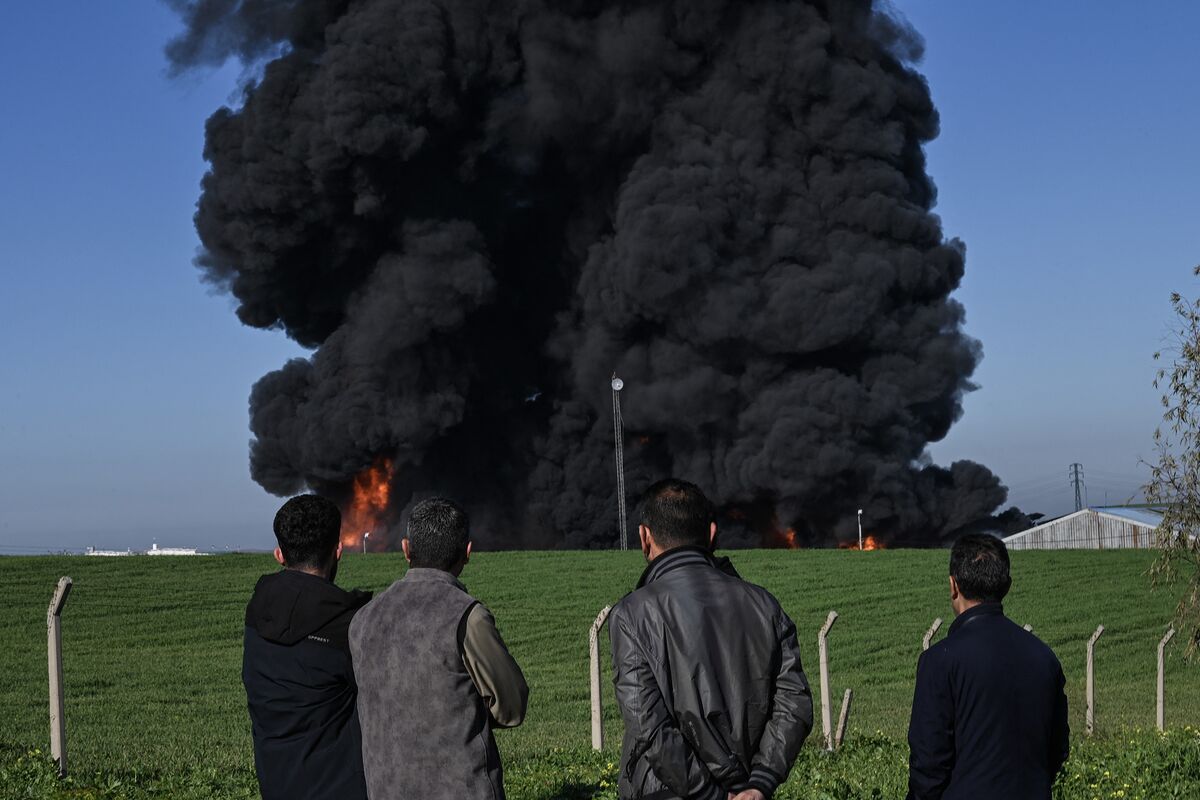

Oil Prices Surge Amid Escalating Tensions Between U.S. and Iran Over Strait of Hormuz
Global oil markets experienced a sharp uptick on Tuesday as geopolitical tensions between the United States and Iran reached a boiling point. President Donald Trump issued a stark ultimatum to Tehran, warning of potential strikes on Iranian power plants and civilian infrastructure if the Strait of Hormuz—a critical maritime chokepoint for global oil shipments—remains closed. The threat, delivered via a series of tweets, sent shockwaves through financial markets, driving Brent crude prices up by nearly 3%, marking one of the most significant single-day gains in recent weeks.
The Strait of Hormuz, often referred to as the world’s most important oil transit route, handles an estimated 21 million barrels of oil per day, accounting for nearly one-third of global seaborne oil trade. Any disruption to this vital waterway has far-reaching implications, not only for energy markets but also for the global economy. Iran’s repeated threats to close the strait in response to U.S. sanctions have long been a source of anxiety for energy traders and policymakers alike. However, President Trump’s latest warning has escalated the situation to a new level of urgency.
A Familiar Flashpoint in U.S.-Iran Relations
The Strait of Hormuz has been a focal point of U.S.-Iran tensions for decades, but recent developments have brought the region to the brink of a full-blown crisis. The U.S. administration reinstated crippling economic sanctions on Iran in 2018 after withdrawing from the landmark 2015 nuclear deal, formally known as the Joint Comprehensive Plan of Action (JCPOA). These sanctions have severely impacted Iran’s economy, leading to soaring inflation, a devalued currency, and widespread unrest. In response, Iran has sought to leverage its strategic position in the Persian Gulf, flirting with the idea of disrupting oil flows through the strait as a retaliatory measure.
The situation took a dramatic turn earlier this year when Iran seized a British-flagged oil tanker in the strait, escalating tensions with the West. The U.S. responded by deploying additional military assets to the region, including aircraft carriers and bombers, as part of its “maximum pressure” campaign against Tehran. President Trump’s latest threat to target Iranian civilian infrastructure represents a significant escalation, raising concerns about the potential for military confrontation.
Market Reactions and Broader Implications
The immediate impact of President Trump’s ultimatum was felt in energy markets, where Brent crude futures surged to $65 per barrel, their highest level in over a month. Analysts warn that prolonged tensions could push prices even higher, particularly if Iran follows through on its threats to block the strait. “The Strait of Hormuz is the linchpin of global energy security,” said John Kilduff, a partner at Again Capital LLC. “Any disruption there could send oil prices skyrocketing, with ripple effects across the global economy.”
Beyond the immediate impact on oil prices, the escalating tensions between the U.S. and Iran carry broader geopolitical implications. The Persian Gulf region is home to some of the world’s largest oil producers, including Saudi Arabia, the United Arab Emirates, and Iraq, all of which rely on the strait to export their crude. A prolonged shutdown could force these countries to seek alternative routes, such as pipelines or land-based transportation, but these options are often limited and costly.
Moreover, the crisis has reignited debates about global energy security and the need to diversify supply chains. While the U.S. has emerged as a leading oil exporter in recent years, thanks to the shale revolution, its ability to offset disruptions in the Persian Gulf remains uncertain. “The U.S. is not immune to the fallout from a Strait of Hormuz closure,” said Amy Myers Jaffe, director of the Council on Foreign Relations’ Energy Security and Climate Change Program. “Even with increased domestic production, we remain deeply interconnected with global energy markets.”
International Reactions and Diplomatic Fallout
President Trump’s latest threat has drawn sharp criticism from international leaders and analysts, who warn that targeting civilian infrastructure could violate international humanitarian law. “The deliberate destruction of power plants and other essential infrastructure would have devastating humanitarian consequences, exacerbating the suffering of the Iranian people,” said Sarah Leah Whitson, executive director of the advocacy group Democracy for the Arab World Now.
The European Union, which has sought to salvage the JCPOA despite U.S. withdrawal, has called for de-escalation. “Diplomatic solutions must prevail over military threats,” said Josep Borrell, the EU’s foreign policy chief. “The closure of the Strait of Hormuz would be a disaster for global energy markets and regional stability.”
Meanwhile, Iran has dismissed President Trump’s ultimatum as “empty threats,” vowing to defend its sovereignty and strategic interests. “The U.S. cannot bully Iran into submission,” said Foreign Ministry spokesperson Abbas Mousavi in a statement. “We will continue to exercise our right to defend our nation and its assets.”
The Road Ahead
As tensions continue to mount, the international community faces a delicate balancing act. On one hand, there is a pressing need to prevent a military escalation that could destabilize the Persian Gulf region and disrupt global energy supplies. On the other hand, resolving the underlying issues—Iran’s nuclear ambitions and U.S. sanctions—requires sustained diplomatic engagement and compromise.
For now, the situation remains fluid, with both sides seemingly unwilling to back down. Market watchers are bracing for further volatility, as any miscalculation or misstep could trigger a broader conflict with far-reaching consequences. “This is a high-stakes game of geopolitical chess,” said Richard Nephew, a former sanctions expert at the U.S. State Department. “The question is whether both sides can find a way to de-escalate before it’s too late.”
As the world watches and waits, the fate of the Strait of Hormuz—and the global energy markets it sustains—hangs in the balance. Whether diplomacy or brinkmanship prevails remains to be seen, but one thing is certain: the stakes have never been higher.
