


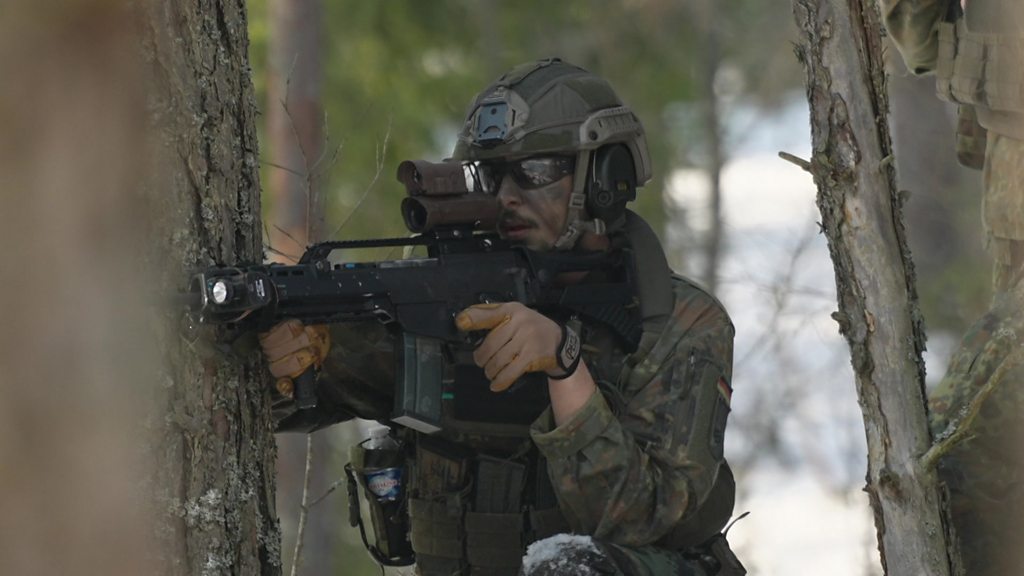

Germany’s Bid for European Military Dominance: A New Chapter in Global Security
The Brandenburg Gate, long a symbol of Germany’s tumultuous history, now casts a shadow over a nation attempting to redefine its role on the global stage. In the wake of Russia’s invasion of Ukraine, Germany has embarked on an unprecedented transformation, pledging to become Europe’s pre-eminent military power. With a €100 billion ($107 billion) defense fund and a commitment to NATO’s 2% GDP spending target, this seismic shift raises critical questions: Can Germany overcome decades of pacifism and reluctance to wield military force? And what does this ambition mean for Europe and the world?
A Historical Shift in German Defense Policy
Germany’s militarization marks a stark departure from its post-World War II identity. Since 1945, the nation has embraced a culture of pacifism, prioritizing economic strength over military might. The reunification of East and West Germany in 1990 further solidified this stance, with the country emerging as a diplomatic and economic powerhouse rather than a military leader. However, Russia’s aggression in Ukraine has shattered this paradigm, forcing Germany to confront its vulnerabilities and redefine its strategic priorities.
Chancellor Olaf Scholz’s announcement of a “Zeitenwende,” or turning point, in February 2022, signaled this dramatic shift. The €100 billion defense fund, the largest in German history, is earmarked for modernizing the Bundeswehr, Germany’s armed forces, which have long suffered from underfunding and inefficiencies. The plan includes investments in advanced weaponry, cybersecurity, and NATO-aligned defense systems, positioning Germany as a cornerstone of European security.
Global Context: A World in Flux
Germany’s transformation comes at a pivotal moment in global geopolitics. The war in Ukraine has exposed Europe’s reliance on U.S. military support, reigniting debates about NATO’s role and Europe’s capacity for self-defense. Meanwhile, China’s rising influence and continued tensions in the Indo-Pacific have underscored the need for robust international alliances.
Germany’s move also reflects broader trends in global security. As NATO expands to include Finland and Sweden, and the European Union seeks to bolster its defense capabilities, Germany’s renewed focus on military strength could strengthen these alliances. However, it also raises concerns about the militarization of Europe and the potential for a new arms race, particularly in light of Russia’s growing belligerence.
Challenges on the Path to Military Leadership
While Germany’s ambitions are clear, significant obstacles remain. Decades of underinvestment have left the Bundeswehr underprepared for modern warfare. Reports of outdated equipment, ammunition shortages, and bureaucratic inefficiencies have plagued the military, prompting calls for systemic reform.
Public opinion also poses a challenge. Many Germans remain wary of their country assuming a prominent military role, fearing a return to the militarism of the past. Chancellor Scholz and his government must navigate this delicate balance, addressing both the practical needs of the armed forces and the concerns of a historically pacifist population.
Additionally, Germany’s transition must align with its broader foreign policy goals. As a leader in climate action and global diplomacy, the nation must ensure that its military ambitions do not undermine its commitment to these priorities.
Why This Matters Globally
Germany’s push for military pre-eminence has far-reaching implications for global security. As Europe’s largest economy, Germany’s enhanced defense capabilities could alleviate some of the strain on NATO and reduce Europe’s dependence on U.S. military support. This shift could also strengthen the European Union’s geopolitical clout, enabling it to play a more active role in addressing global conflicts and crises.
However, Germany’s rise as a military power could also unsettle its neighbors. France, historically Europe’s leading military force, may view Germany’s ambitions as a challenge to its own influence. Meanwhile, countries with memories of German aggression, such as Poland and the Czech Republic, may approach this development with caution.
For the United States, Germany’s transformation presents both opportunities and challenges. A stronger German military could bolster NATO’s capabilities, but it could also shift the balance of power within the alliance. As geopolitical tensions escalate, Germany’s ability to navigate these dynamics will be critical.
A Pivotal Moment in History
Germany’s bid to become Europe’s pre-eminent military power marks a watershed moment in global security. After decades of reluctance, the nation is poised to embrace a new identity, one that could reshape the geopolitical landscape of Europe and beyond.
Yet, the path forward is fraught with challenges. From overcoming historical hesitations to addressing practical hurdles, Germany must navigate a complex web of political, social, and strategic considerations.
As the world watches this transformation unfold, one thing is clear: Germany’s ambition is not just about military might—it’s about redefining its role in a rapidly changing world. The success or failure of this endeavor will have profound implications for Europe, NATO, and the global order. In a world increasingly defined by uncertainty and conflict, Germany’s journey toward military leadership is a story worth following—one that could shape the future of global security for decades to come.
