


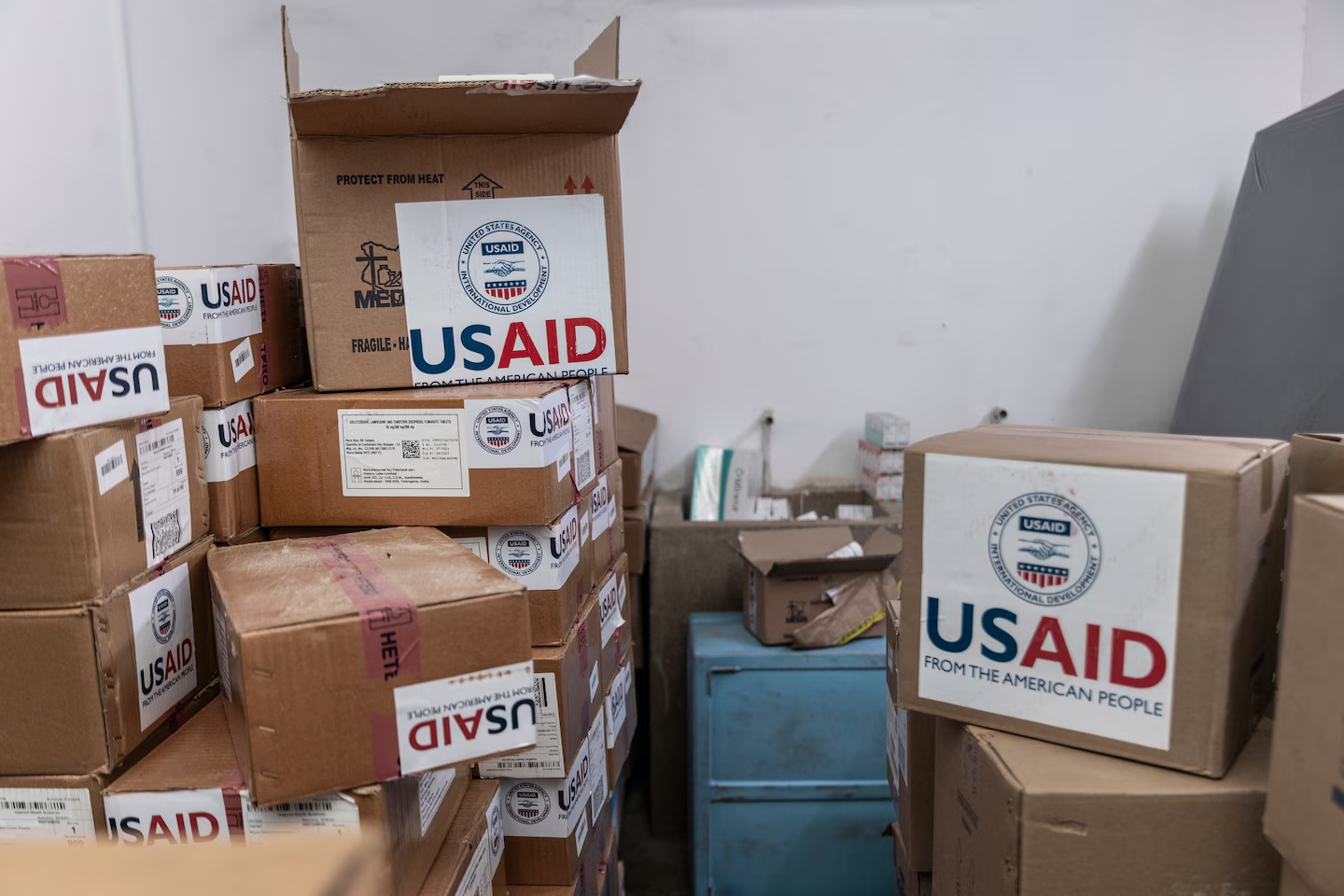

Trump Administration Reshapes U.S. Global Health Strategy with “America First” Approach
The Trump administration has spent the past year quietly negotiating agreements with lower-income nations as part of a sweeping effort to reform U.S. foreign assistance programs. At the heart of this shift is a new “America First” global health strategy, which seeks to reimagine how the United States addresses critical health issues such as HIV and tuberculosis prevention abroad. This approach marks a significant departure from decades of bipartisan global health policy, raising questions about its long-term impact on international partnerships and public health outcomes.
The strategy, spearheaded by the U.S. Department of State and the U.S. Agency for International Development (USAID), aims to align foreign aid more closely with American interests. Under this framework, assistance programs are being refocused to prioritize measurable returns for the U.S., including economic benefits and enhanced diplomatic leverage. Critics argue that this transactional approach risks undermining the humanitarian principles that have long guided U.S. global health initiatives.
A Quiet Redirection of Resources
Over the past year, U.S. officials have engaged in behind-the-scenes discussions with governments in Africa, Asia, and Latin America to renegotiate existing aid agreements. These talks have centered on redirecting resources toward projects that align with America’s strategic goals, such as combating infectious diseases that could threaten U.S. borders or supporting initiatives that foster trade and economic ties.
For example, the President’s Emergency Plan for AIDS Relief (PEPFAR), a hallmark of U.S. global health efforts launched under President George W. Bush, is undergoing significant changes. PEPFAR has historically provided billions of dollars in funding to combat HIV/AIDS in sub-Saharan Africa and other regions. Under the new strategy, however, some of this funding is being redirected toward programs that emphasize sustainability and local ownership, with a focus on reducing long-term dependency on U.S. aid.
Similarly, tuberculosis prevention programs are being restructured to prioritize countries where the disease poses a direct threat to U.S. health security. This includes nations with high rates of drug-resistant TB or those identified as potential sources of cross-border transmission.
Domestic and International Reactions
The administration’s “America First” approach has sparked a mix of praise and concern at home and abroad. Supporters argue that the U.S. has long shouldered a disproportionate share of global health funding and that this recalibration ensures taxpayer dollars are used more effectively. They also point to the administration’s emphasis on accountability and results-based outcomes as a positive step forward.
However, critics warn that the strategy could weaken America’s leadership role in global health and erode trust among international partners. They note that the U.S. has historically been a key driver of progress in combating infectious diseases, saving millions of lives through initiatives like PEPFAR and the Global Fund to Fight AIDS, Tuberculosis, and Malaria. By scaling back these efforts, they argue, the U.S. risks reversing hard-won gains and leaving vulnerable populations at risk.
Global health organizations have also expressed concern. The World Health Organization (WHO) and other multilateral institutions worry that the U.S. shift could create gaps in funding and resources, particularly in regions heavily reliant on American support. Non-governmental organizations (NGOs) working on the ground have echoed these concerns, warning that the changes could disrupt ongoing programs and leave communities without vital services.
Why It Matters
The Trump administration’s global health strategy reflects broader changes in U.S. foreign policy, emphasizing bilateral agreements over multilateral cooperation and prioritizing national interests over global ones. This approach has significant implications for the fight against infectious diseases, which remain a pressing global challenge.
HIV, tuberculosis, and other infectious diseases continue to claim millions of lives annually, particularly in low- and middle-income countries. U.S. leadership has been instrumental in driving progress on these fronts, from funding research and treatment programs to supporting local health systems. A shift away from this role could slow momentum and exacerbate health disparities worldwide.
The strategy also carries geopolitical implications. By framing foreign aid as a transactional tool, the U.S. risks alienating allies and ceding influence to other global powers, such as China, which has increasingly positioned itself as a leader in international development.
Looking Ahead
As the Trump administration moves forward with its “America First” global health strategy, the long-term impact remains uncertain. While the approach may yield short-term benefits for U.S. interests, it could also weaken America’s position as a leader in global health and humanitarian aid.
The coming months will be critical in determining how these changes unfold. Observers will be watching closely to see whether the administration can strike a balance between advancing national priorities and upholding America’s commitment to improving global health outcomes.
On the international stage, the U.S. shift may prompt other countries and organizations to reconsider their roles and responsibilities in global health. It could also accelerate efforts to diversify funding sources and reduce reliance on American aid, potentially reshaping the landscape of international health cooperation.
Ultimately, the success of the “America First” strategy will depend on its ability to address both U.S. interests and global needs. As the world grapples with ongoing and emerging health challenges, the stakes could not be higher.
