



Mounting Concerns in Credit Markets: AI Disruption and Leverage Expose Vulnerabilities
The global credit market is facing unprecedented pressure as a combination of elevated leverage, shifting investor behavior, and the rapid advancement of artificial intelligence (AI) threatens to destabilize a sector already navigating turbulent waters. According to a recent Moody’s Investors Service report, the interplay of these factors has prompted a significant reassessment of credit risks, particularly in the realm of specialized investment vehicles. The report, released Tuesday, highlights a sharp reversal in investor sentiment, with net outflows from the sector recorded for the first time ever in the first quarter of 2023—a stark contrast to the robust inflows seen just months earlier.
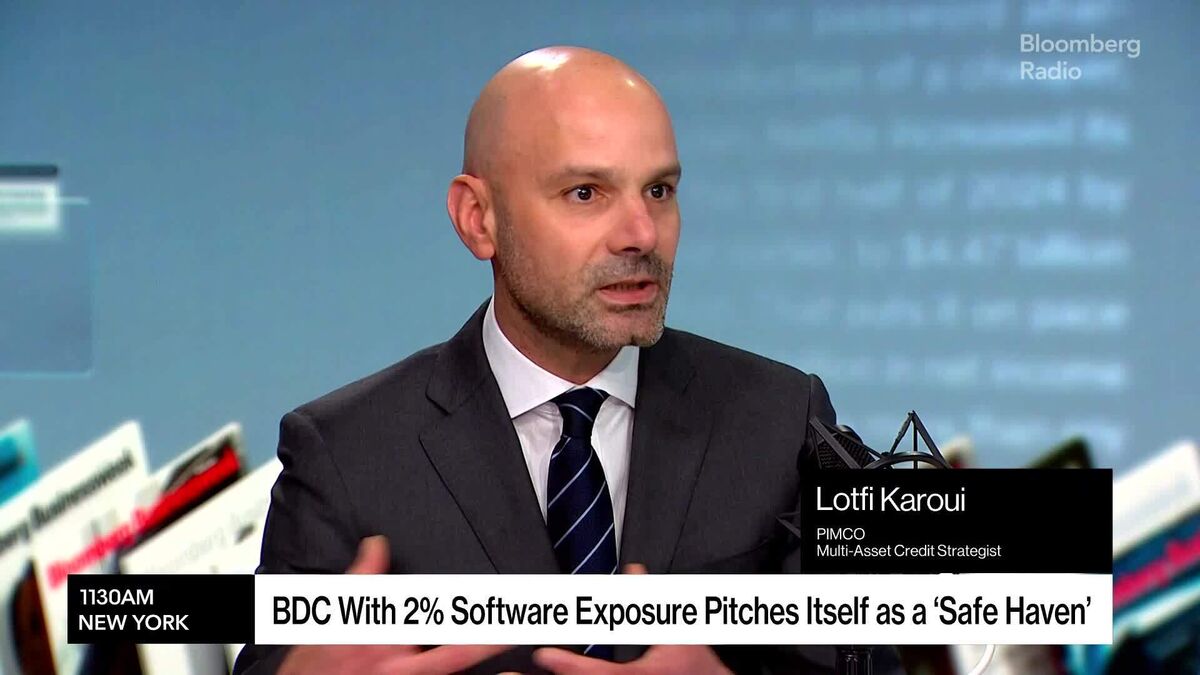
The alarm bells sounded by Moody’s underscore a broader unease gripping financial markets. As AI-driven innovations disrupt traditional business models and amplify uncertainty, credit strategists are increasingly adopting a defensive posture. Lotfi Karoui, Multi-Asset Credit Strategist at PIMCO, noted that the concerns emerging in direct lending are partly tied to the sector’s rapid expansion. “The pace of growth has outpaced the ability of market participants to fully assess and mitigate risks,” Karoui remarked.
The Exodus from Nontraded Vehicles
One of the most pressing issues flagged by Moody’s is the ongoing withdrawal of capital from nontraded investment vehicles, which account for approximately 60% of the sector’s assets. These vehicles, often structured as private credit funds or business development companies (BDCs), have historically attracted investors seeking higher yields in a low-interest-rate environment. However, their opacity and illiquidity have increasingly come under scrutiny as market conditions evolve.
The exodus from nontraded vehicles has been driven by a confluence of factors, including rising interest rates, tightening regulatory oversight, and heightened risk aversion among investors. Moody’s analysts noted that the abrupt outflow of capital in early 2023—a first for the sector—marks a turning point in investor sentiment. This reversal has exposed vulnerabilities in the sector’s funding model, which relies heavily on continuous inflows to sustain its operations.
Elevated Leverage in Publicly Traded Counterparts
While nontraded vehicles face liquidity challenges, their publicly traded counterparts are grappling with elevated levels of leverage. Moody’s report emphasized that this leverage amplifies the sector’s sensitivity to adverse market movements, particularly in an environment where interest rates remain high and economic growth falters.
The increased borrowing costs associated with higher rates have squeezed margins for many publicly traded credit funds, forcing them to reassess their risk management strategies. As Karoui pointed out, “The combination of elevated leverage and shifting market dynamics creates a precarious situation for these vehicles. Any further tightening of financial conditions could exacerbate existing pressures.”
AI: A Disruptive Force Amplifying Uncertainty
Adding to the sector’s woes is the accelerating pace of AI adoption, which Moody’s analysts describe as a “disruptive force” set to reshape the credit landscape. The rapid advancement of AI technologies has raised questions about the durability of certain asset classes, particularly software securities and other tech-dependent investments.
As AI continues to evolve, its potential to automate processes, reduce costs, and redefine business models is both a source of opportunity and a significant risk. For credit markets, the uncertainty surrounding AI’s long-term impact has introduced new complexities into risk assessment processes. Moody’s warned that this technological disruption could compound existing concerns, forcing credit strategists to remain “on defense” throughout 2023 and beyond.
Historical Context and Market Shifts
The current challenges facing the credit market mark a dramatic shift from the sector’s performance in recent years. As recently as the third quarter of 2022, nontraded vehicles were experiencing robust inflows, buoyed by strong investor demand for higher-yielding assets. However, the tide began to turn in late 2022, as rising interest rates and broader macroeconomic uncertainties prompted a reassessment of risk appetites.
The Federal Reserve’s aggressive rate-hiking campaign, aimed at curbing inflation, has played a pivotal role in reshaping market dynamics. Higher borrowing costs have not only dampened investor enthusiasm for leveraged credit vehicles but also increased the risk of defaults among borrowers reliant on variable-rate debt.
The Road Ahead: Navigating Uncertainty
As credit market participants grapple with these multifaceted challenges, the path forward remains fraught with uncertainty. Moody’s report suggests that a combination of improved risk management practices, greater transparency, and heightened regulatory oversight will be critical to restoring investor confidence.
However, the disruptive impact of AI presents a wildcard that could fundamentally alter the sector’s trajectory. “The ability to adapt to technological change will be a key determinant of success in the coming years,” Moody’s analysts wrote.
For investors, the evolving landscape underscores the importance of diversification and vigilant risk assessment. With nontraded vehicles facing liquidity pressures and publicly traded funds grappling with high leverage, a cautious approach may be warranted.
Conclusion: A Sector at a Crossroads
The global credit market finds itself at a crossroads, navigating a complex interplay of structural vulnerabilities, shifting investor sentiment, and technological disruption. While the sector has proven resilient in the face of past challenges, the confluence of current risks presents a uniquely daunting environment.
As Moody’s aptly noted, the credit market’s ability to weather this storm will depend on its capacity to adapt and innovate. In the meantime, market participants are bracing for a period of heightened volatility and uncertainty, underscoring the adage that in finance, the only constant is change.
As Lotfi Karoui succinctly put it, “The sector is entering uncharted territory, and the stakes have never been higher.” Indeed, the coming months will test the mettle of credit strategists and investors alike in an era defined by disruption and transformation.
