



Farmers’ Protests Paralyze Ireland: A Growing Global Movement Against Economic Pressures
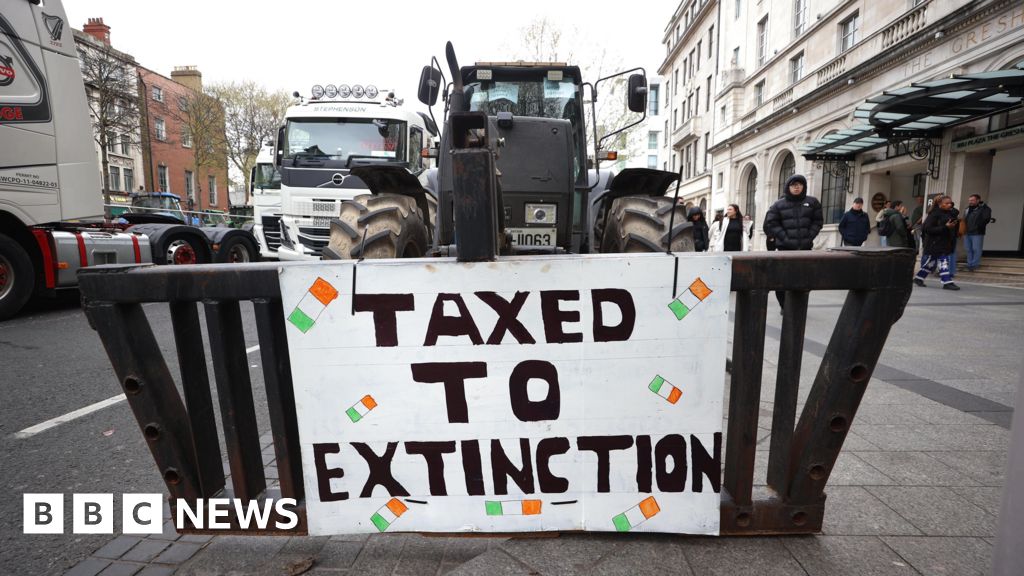
Dublin, Ireland – For the fourth consecutive day, the hum of tractors and the shouts of protesters have replaced the usual bustle of Ireland’s roads. Farmers, wielding their vehicles as barricades, have brought key transport routes to a standstill in a dramatic escalation of their campaign against rising costs and stringent environmental regulations. The demonstrations, echoing similar uprisings across Europe, underscore a deepening crisis in global agriculture—one that threatens food security, economic stability, and political cohesion.
The Irish Standoff: Roads Blocked, Tensions Rising
Since Tuesday, convoys of tractors and trucks have choked highways and city entrances, from Cork to Dublin, in a protest organizers vow will continue until the government addresses their demands. Farmers decry soaring fuel prices, unfair competition from imports, and EU climate policies they argue cripple their livelihoods.
“We’re being regulated out of existence,” said one dairy farmer at a blockade near Limerick, where protesters lit bonfires and waved placards reading “No Farmers, No Food.” Police, while present, have largely avoided confrontation, reflecting the delicate balance authorities face between enforcing order and acknowledging widespread public sympathy for the demonstrators.
A Continent on Edge: Europe’s Farmer Revolts
Ireland’s turmoil is far from isolated. From Germany to Greece, farmers have taken to the streets in a wave of dissent against EU green policies and economic pressures exacerbated by the Ukraine war. In France, President Macron’s government hastily rolled back diesel taxes after weeks of violent clashes; in Poland, grain imports from Ukraine sparked border blockades and diplomatic spats.
Analysts warn these protests signal a broader rejection of globalization’s uneven burdens. “Farmers are the canary in the coal mine,” noted Dr. Elsa Müller, a Brussels-based agricultural economist. “When they revolt, it’s often a precursor to wider societal unrest over inflation and inequality.”
Why This Matters Beyond Ireland
The stakes extend far beyond rural discontent. Agriculture accounts for 10% of EU jobs and 40% of its land use, making it a linchpin of both economies and ecosystems. Climate policies like the EU’s Farm to Fork strategy—aimed at slashing emissions—have collided with post-pandemic inflation and energy shocks, leaving farmers feeling scapegoated.
Globally, the fallout is palpable. Disruptions in Europe, a major food exporter, could ripple through supply chains, driving up prices in import-dependent regions like Africa and the Middle East. Meanwhile, far-right parties have seized on the protests to attack mainstream governments, further destabilizing an already volatile political landscape.
The Human Cost: “We Can’t Feed Our Families”
Behind the barricades are stories of desperation. “My grandfather worked this land; soon there’ll be nothing left,” said Siobhan O’Donnell, a third-generation sheep farmer in County Galway. Like many, she cites fertilizer costs tripling since 2021 and supermarkets underpaying for produce while charging consumers more.
Such grievances resonate worldwide. In India, 2020–21 farmer protests forced Modi’s government to repeal controversial reforms. In Argentina, producers recently struck over export taxes. The common thread? A sense that policymakers prioritize urban consumers and climate targets over rural survival.
What Happens Next?
Ireland’s coalition government has called for emergency talks, but protesters demand concrete action, not dialogue. Options are limited: reversing environmental rules risks EU penalties, while subsidies strain budgets already stretched by energy crises.
The EU Commission, for its part, insists sustainability and farmer welfare aren’t mutually exclusive. “We’re listening,” said Agriculture Commissioner Janusz Wojciechowski this week, announcing minor concessions on crop diversification rules. Critics call it too little, too late.
A World at a Crossroads
As Ireland’s standoff continues, it reflects a pivotal moment for democracies worldwide: how to balance urgent climate action with social equity. The protests are a stark reminder that policies crafted in boardrooms must withstand the realities of those who till the soil.
For now, the tractors remain. And with them, a warning—when the hands that feed nations are pushed to the brink, the world had better listen.
