



Hungary at a Crossroads: Rising Opposition Challenges Orbán’s Long-Standing Rule
Budapest, Hungary – The political landscape in Hungary is undergoing its most dramatic shift in over a decade as Péter Magyar, a former insider turned anti-establishment firebrand, surges in popularity ahead of crucial elections. Prime Minister Viktor Orbán, Europe’s longest-serving leader, faces an unprecedented challenge from a grassroots movement that has galvanized disillusioned voters. The stakes are high—not just for Hungary, but for the future of democracy in Central Europe and the balance of power within the European Union.
A Defiant Orbán Confronts a Rising Rival
Recent polls indicate that Péter Magyar’s fledgling party, Tisza (Respect and Freedom), has gained significant traction, with some surveys placing it ahead of Orbán’s Fidesz party for the first time in years. Magyar, a former government official and ex-husband of Orbán’s former justice minister, has positioned himself as a reformist alternative, capitalizing on fatigue with corruption scandals and economic stagnation.
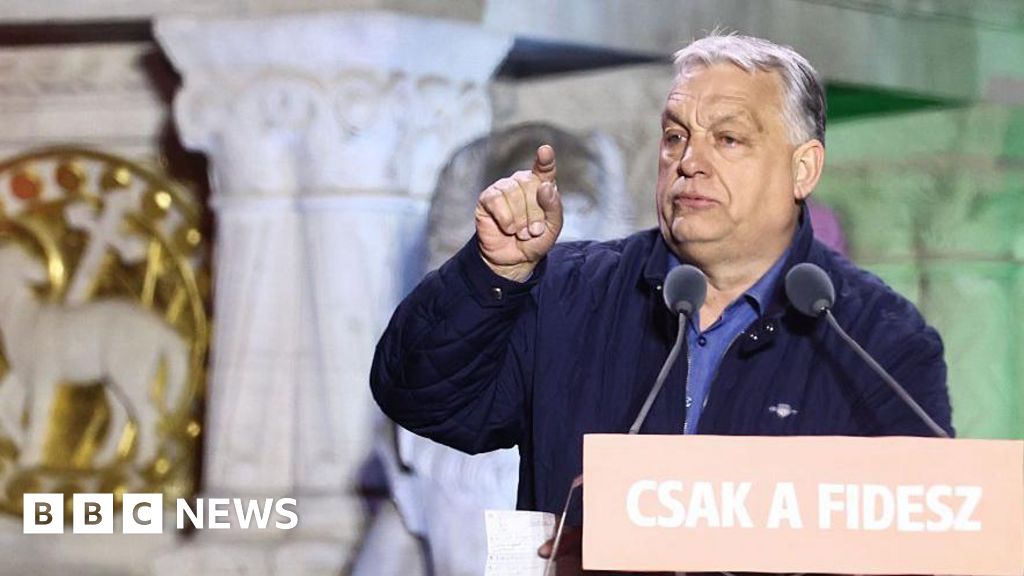
Yet Orbán, a master political strategist, remains defiant. In a fiery speech last week, he dismissed Magyar’s movement as a “foreign-backed project” and doubled down on his nationalist rhetoric, vowing to protect Hungary from what he calls “globalist interference.” His government has also tightened its grip on state media, raising concerns about electoral fairness.
Global Context: Why Hungary’s Election Matters
Hungary’s political turmoil is being closely watched in Brussels, Washington, and Moscow. Orbán, once a darling of the European right, has increasingly isolated himself by opposing EU policies on migration, Ukraine aid, and rule-of-law reforms. His government’s close ties with Russia and China have further strained relations with NATO allies.
If Magyar’s movement succeeds, it could signal a broader shift away from populist strongmen in Europe. Conversely, an Orbán victory would embolden other nationalist leaders, such as Poland’s Jarosław Kaczyński and Slovakia’s Robert Fico, who have similarly clashed with Brussels over democratic norms.
The Human Cost of Orbán’s Rule
Beyond geopolitics, Hungarians are feeling the effects of Orbán’s policies in their daily lives. Inflation remains stubbornly high, public services are strained, and young professionals continue to emigrate in search of better opportunities. Magyar’s appeal lies in his promises to restore judicial independence, crack down on corruption, and reintegrate Hungary into the European mainstream.
“People are tired of the constant battles with the EU, tired of the propaganda,” said Anna Kovács, a Budapest-based political analyst. “Magyar represents something new—a break from the past without the chaos of a far-left alternative.”
The Road Ahead: A Test for Democracy
With elections looming, both sides are preparing for a fierce contest. Orbán’s government has already introduced legislation that critics say could suppress opposition votes, while Magyar’s campaign relies on mass rallies and social media outreach. International observers warn that Hungary’s democratic institutions, already weakened by years of centralized control, may not withstand another term of Orbán’s rule without irreversible damage.
The outcome could also influence the EU’s approach to member states that flout democratic norms. Brussels has frozen billions in funding over Hungary’s rule-of-law violations, but a change in leadership could reset relations—or deepen the rift.
Conclusion: A Pivotal Moment for Europe
As Hungary braces for a historic showdown, the world is watching. Will Orbán’s iron grip hold, or will Magyar’s insurgent campaign mark the beginning of a new era? The answer will resonate far beyond Budapest—shaping the future of European unity, the strength of democratic institutions, and the global struggle between authoritarianism and reform. For Hungarians, and for the world, this is more than an election. It is a battle for the soul of a nation.
