



Supertankers’ Aborted Passage Through Strait of Hormuz Highlights Escalating US-Iran Tensions
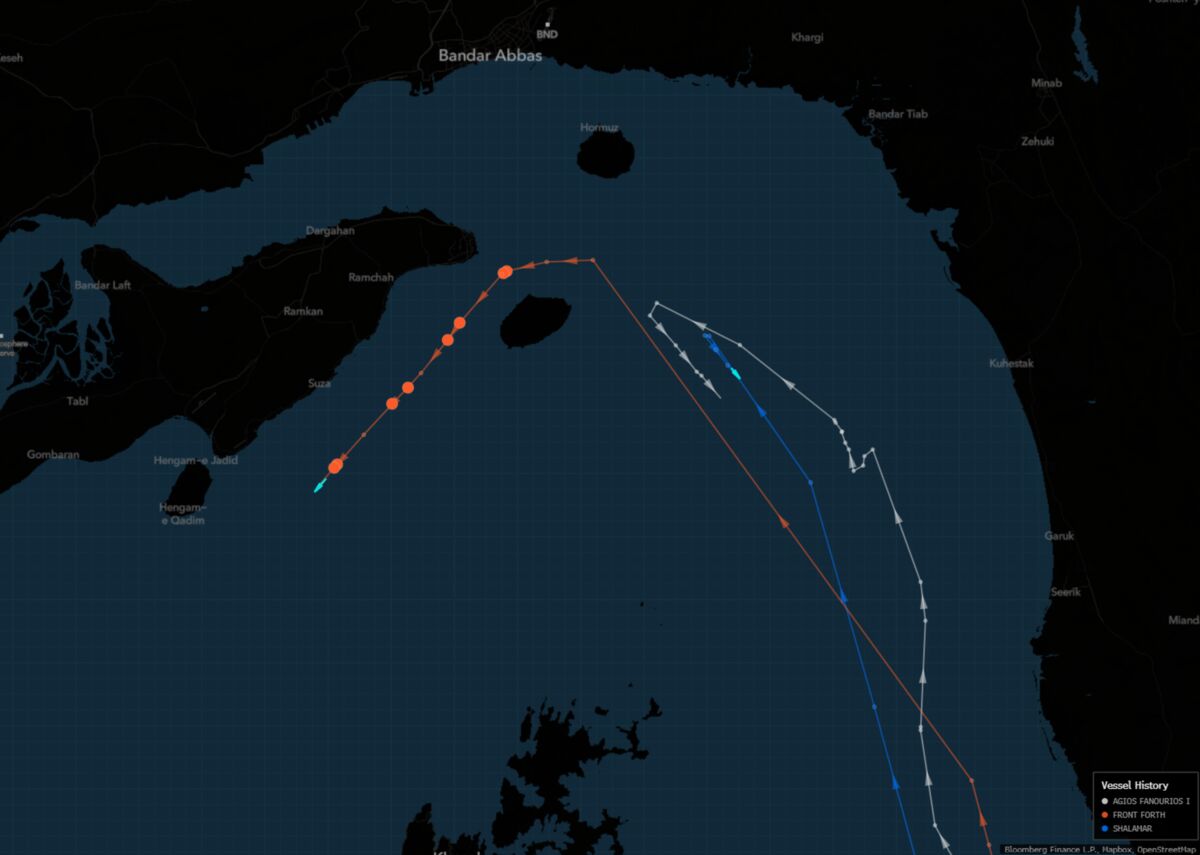
In a dramatic turn of events on Sunday, two empty supertankers navigating the Strait of Hormuz were forced to reverse course abruptly, underscoring the fragile geopolitical tensions simmering in one of the world’s most critical maritime chokepoints. The sudden reversal came just hours as peace negotiations between the United States and Iran collapsed, raising fears of a potential escalation that could destabilize the region and disrupt global energy markets. The Strait of Hormuz, a narrow passage connecting the Persian Gulf to the Arabian Sea, serves as a lifeline for nearly a fifth of the world’s oil supply, making any hint of instability a cause for global concern.
The two vessels, identified as VLCCs (Very Large Crude Carriers), were en route to pick up cargo in the Persian Gulf when they abruptly changed direction and exited the strait. While no official explanation was provided by the tankers’ operators, maritime analysts and experts suggest the decision was likely influenced by heightened security risks in the wake of the failed diplomatic talks between Washington and Tehran. The timing of the incident has drawn significant attention, as it coincided with the breakdown of negotiations aimed at reviving the 2015 Iran nuclear deal, formally known as the Joint Comprehensive Plan of Action (JCPOA).
A Narrow Passage, A Global Flashpoint
The Strait of Hormuz has long been a focal point of geopolitical contention due to its strategic importance. Approximately 21 million barrels of oil pass through the strait daily, accounting for around 20% of global oil consumption. For Iran, the waterway represents both a critical economic artery and a geopolitical lever. In recent years, Tehran has repeatedly threatened to disrupt traffic through the strait in response to international sanctions and perceived acts of aggression.
The latest incident comes amid a backdrop of escalating tensions between the US and Iran. The collapse of the nuclear talks has dashed hopes of a diplomatic resolution, leaving both sides in a precarious standoff. The US has accused Iran of stalling negotiations while continuing to enrich uranium to near-weapons-grade levels, while Iran has criticized Washington for failing to lift sanctions that have crippled its economy. The fragile ceasefire in the region, which has held since the Biden administration took office, now appears increasingly tenuous.
Maritime Security on Edge
The Strait of Hormuz is no stranger to incidents involving shipping. Over the past decade, there have been numerous confrontations between Iranian forces and foreign vessels, including the seizure of tankers and allegations of sabotage. In 2019, tensions reached a boiling point when Iran seized a British-flagged tanker in retaliation for the UK’s detention of an Iranian vessel off Gibraltar. The incident sparked international outrage and led to a temporary spike in oil prices.
Maritime experts are now warning that the recent U-turn by the two supertankers could signal a broader trend of risk aversion among shipping companies. “When you see vessels altering course in such a high-risk area, it’s a clear indication that operators are prioritizing safety over profit,” said John Kingston, a maritime security analyst. “The geopolitical climate in the region is becoming increasingly unpredictable, and no one wants to be caught in the crossfire.”
While the tankers’ reversal does not immediately disrupt oil flows, it highlights the growing unease among shipping operators navigating the strait. Insurance premiums for vessels passing through the region have already skyrocketed in recent years, driven by the constant threat of Iranian interference. For global markets, the stakes are high. Any sustained disruption to traffic through the Strait of Hormuz could send shockwaves through the global economy, driving up energy prices and exacerbating inflationary pressures.
A Diplomatic Deadlock
The collapse of US-Iran negotiations adds another layer of complexity to an already volatile situation. The Biden administration had hoped to revive the JCPOA, which was abandoned by former President Donald Trump in 2018. The deal, which aimed to curb Iran’s nuclear program in exchange for sanctions relief, was widely seen as a cornerstone of Middle East stability. However, talks have stalled in recent months, with both sides accusing the other of intransigence.
Iran has demanded guarantees that future US administrations will not renege on the agreement, while Washington insists on stricter oversight of Tehran’s nuclear activities. The impasse has left the diplomatic process in limbo, with no clear path forward. “The window for diplomacy is closing rapidly,” said Ali Vaez, Iran project director at the International Crisis Group. “Both sides are digging in their heels, and the risk of miscalculation is growing by the day.”
Global Implications
The Strait of Hormuz is not just a regional flashpoint; its significance extends far beyond the Middle East. Major economies, including China, India, and Europe, rely heavily on oil imports from the Persian Gulf, making any disruption to shipping a global concern. The recent incident serves as a stark reminder of the delicate balance that underpins global energy security.
For now, the situation remains tense but stable. However, the failure of diplomacy and the increasing militarization of the region raise troubling questions about the future. Analysts warn that without a renewed commitment to dialogue, the risk of conflict—whether intentional or accidental—will continue to grow.
As the two supertankers retreated from the Strait of Hormuz, their abrupt departure offered a poignant metaphor for the broader state of US-Iran relations: a fragile equilibrium teetering on the edge of collapse. Whether diplomacy can salvage the situation remains uncertain, but one thing is clear—the stakes for the world could not be higher.
