


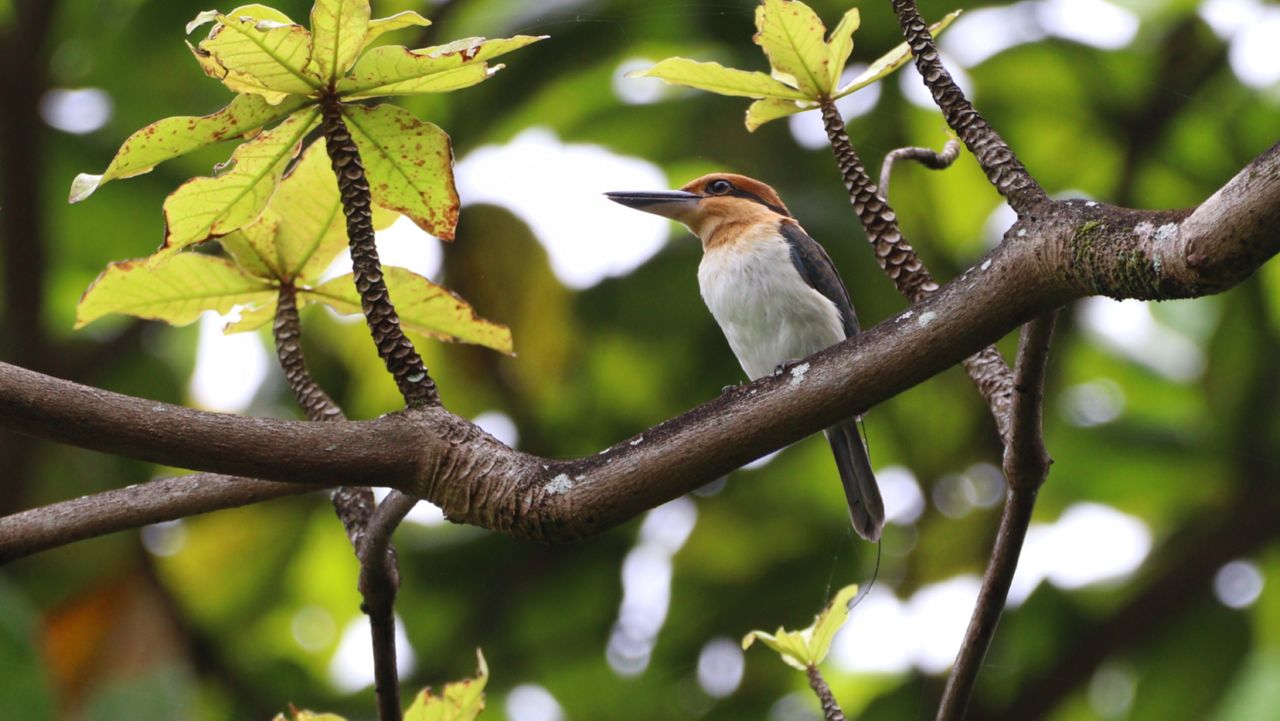

Endangered Guam Kingfishers Breed in Wild for First Time in 40 Years on Remote Pacific Island
For the first time since the 1980s, critically endangered Sihek birds—also known as Guam kingfishers—have laid eggs in the wild, marking a major milestone in a decades-long conservation effort. The eggs were discovered on Palmyra Atoll, a remote island in the Pacific, where nine Sihek were released last September in a bid to revive the species after its extinction in its native Guam.
A Conservation Breakthrough
Three of the birds now nesting on Palmyra Atoll came from the Cincinnati Zoo & Botanical Garden, a key player in the international effort to save the species. Among them is Tutuhan, a female Sihek who has already made history—she was the first chick hatched in the breeding program and is now the first to produce eggs in the wild.
“This is something I never thought I’d see in my lifetime,” said Aimee Owen, senior aviculturist at the Cincinnati Zoo. “Tutuhan has been a trailblazer from the start, and seeing her now as a mother is incredibly rewarding.”
Why Palmyra Atoll?
The uninhabited Palmyra Atoll, managed by The Nature Conservancy, was chosen for its lack of invasive predators—a stark contrast to Guam, where the accidental introduction of brown tree snakes in the 1940s decimated the Sihek population. By the 1980s, the birds were declared extinct in the wild, surviving only in captivity through a breeding program that started with just 29 individuals.
Since their release last year, the Sihek have adapted surprisingly well, learning to hunt, forage, and form mating pairs—a promising sign for their long-term survival.
Challenges Remain
While the discovery of eggs is a hopeful development, conservationists caution that success isn’t guaranteed. The breeding birds are less than a year old, and young parents often struggle with incubation and chick-rearing.
“It may take a few attempts before they get it right,” Owen explained. “But the fact that they’re even trying is a testament to their resilience and the power of conservation.”
A Long-Term Vision
The immediate goal is to establish a self-sustaining Sihek population on Palmyra Atoll. The ultimate dream? Returning the birds to Guam—but only after invasive snakes are controlled.
“Tutuhan’s name means ‘beginning,’ and she’s living up to it,” said Yolonda Topasna of Guam’s Division of Aquatic and Wildlife Resources. “She fought for her mate, and now she’s guarding her eggs. This is just the start.”
More Releases Coming
Additional Sihek are set to be released on Palmyra this summer, while zoos across the U.S. and U.K.—including Cincinnati, Disney’s Animal Kingdom, and the Smithsonian—continue breeding efforts. The collaboration between these institutions has been crucial to the program’s success.
For now, conservationists are cautiously optimistic. Each egg represents hope for a species that nearly vanished—and a reminder that extinction isn’t always forever.
— Reported by Nexio News
