



French Executives Sentenced for Funding Terror: A Global Wake-Up Call
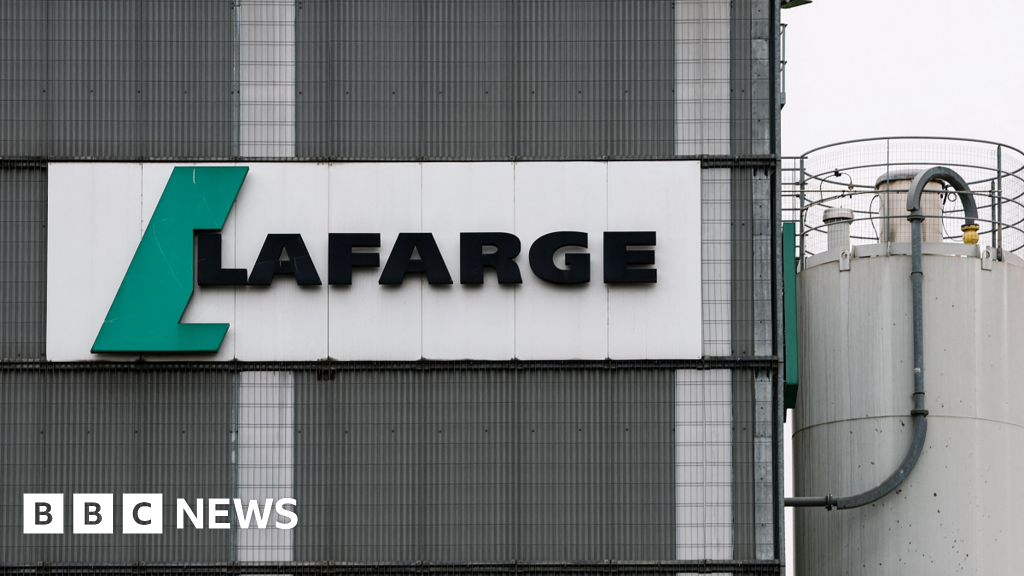
In a landmark ruling that reverberates beyond France’s borders, three former executives of Lafarge, the global cement giant, have been handed prison sentences for their role in funneling millions of dollars to jihadist groups, including ISIS, during the Syrian civil war. The case, which marks the first time a major multinational corporation has been convicted of financing terrorism, underscores the perilous intersection of corporate greed and global security. The verdict serves as a stark reminder of how corporate misconduct can fuel conflicts, destabilize regions, and endanger lives worldwide.
The Case: A Breach of Corporate Ethics
The trial centered on Lafarge’s operations in Syria between 2011 and 2014, a period marked by escalating violence and the rise of extremist groups. Prosecutors revealed that Lafarge, through its subsidiary Lafarge Cement Syria, paid approximately $13 million to armed factions, including ISIS and the al-Qaeda-linked Nusra Front, to ensure the continued operation of its $680 million cement plant in northern Syria. These payments, disguised as “security fees,” were intended to protect the company’s assets and staff, even as the country descended into chaos.
Bruno Lafont, the former CEO of Lafarge, was handed a two-year suspended sentence and a €40,000 fine for complicity in crimes against humanity and financing terrorism. Christian Herrault, the former deputy managing director, received a five-year prison sentence for similar charges. Firas Tlass, a Syrian national and former Lafarge employee who orchestrated the payments, was sentenced in absentia to seven years in prison. While Lafarge merged with Swiss giant Holcim in 2015, the company itself faces a €400 million fine for its actions.
Global Context: Syria’s War and Corporate Accountability
The Lafarge case is emblematic of a broader trend in which corporations prioritize profits over principles, often in conflict zones where oversight is minimal. Syria’s civil war, which erupted in 2011, created fertile ground for such exploitation. With the Syrian government losing control of vast territories, armed groups vied for dominance, leaving foreign companies to navigate a fractured and dangerous landscape. Lafarge’s decision to continue operations—and fund extremist groups—reflects a disturbing calculation that placed financial interests above human lives.
This case also highlights the global ramifications of corporate misconduct in conflict zones. By funding ISIS, Lafarge inadvertently contributed to the group’s expansion, enabling its brutal campaigns across Syria and Iraq. This, in turn, fueled the refugee crisis, destabilized Europe, and prompted military interventions by global powers. The verdict sends a clear message: corporations cannot operate with impunity in fragile states, and their actions can have far-reaching consequences.
Why It Matters: A Precedent for Corporate Accountability
The Lafarge ruling sets a critical precedent in the fight against corporate complicity in global conflicts. Historically, multinational corporations have enjoyed significant leeway in operating within conflict zones, often citing economic development as justification. However, this case demonstrates that such activities cannot come at the expense of human rights or security.
For governments and international organizations, the verdict underscores the need for stricter regulations and oversight of corporate activities in high-risk areas. It also highlights the importance of holding individuals, not just corporations, accountable for their actions. By targeting executives, the French judiciary has signaled that corporate leaders can no longer hide behind their positions to evade responsibility.
For the global public, the case serves as a wake-up call. It exposes the hidden ways in which corporate greed can exacerbate conflicts and perpetuate suffering. It also raises questions about the ethics of doing business in war-torn regions, prompting a broader conversation about corporate responsibility in an interconnected world.
The Human Cost: Lives Lost, Communities Destroyed
Behind the legal jargon and corporate maneuvering lies a tragic human toll. The Syrian civil war has claimed over 500,000 lives, displaced millions, and left entire cities in ruins. Lafarge’s payments to ISIS and other extremist groups contributed to this devastation, enabling the militants to arm themselves and terrorize civilian populations.
For the families of those killed or displaced by ISIS, the verdict offers a semblance of justice. However, it also serves as a painful reminder of the international complicity in their suffering. The case underscores the need for reparations and accountability beyond legal rulings, ensuring that victims receive the support they deserve.
A Turning Point in Global Security
The Lafarge case is more than a legal milestone; it is a turning point in the fight against corporate complicity in terrorism. By holding executives accountable, the French judiciary has set a standard for global justice, demonstrating that no individual or corporation is above the law. For multinational companies operating in conflict zones, the verdict is a stark warning: prioritize ethics over profits, or face the consequences.
As the world grapples with ongoing conflicts and rising extremism, the Lafarge case serves as a powerful reminder of the interconnectedness of global security. Corporate actions, no matter how seemingly isolated, can have profound implications for peace and stability. The verdict is a call to action—for governments, corporations, and individuals—to ensure that business practices align with the values of humanity and justice.
In an era defined by uncertainty and upheaval, the Lafarge ruling offers a glimmer of hope, signaling a new chapter in the pursuit of accountability and integrity in global affairs. The world is watching, and the stakes have never been higher.
