


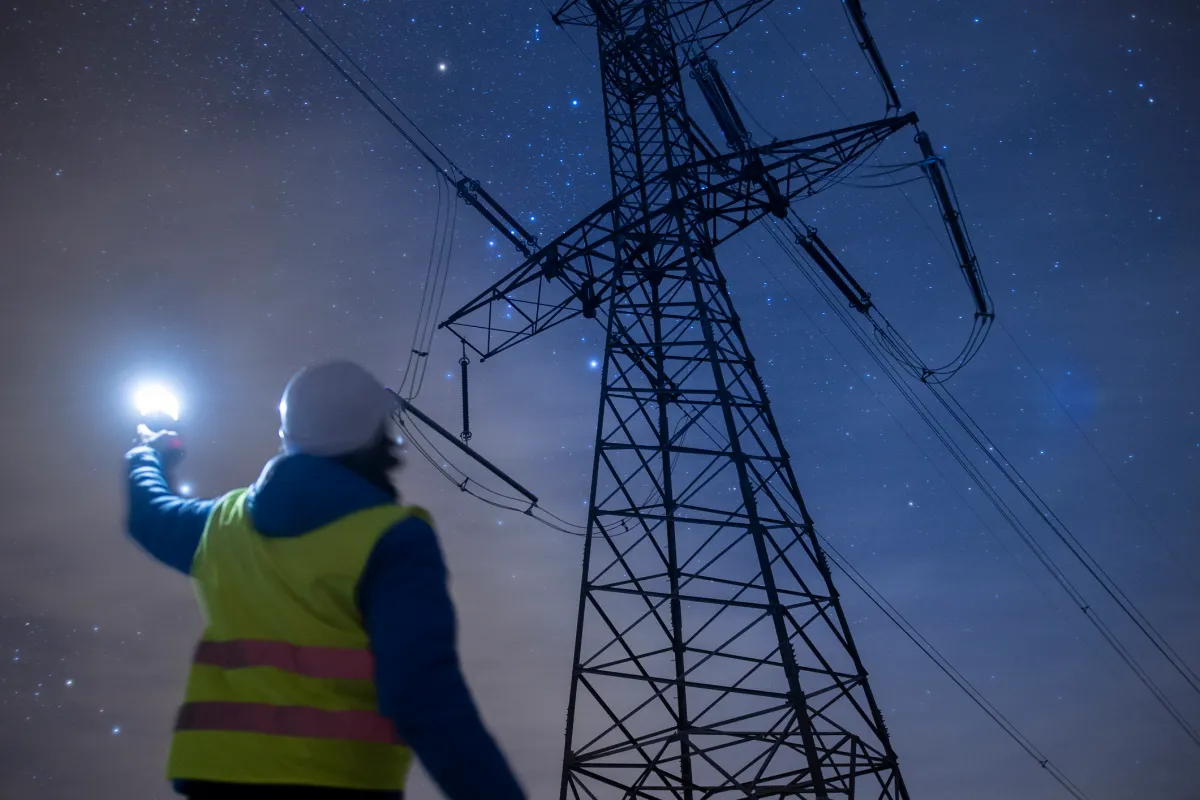

The Energy Gamble: How AI’s Power Hunger is Fueling a Global Race for Fusion, Fission, and Renewables
As the world becomes increasingly reliant on artificial intelligence (AI), the technology’s insatiable appetite for energy is reshaping global power grids and pushing the limits of existing energy infrastructure. AI’s soaring demand for electricity, driven by data centers and machine learning processes, has sent tech giants scrambling for reliable, scalable, and sustainable energy solutions. This hunt has ignited a fierce competition among energy innovators, from nuclear fission startups to fusion pioneers, and even traditional natural gas producers, all vying to power the digital future. But as the clock ticks, the stakes are higher than ever: the energy choices made today could redefine the global energy landscape for decades to come.
Natural Gas: A Fragile Foundation
For decades, natural gas has been the go-to source for reliable, baseload power. It’s affordable, widely available, and has a proven track record of delivering electricity around the clock. However, recent geopolitical tensions and supply chain disruptions have exposed its vulnerabilities. The war in the Middle East, particularly Iranian drone strikes on Qatar’s natural gas infrastructure, has underscored the fragility of global gas supplies. Qatar, a major exporter, saw a significant portion of its capacity compromised, sending shockwaves through the energy market.
Compounding the issue is a surge in demand for natural gas turbines, which has created a backlog so severe that orders placed today may not be fulfilled until the early 2030s. In the U.S., where 40% of natural gas consumption goes toward electricity generation, these delays pose a dual challenge: tech companies face potential energy shortages, while the natural gas industry risks losing its dominance to emerging competitors.
Nuclear Fission: Small Modular Reactors Take the Stage
Enter small modular reactors (SMRs), a new breed of nuclear fission technology that promises to deliver clean, reliable energy at a fraction of the size and cost of traditional reactors. SMRs are designed to be mass-produced, offering scalability and flexibility that could make them a formidable challenger to natural gas.
Several SMR startups are racing to bring their designs to market. Kairos Power, backed by tech giant Google, has already secured approval for its Hermes 2 demonstration reactor and is making steady progress toward completion. Oklo, which merged with Sam Altman’s special-purpose acquisition company in 2024, is targeting 2028 for its first commercial operations. Meanwhile, X-energy, with Amazon as an investor, and TerraPower, founded by Bill Gates and partnered with Meta, are aiming for the early 2030s.
The biggest hurdle for SMRs is scaling production quickly enough to achieve the economies of scale they rely on. While their designs are based on proven nuclear physics, the challenge lies in manufacturing reactors at a pace and cost that can compete with natural gas. Yet, tech companies are betting big on SMRs, investing heavily in startups and signing agreements for gigawatts of future power.
Fusion Power: The Elusive Holy Grail
If SMRs are the pragmatic solution, fusion power represents the ultimate dream. Unlike fission, which splits atoms, fusion combines them, mimicking the process that powers the sun. It promises virtually limitless energy with minimal environmental impact, using little more than seawater as fuel. While fusion has long been dismissed as a distant possibility, recent breakthroughs have brought it closer to reality than ever before.
Fusion startups are now targeting the early 2030s—or sooner—for commercial deployment. Commonwealth Fusion Systems, a front-runner in the field, is on track to activate its demonstration reactor next year and plans to connect its first commercial reactor, the 400-megawatt Arc, to the grid in Virginia by the early 2030s. Inertia Enterprises, a newcomer, is banking on technology inspired by the National Ignition Facility’s landmark fusion experiments and hopes to start construction on a grid-scale plant by 2030.
Perhaps the most ambitious timeline belongs to Helion, a fusion startup backed by Sam Altman. Helion is racing to complete its Orion reactor by 2028 to supply Microsoft with electricity. The company is reportedly in talks with OpenAI to deliver up to 5 gigawatts by 2030 and 50 gigawatts by 2035—a feat that would require building thousands of reactors in record time. If successful, Helion could single-handedly eclipse the natural gas industry’s annual capacity additions.
The Price Problem: A Race Against Costs
For all the promise of nuclear and fusion technologies, cost remains a critical barrier. Today, nuclear power is among the most expensive forms of new electricity generation, with costs averaging $170 per megawatt-hour. Fusion, despite its potential, faces even greater uncertainties, with initial estimates pegging its cost at around $150 per megawatt-hour. In comparison, new natural gas plants cost approximately $107 per megawatt-hour, although prices have been rising in recent years.
However, renewables paired with battery storage are emerging as a wildcard in the energy race. Wind and solar power have seen precipitous cost declines over the past decade, and battery storage technologies are becoming increasingly affordable. In 2025 alone, the U.S. installed 58 gigawatt-hours of new energy storage capacity. Solar paired with batteries now ranges from $50 to $130 per megawatt-hour, overlapping with the projected costs of fusion, fission, and natural gas.
Innovations in battery technology could further tip the scales. Companies like Form Energy are developing long-duration storage solutions using iron-air batteries, while XL Batteries is repurposing old oil tanks to store inexpensive organic fluids. These advancements, which avoid reliance on critical minerals like lithium, threaten to undercut traditional energy sources and reshape the energy market.
A Balanced Future
As AI’s energy demand continues to soar, the global energy sector stands at a crossroads. Natural gas, once the undisputed king of baseload power, faces mounting challenges from both nuclear fission and fusion startups, as well as rapidly advancing renewable technologies. While SMRs and fusion promise to deliver clean, reliable energy, their success hinges on overcoming significant technical and financial hurdles. Meanwhile, renewables paired with storage are closing the gap, offering a cost-effective and sustainable alternative.
In this high-stakes race, one thing is clear: the energy solutions of tomorrow will be shaped by the innovations and investments of today. Whether fission, fusion, or renewables emerge victorious, the world is poised for a transformative shift in how it powers its digital future.
