



Trump Renews Threats Against Iran as U.S. Troops Deploy to the Region, Raising Tensions
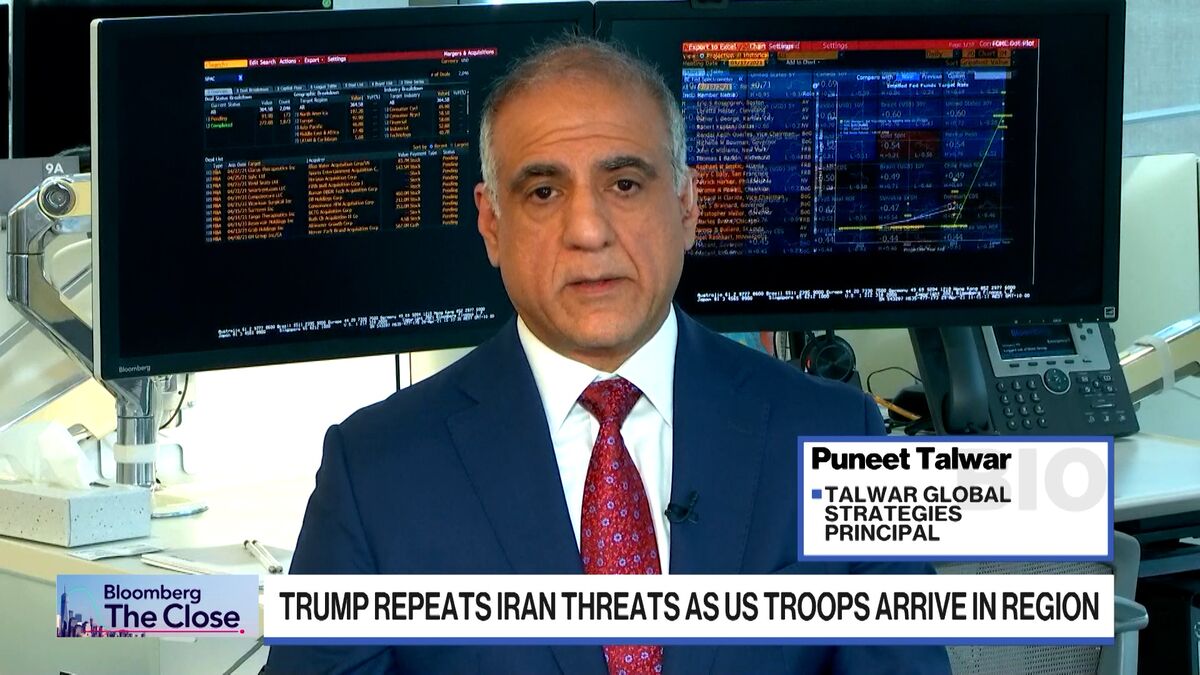
The Middle East is once again on edge as U.S. President Donald Trump renews aggressive rhetoric against Iran, coinciding with the deployment of American troops to the region. This latest escalation, occurring against a backdrop of longstanding geopolitical tensions, has sparked concerns over the potential for renewed conflict in one of the world’s most volatile regions. Puneet Talwar, a former Senior Advisor to President Barack Obama and a seasoned foreign policy expert, recently weighed in on the situation, offering critical insights into the implications of Trump’s approach. Speaking with Katie Greifeld on Bloomberg’s “The Close,” Talwar underscored the risks of this strategy, warning that it could destabilize an already fragile situation and lead to unintended consequences.
The current tensions trace their roots to 2018, when President Trump unilaterally withdrew the United States from the Iran nuclear deal, formally known as the Joint Comprehensive Plan of Action (JCPOA). The agreement, negotiated in 2015 under the Obama administration, had placed strict limits on Iran’s nuclear program in exchange for the lifting of economic sanctions. Trump’s withdrawal was met with widespread condemnation from U.S. allies and international partners, who argued that it undermined diplomatic efforts to curb Iran’s nuclear ambitions. Since then, the U.S. has imposed a series of harsh sanctions on Iran, crippling its economy and fueling resentment within the Islamic Republic.
In recent weeks, the Trump administration has ramped up its rhetoric against Iran, accusing it of orchestrating attacks on U.S. interests in the region. These allegations come amid reports of increased Iranian military activity, including the placement of advanced missile systems in proximity to U.S. allies. In response, the U.S. has deployed additional troops and military assets to the Middle East, signaling a readiness to confront any potential threats. Defense officials have described the moves as “defensive in nature,” but critics argue that they could provoke Iran into taking more aggressive actions.
Puneet Talwar, who played a key role in shaping U.S. policy toward Iran during the Obama administration, expressed concern over the Trump administration’s approach. “What we’re seeing is a dangerous escalation,” Talwar told Bloomberg. “The administration’s strategy seems to be one of maximum pressure, but without a clear endgame. This has the potential to backfire, leading to a cycle of provocations that could spiral out of control.” Talwar emphasized the importance of diplomacy in addressing the conflict, urging the U.S. to engage with Iran through multilateral channels.
The stakes are particularly high given the region’s history of conflict and the involvement of multiple global powers. Iran, a Shia-majority nation, has long been at odds with its Sunni-majority neighbors, including Saudi Arabia and the United Arab Emirates, both of which are key U.S. allies. The ongoing proxy wars in Yemen and Syria have further exacerbated these tensions, with Iran backing factions that oppose U.S.-aligned forces. Meanwhile, Russia and China have sought to expand their influence in the region, complicating the geopolitical landscape.
The deployment of U.S. troops comes at a sensitive time for Iran’s domestic politics. The country is grappling with deep economic challenges, exacerbated by U.S. sanctions, and widespread public discontent. The Trump administration has expressed hope that economic pressure will force Tehran to the negotiating table, but experts like Talwar caution that this approach could have unintended consequences. “Sanctions can weaken a regime, but they can also strengthen its resolve,” Talwar noted. “If the Iranian leadership feels cornered, it may resort to more aggressive tactics, including in its nuclear program.”
Indeed, Iran has already taken steps to reduce its compliance with the JCPOA, increasing its uranium enrichment levels and stockpiles beyond the limits set by the agreement. While these moves stop short of outright violations, they signal Tehran’s willingness to push back against U.S. pressure. Iranian officials have repeatedly stated that their actions are reversible, contingent on the lifting of sanctions and a return to the negotiating table. However, with the U.S. showing no signs of softening its stance, the prospect of meaningful dialogue appears increasingly remote.
The international community has watched these developments with growing unease. European signatories to the JCPOA—France, Germany, and the United Kingdom—have sought to salvage the deal, but their efforts have been hampered by the U.S. sanctions regime. Meanwhile, global energy markets remain vulnerable to disruptions, as Iran controls critical shipping lanes in the Persian Gulf. Any escalation in the region could lead to a spike in oil prices, with ripple effects felt across the global economy.
Against this backdrop, Puneet Talwar’s insights offer a sobering reminder of the broader implications of the U.S.-Iran standoff. “This is not just a bilateral issue,” he stressed. “It’s a regional and global challenge that requires a coordinated response. The U.S. cannot go it alone.” Talwar’s comments echo a growing consensus among foreign policy experts, who argue that the Trump administration’s “maximum pressure” campaign risks isolating the United States while emboldening Iran’s hardliners.
As tensions continue to simmer, the world is left to ponder the potential outcomes of this high-stakes confrontation. Will diplomacy prevail, or will the region descend into another devastating conflict? The answer may hinge on the willingness of both sides to de-escalate and engage in meaningful dialogue. For now, the Middle East remains a tinderbox, with the specter of war looming ever closer.
In the words of Talwar, “The path forward is fraught with challenges, but it’s not too late to change course. The alternative is a future no one wants to see.” As the world watches and waits, the hope for peace and stability in the Middle East remains fragile, resting on the decisions of leaders in Washington, Tehran, and beyond.
