


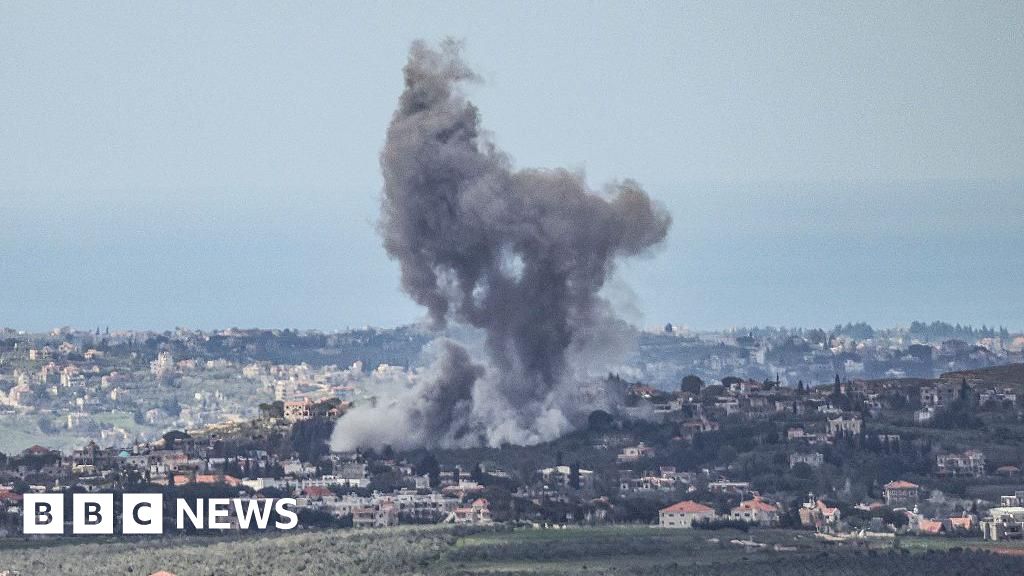

Global Security Alert: Escalating Tensions on the Israel-Lebanon Border Threaten Regional Stability
A Dangerous New Front Opens as Israel Vows to Demolish Lebanese Border Villages
The Middle East stands on the brink of a devastating escalation as Israeli Defense Minister Israel Katz declares plans to demolish homes in Lebanese villages near the border, citing security concerns. The announcement, made amid ongoing cross-border clashes between Israel and Hezbollah, raises fears of a full-scale war that could engulf the region. With global powers scrambling to prevent another conflict, the stakes have never been higher for an already volatile part of the world.
Why This Escalation Matters
The Israel-Lebanon border has been a flashpoint for decades, but recent months have seen a dangerous uptick in hostilities. Since the October 7 Hamas attacks and Israel’s subsequent war in Gaza, Hezbollah—the Iran-backed militant group in Lebanon—has engaged in near-daily rocket and drone strikes against northern Israel. Israel’s retaliatory airstrikes have killed hundreds in southern Lebanon, including civilians and Hezbollah fighters.
Now, Katz’s warning signals a potential shift from targeted strikes to broader territorial operations, a move that could trigger a wider war with catastrophic humanitarian and geopolitical consequences.
The Strategic and Humanitarian Risks
1. A Wider War Looms
A full-scale Israel-Hezbollah conflict would dwarf the current fighting in Gaza. Hezbollah possesses an estimated 150,000 rockets and missiles, far more than Hamas, and has deeper ties to Iran’s Revolutionary Guard. If Israel moves forward with demolishing Lebanese villages, Hezbollah could retaliate with unprecedented force, dragging Iran and its proxies into direct confrontation with Israel—and potentially the U.S.
2. Displacement and Civilian Suffering
Southern Lebanon’s residents, many of whom have already fled due to shelling, now face the threat of mass displacement. Katz’s statement suggests Israel may enforce a “buffer zone,” a tactic last used during its 18-year occupation of southern Lebanon (1985–2000). Such measures could lead to long-term displacement, mirroring the humanitarian crisis in Gaza.
3. Global Economic Fallout
Beyond immediate casualties, a regional war would disrupt oil supplies, spike energy prices, and destabilize global markets. The Lebanon-Israel border sits near critical Mediterranean trade routes, and any escalation could disrupt shipping lanes already strained by Houthi attacks in the Red Sea.
International Reactions and Diplomatic Efforts
The U.S., France, and the UN have intensified mediation efforts, but progress remains elusive. Washington has repeatedly warned against a broader war, deploying senior envoys to Beirut and Tel Aviv. Meanwhile, Hezbollah insists it will only cease fire if Israel ends its Gaza offensive—a demand Israel rejects.
The UN’s peacekeeping force in southern Lebanon (UNIFIL) has called for restraint, but its ability to enforce stability is limited. With both sides hardening their positions, the risk of miscalculation grows by the day.
Historical Context: Why This Border Remains a Tinderbox
The Israel-Lebanon frontier has been contested since Israel’s founding in 1948. Hezbollah emerged in the 1980s as a resistance force against Israel’s occupation, and the two fought a brutal month-long war in 2006. Since then, an uneasy ceasefire has held, but the current clashes represent the most sustained violence since that conflict.
Lebanon, already crippled by economic collapse and political paralysis, cannot afford another war. Yet Hezbollah’s allegiance to Iran often overrides domestic concerns, leaving civilians caught in the crossfire.
What Comes Next?
Diplomacy remains the only viable path to de-escalation, but time is running out. If Israel proceeds with demolitions, Hezbollah’s response could be swift and severe. Alternatively, a last-minute ceasefire deal—potentially linked to Gaza—could avert disaster.
For now, the world watches nervously as two heavily armed adversaries inch closer to all-out war. The consequences would ripple far beyond the Middle East, testing global alliances, economies, and the fragile balance of power in one of the world’s most combustible regions.
A Fragile Peace Hangs by a Thread
As tensions reach a boiling point, the international community faces a stark choice: act decisively to prevent catastrophe or brace for a conflict that could reshape the region for years to come. The coming days will determine whether diplomacy can prevail—or whether the Middle East is destined for another devastating war.
