


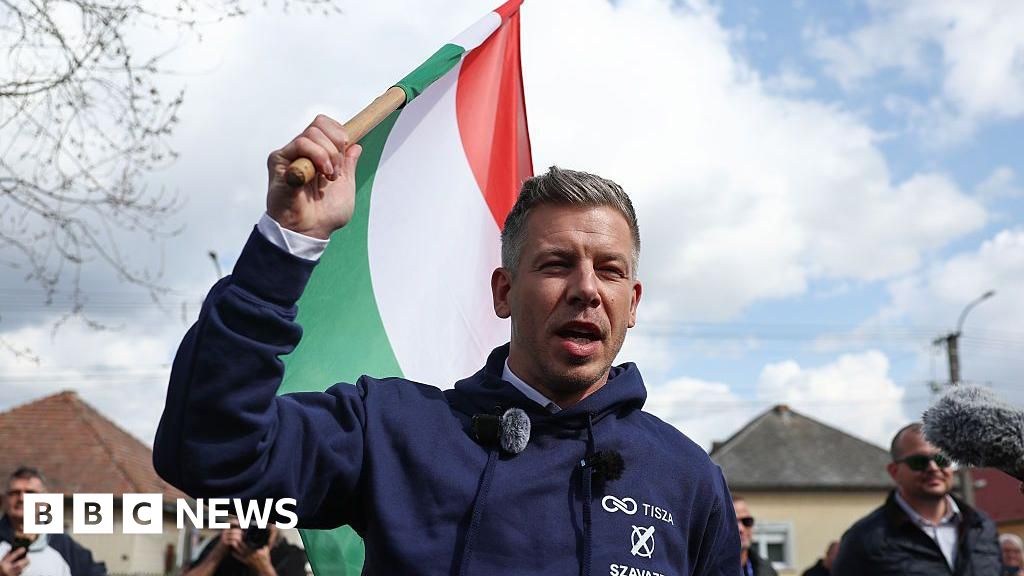

A New Political Force Emerges: Hungary’s Leadership Faces Unprecedented Challenge
Budapest, Hungary – October 2023
In the heart of Central Europe, a political storm is brewing that could reshape the landscape of Hungarian politics for decades. For the first time since Viktor Orbán rose to power in 2010, his ironclad grip on the nation’s leadership is being seriously tested. The catalyst? Péter Magyar, a charismatic and outspoken figure who has rapidly gained traction as a formidable opponent to Orbán’s Fidesz party. Magyar’s rise underscores a growing discontent among Hungarians with the status quo, threatening to dismantle what many have long considered an unassailable political dynasty.
As Hungary grapples with economic stagnation, allegations of corruption, and increasing international isolation, Magyar’s emergence raises critical questions about the country’s future—and its role in the broader European Union. For a region already fraught with geopolitical tensions, the outcome of this internal struggle could ripple far beyond Hungary’s borders.
The Rise of Péter Magyar
Péter Magyar, a former insider within Orbán’s administration, has positioned himself as a credible alternative to the long-standing regime. With a background in law and public service, Magyar has leveraged his intimate knowledge of the government’s inner workings to critique its policies and practices. His platform emphasizes transparency, accountability, and economic reform—issues that resonate deeply with a populace weary of corruption scandals and perceived mismanagement.
Magyar’s rapid ascent has been aided by his ability to connect with younger voters and urban populations, groups that have grown increasingly disillusioned with Orbán’s nationalist rhetoric and conservative policies. Through a series of high-profile public appearances and viral social media campaigns, Magyar has managed to galvanize support in a way that previous opposition figures have failed to do.
Orbán’s Legacy Under Threat
Viktor Orbán’s tenure as Hungary’s prime minister has been marked by a combination of political acumen and authoritarian tendencies. Since his election in 2010, Orbán has consolidated power through constitutional changes, media control, and the systematic weakening of opposition parties. His administration has pursued a staunchly nationalist agenda, prioritizing Hungarian sovereignty over EU integration and positioning the country as a bulwark against liberal values.
However, Orbán’s dominance has also led to growing criticism both domestically and internationally. Allegations of cronyism, electoral manipulation, and undermining democratic institutions have tarnished his reputation. The EU has repeatedly clashed with Hungary over issues ranging from press freedom to rule of law, leading to frozen funds and strained relations. Magyar’s rise represents not just a political challenge but a referendum on Orbán’s leadership style and policies.
Global Implications
Hungary’s political turmoil carries significant implications for the European Union and beyond. As a member state, Hungary’s alignment—or lack thereof—with EU values has been a persistent source of tension. Orbán’s government has often been at odds with Brussels on issues like migration, judicial independence, and LGBTQ+ rights. A shift in leadership could pave the way for Hungary to adopt a more cooperative stance within the bloc, potentially strengthening EU unity at a time when cohesion is crucial.
On the global stage, Hungary’s geopolitical positioning has drawn attention from major powers. Orbán’s government has cultivated close ties with Russia and China, often diverging from the EU’s more confrontational approach. A change in leadership could recalibrate Hungary’s foreign policy, impacting the balance of power in Europe and beyond.
The situation in Hungary also serves as a bellwether for the broader struggle between populism and liberal democracy. As Orbán faces an unprecedented challenge, the world watches closely to see whether his brand of nationalism can withstand the pressures of a changing political landscape.
Why This Matters
The stakes in Hungary’s political crisis extend far beyond its borders. At a time when democratic institutions are under strain across the globe, the outcome of this struggle could signal a broader shift in the fight against authoritarianism. For the European Union, Hungary’s trajectory will influence its ability to maintain unity and uphold its core values.
Moreover, Hungary’s geopolitical choices have far-reaching consequences. Its relationships with Russia, China, and the West are pivotal in shaping the region’s security and economic dynamics. As Orbán’s rule faces its most serious threat in over a decade, the world is reminded that even the most entrenched leaders are not immune to the winds of change.
A Turning Point for Hungary
As Péter Magyar’s influence grows, Hungary stands at a crossroads. The nation’s political future—and its role on the global stage—hangs in the balance. For Viktor Orbán, the challenge posed by Magyar is not just a test of his leadership but a reckoning with the legacy he has built over the past 13 years.
In the coming months, Hungary’s citizens will decide whether to continue down the path forged by Orbán or embrace a new direction championed by Magyar. Whatever the outcome, the implications will resonate far beyond the Danube River, offering lessons and warnings for democracies everywhere.
The world watches, waiting to see if Hungary’s political revolution will become a beacon of hope—or a cautionary tale.
