


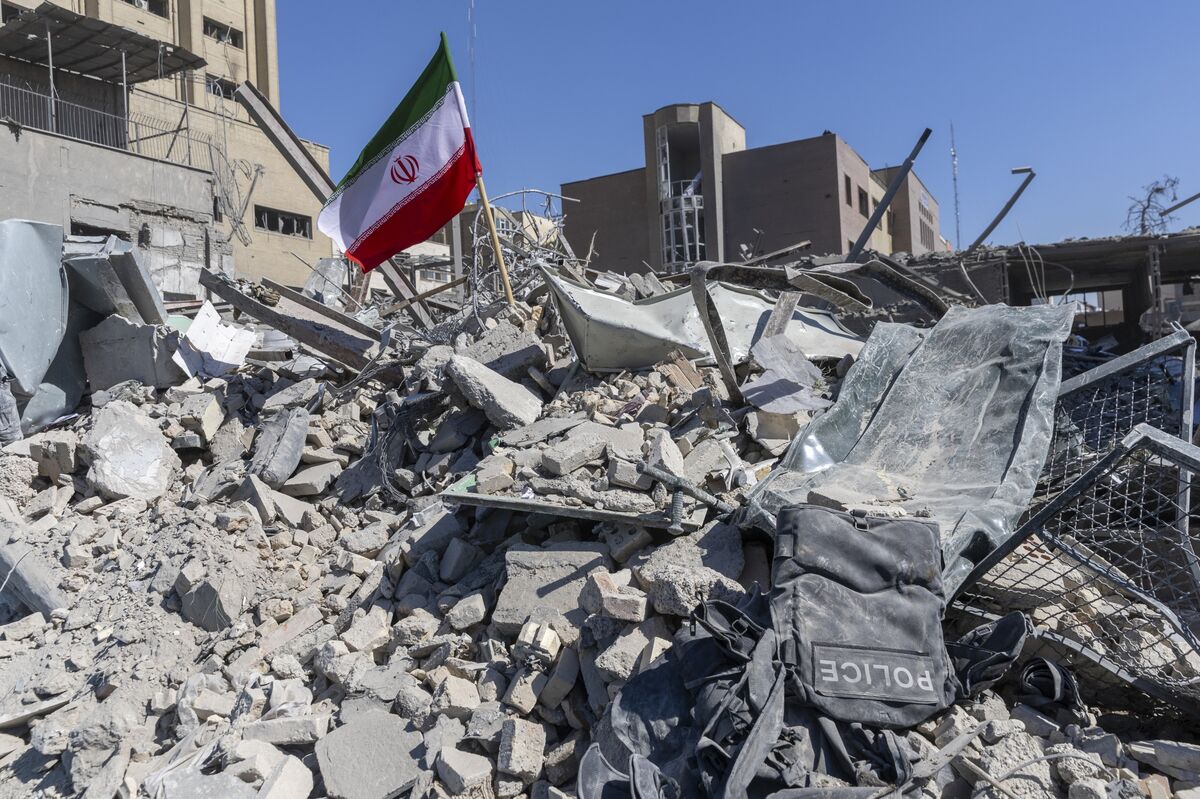

Global Markets Shaken as Trump’s Iran Warning Fuels Uncertainty
In a week marked by heightened geopolitical tensions and economic unease, global financial markets experienced a sharp downturn as investor confidence wavered following a stark warning from former U.S. President Donald Trump. Speaking on Wednesday, Trump declared that the United States would strike Iran “extremely hard” within two to three weeks, a statement that reignited fears of escalating conflict in the Middle East. The remarks, delivered amid an already volatile geopolitical climate, sent shockwaves through international markets, prompting a sell-off in equities and a surge in demand for safe-haven assets such as the U.S. dollar.
The immediate market reaction underscored the fragility of investor sentiment, which had been cautiously optimistic in recent weeks amid hopes for de-escalation in the region. Instead, Trump’s ominous prediction dashed those expectations, leaving traders grappling with renewed uncertainty. The S&P 500 and Nasdaq Composite both recorded notable declines, while European and Asian markets followed suit, echoing the global unease. The dollar, traditionally seen as a refuge in times of instability, strengthened against a basket of currencies, further reflecting the flight to safety among investors.
A History of Tensions
The strained relationship between the U.S. and Iran has long been a focal point of global geopolitical tensions, with decades of mistrust and periodic confrontations shaping the dynamic between the two nations. The 2015 Joint Comprehensive Plan of Action (JCPOA), commonly known as the Iran nuclear deal, briefly offered a glimmer of hope for détente. However, the Trump administration’s decision to withdraw from the agreement in 2018 and impose stringent economic sanctions on Iran reignited hostilities.
In the years since, sporadic incidents, including attacks on oil facilities, tanker seizures, and the targeted killing of Iranian General Qasem Soleimani by the U.S. in 2020, have kept tensions simmering. Recent months have seen a series of provocations, including Iran’s acceleration of its nuclear program and alleged involvement in regional conflicts, further complicating efforts to restore diplomatic channels. Against this backdrop, Trump’s latest statement has amplified concerns that the situation could escalate into a broader conflict, with far-reaching consequences for global stability.
Market Reactions and Economic Implications
The financial markets’ response to Trump’s comments highlights the profound interconnectedness of geopolitics and economics. Stocks across major indices slid as investors recalibrated their risk appetites, with sectors sensitive to geopolitical uncertainty, such as energy and defense, experiencing heightened volatility. Oil prices, which had been relatively stable in recent weeks, also faced upward pressure as traders priced in the potential for supply disruptions in the event of a military confrontation.
The U.S. dollar’s rise was another clear indicator of market anxiety. As the world’s primary reserve currency, the dollar tends to appreciate during periods of uncertainty, and its recent strength reflects broader concerns about the potential for conflict to disrupt global trade and economic recovery. Meanwhile, gold, another traditional safe-haven asset, also saw increased demand, with prices climbing to their highest levels in weeks.
Analysts caution that prolonged uncertainty could have broader economic implications, particularly for emerging markets. A stronger dollar typically exerts pressure on these economies by increasing the cost of servicing dollar-denominated debt and making imports more expensive. Additionally, rising oil prices could fuel inflationary pressures, complicating central banks’ efforts to balance growth and price stability.
Global Reactions and Diplomatic Challenges
The international community has been swift to react to the developments, with leaders and diplomats expressing concern over the potential for renewed hostilities. The European Union, which has sought to salvage the Iran nuclear deal despite U.S. opposition, has called for restraint and dialogue. Similarly, regional powers such as Saudi Arabia and Israel, both long-standing adversaries of Iran, have reiterated their commitment to stability while closely monitoring the situation.
For Iran, the path forward remains fraught with challenges. The country’s economy, battered by years of sanctions, faces mounting pressure as it navigates the dual challenges of domestic unrest and international isolation. The Biden administration, which initially sought to revive diplomatic talks with Iran, has faced criticism for its handling of the situation, with some observers arguing that its approach has been too cautious.
Broader Implications for Global Security
Beyond the immediate economic impact, the prospect of a U.S.-Iran conflict carries profound implications for global security. The Middle East, already a volatile region, could see further destabilization, with ripple effects extending to neighboring countries and beyond. Moreover, the potential for miscalculation or unintended escalation remains a significant concern, particularly given the complex web of alliances and rivalries in the region.
Experts emphasize the importance of diplomatic efforts to de-escalate tensions and prevent a full-blown crisis. However, with trust in short supply and domestic political considerations influencing decision-making on both sides, the road to reconciliation appears increasingly uncertain.
A Delicate Balancing Act
As markets continue to grapple with the fallout from Trump’s comments, the broader implications of the U.S.-Iran standoff remain a source of concern for policymakers and investors alike. The delicate balancing act between deterrence and diplomacy will be critical in the weeks ahead, with the stakes extending far beyond the financial markets.
For now, the world watches and waits, hoping for clarity and restraint in a situation fraught with peril. As history has shown, the consequences of miscalculation in such high-stakes scenarios can be profound, underscoring the need for measured and deliberate action in the face of uncertainty. The coming weeks will undoubtedly test the resolve of all parties involved, with the potential to shape the trajectory of global affairs for years to come.
In the meantime, markets remain on edge, reflecting the uneasy reality that in today’s interconnected world, geopolitical tensions can reverberate far beyond their immediate origins. Whether this latest flare-up leads to conflict or dialogue, its impact will be felt across continents, reminding us of the fragile nature of peace in an increasingly unstable world.
