



Israel’s War in Iran: A High-Stakes Gamble with Global Consequences
By [Your Name], Global Security Correspondent
A Dangerous Escalation
Israel’s prolonged military campaign in Iran has entered a critical phase, with no clear endgame in sight. What began as a targeted operation to degrade Tehran’s nuclear and missile capabilities has spiraled into a protracted conflict, raising fears of a broader regional war. Despite Prime Minister Benjamin Netanyahu’s bold claims of reshaping the Middle East, Iran remains defiant—its regime intact, its missile arsenal operational, and its nuclear program alarmingly close to weapons-grade capability. The stakes could not be higher: failure risks emboldening Iran, while success could destabilize an already volatile region.
The Strategic Stalemate
More than a month into the war, Israel has yet to achieve its primary objective—neutralizing Iran’s nuclear threat. Satellite imagery and intelligence reports suggest that Tehran’s uranium enrichment facilities remain active, with enough highly enriched material to potentially build a dozen nuclear warheads if further processed. Meanwhile, Iranian-backed militias continue launching rockets into Israel, while the regime’s leadership vows retaliation.
Netanyahu, who has long framed Iran as an existential threat, now faces mounting pressure at home and abroad. Critics argue that the campaign has overextended Israel’s military without delivering decisive results. “This is no longer about containment—it’s about survival,” said a senior Israeli defense official, speaking on condition of anonymity. “But without a clear exit strategy, we risk trading short-term gains for long-term chaos.”
Global Repercussions
The conflict has sent shockwaves far beyond the Middle East. Oil prices have surged amid fears of disrupted shipments through the Strait of Hormuz, a vital chokepoint for global energy supplies. The U.S. and European allies have scrambled to prevent a wider war, with Washington reinforcing naval patrols and urging de-escalation behind closed doors.
Russia and China, meanwhile, have seized the opportunity to position themselves as mediators—a move analysts see as an attempt to undermine Western influence. “This isn’t just a regional conflict; it’s a proxy battleground for great-power competition,” said Dr. Elena Petrov, a geopolitical strategist at the International Crisis Group. “Every missile strike accelerates the fragmentation of the global order.”
The Nuclear Shadow
At the heart of the crisis lies Iran’s nuclear program. Despite years of sanctions and sabotage, Tehran has steadily expanded its enrichment capacity. Experts warn that if the current war does not dismantle these facilities, Iran could emerge with an even stronger deterrent—or worse, a nuclear breakout capability. “The window for diplomatic solutions is closing,” said Mark Fitzpatrick, a former non-proliferation official. “If Israel doesn’t finish the job, someone else might have to.”
The implications are dire. A nuclear-armed Iran could trigger a regional arms race, with Saudi Arabia and Turkey likely pursuing their own programs. For Israel, the calculus is existential: a failure to act now could mean facing an even deadlier threat in the near future.
Human Cost and Humanitarian Fallout
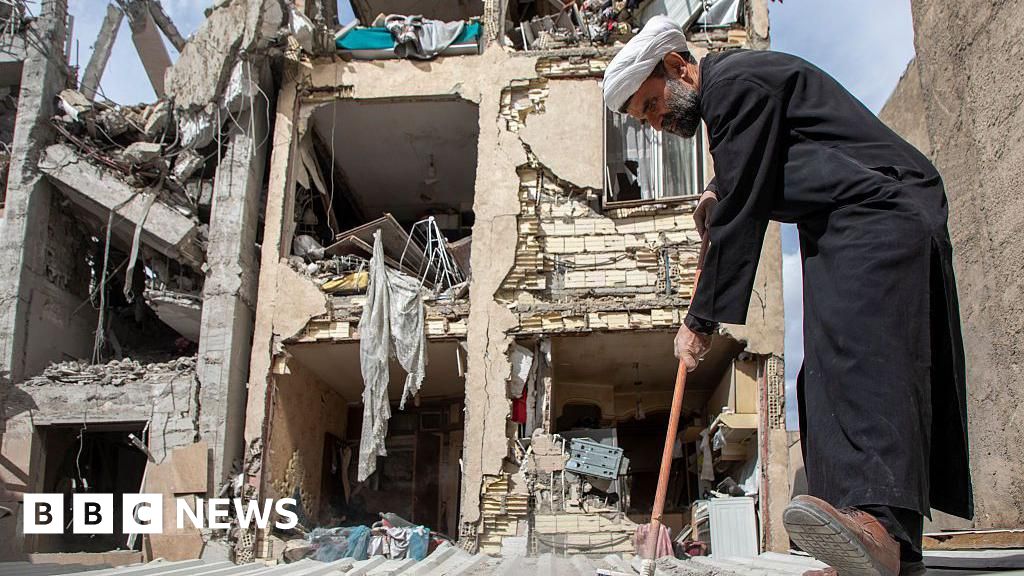
Civilian casualties on both sides have drawn condemnation from the UN and human rights groups. Iranian state media reports thousands dead, while Israel claims its strikes are precision-targeted. Yet images of destroyed neighborhoods and displaced families dominate global headlines, fueling outrage and complicating Israel’s diplomatic standing.
The humanitarian crisis is compounded by Iran’s economic collapse, exacerbated by wartime shortages. With inflation soaring and medical supplies dwindling, ordinary Iranians are paying the heaviest price. “This war isn’t just fought on battlefields—it’s crushing lives in markets and hospitals,” said Leila Mohammadi, an aid worker in Tehran.
What Comes Next?
The conflict’s trajectory remains uncertain. Israel could intensify strikes, risking direct confrontation with Hezbollah or even Russia. Alternatively, a ceasefire brokered by China or the UN might freeze hostilities—but leave Iran’s nuclear ambitions unchecked. For Netanyahu, the political clock is ticking; his wartime unity government shows signs of strain as opposition leaders demand accountability.
Globally, the war has exposed the limits of deterrence and the fragility of alliances. Whether it ends in a pyrrhic victory or a protracted quagmire, one thing is clear: the Middle East—and the world—will bear the consequences for years to come.
A Defining Moment for Global Security
As the conflict enters its second month, the world watches with bated breath. This is more than a regional power struggle; it is a test of whether military force can thwart nuclear proliferation—and whether the international community can prevent a crisis from spiraling into catastrophe. For Netanyahu, for Iran, and for global stability, the next moves will be decisive. The price of miscalculation has never been higher.
—Reporting with contributions from intelligence and diplomatic sources in Tel Aviv, Washington, and Brussels.
