



Housing Crisis Debate Reignited as Safety Concerns Clash with Construction Needs
By [Your Name]
LONDON, UK — A senior housing official has sparked controversy by suggesting that fire safety regulations should not halt new home construction, arguing that fatal house fires are statistically rare compared to road deaths. The remarks come amid an ongoing national debate over balancing safety standards with urgent housing demands.
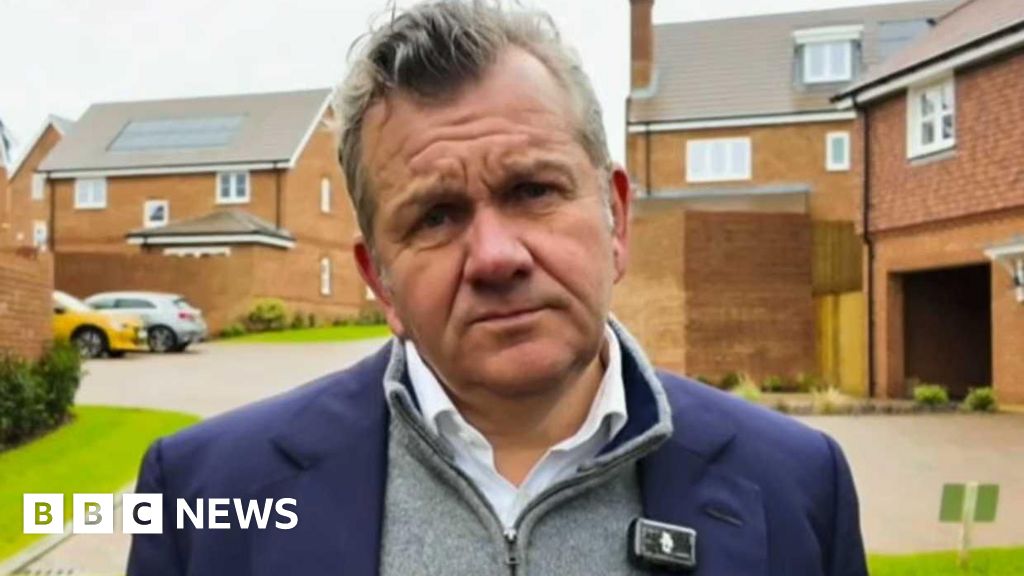
Speaking at a housing policy forum, Jonathan Dudley, a prominent figure in the UK’s construction sector, defended the need to accelerate homebuilding despite heightened scrutiny following the 2017 Grenfell Tower tragedy, which claimed 72 lives. “Extracting Grenfell from the statistics, actually people dying in house fires is rare,” Dudley said. “Many, many more people die on the roads driving cars, but we’re not making cars illegal, so why are we stopping houses from being built?”
The comments have drawn sharp reactions from fire safety advocates and survivors’ groups, who argue that such comparisons undermine efforts to prevent future tragedies. Meanwhile, developers and government officials remain locked in a struggle to address the UK’s chronic housing shortage while ensuring stricter post-Grenfell building regulations are met.
The Housing Shortage vs. Safety Debate
The UK faces a deficit of nearly 4 million homes, according to recent estimates, with demand far outpacing supply. Successive governments have pledged to ramp up construction, but progress has been hampered by complex planning laws, rising material costs, and—critically—the fallout from Grenfell.
In response to the disaster, the government introduced the Building Safety Act 2022, imposing stricter fireproofing standards and requiring costly retrofits for existing high-rises. While widely praised for prioritizing safety, critics argue the regulations have slowed construction to a crawl, exacerbating the housing crisis.
Dudley’s remarks reflect growing frustration within the industry. “If we let fear dictate policy, we’ll never solve the housing shortage,” he asserted. “We need proportionality—safety matters, but so does giving people homes.”
Pushback from Safety Campaigners
Fire safety groups and Grenfell survivors have condemned the analogy to road fatalities, calling it misleading and insensitive. “Comparing preventable fire deaths to car accidents is a false equivalence,” said a spokesperson for the Grenfell United survivors’ group. “The issue isn’t frequency—it’s whether deaths could be avoided with proper regulation.”
Experts note that while fatal house fires are relatively uncommon—official data shows fewer than 300 fire-related deaths annually in England—the Grenfell tragedy exposed systemic failures in building safety, including flammable cladding and inadequate evacuation plans.
“Road safety improvements—like seatbelt laws and crash testing—have drastically reduced fatalities over decades,” said Dr. Emily Carter, a fire safety researcher at the University of Manchester. “The same rigor should apply to buildings.”
Government and Industry at a Crossroads
The government has attempted to strike a balance, pledging both faster construction and stronger safeguards. Housing Secretary Michael Gove recently announced plans to streamline approvals for low-risk developments while maintaining “gold-standard” safety for high-rises.
Yet tensions persist. Developers argue that excessive red tape is stifling projects, while campaigners warn against cutting corners. The Home Builders Federation reports that new housing starts have dropped by 20% since 2022, attributing the decline partly to regulatory delays.
Meanwhile, leaseholders in older buildings still face crippling costs to replace unsafe cladding, despite government remediation funds. “The system is broken,” said Tom Reynolds, CEO of the Builders’ Association. “We need smarter regulations, not just more of them.”
What Comes Next?
The debate highlights a broader dilemma: how to reconcile urgent housing needs with non-negotiable safety standards. With homelessness rising and young families priced out of homeownership, pressure is mounting for solutions.
Some propose modular or timber-framed homes—quicker to build but subject to fire safety debates. Others advocate for decentralized planning powers to speed up approvals.
For now, Dudley’s comments have reignited a contentious discussion. As the UK grapples with its housing crisis, the question remains: Can the country build faster without compromising on the lessons of Grenfell?
The answer may shape Britain’s urban landscape—and its safety—for decades to come.
