



Japanese Companies Scale Back Share Buybacks Amid Economic Uncertainty
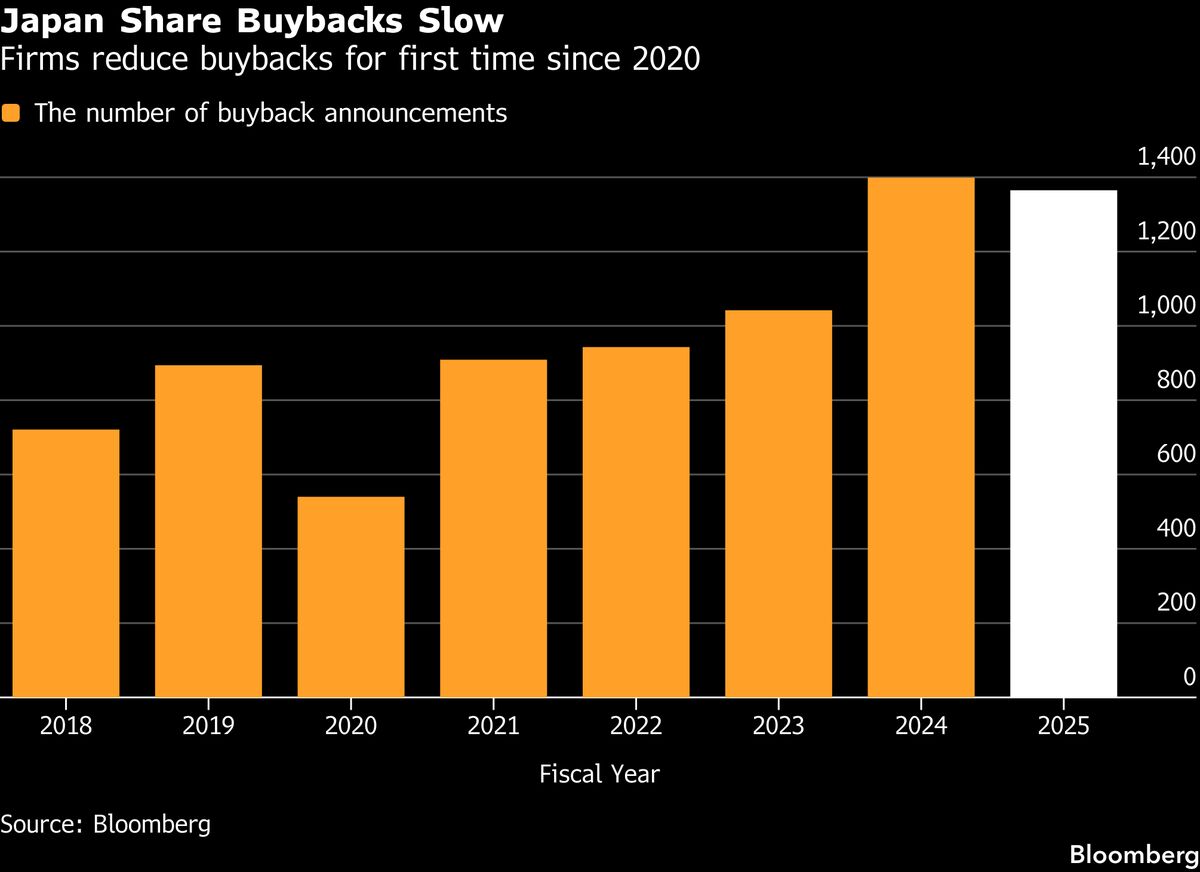
Tokyo, Japan – In a notable shift for Japan’s corporate landscape, companies across the archipelago have announced a significant reduction in share buyback programs during the fiscal year that ended on March 31. This marks the first decline in such activity since 2020, signaling heightened caution among businesses grappling with economic headwinds and shifting market dynamics.
According to data compiled by financial institutions and market analysts, the total value of share buybacks announced by Japanese firms fell by approximately 15% compared to the previous fiscal year. This reversal comes after a period of robust buyback activity, which had been steadily climbing since the pandemic-induced market volatility of 2020. Share buybacks, a common strategy used by companies to return capital to shareholders and boost stock prices, are often seen as a barometer of corporate confidence and financial health. The recent downturn suggests that Japanese firms are reassessing their priorities amid a challenging economic environment.
Economic Pressures Drive Cautious Corporate Behavior
The decline in share buybacks reflects broader concerns about Japan’s economic outlook. Despite a modest recovery from the COVID-19 pandemic, the country continues to face a host of challenges, including persistent inflation, a weakening yen, and sluggish consumer spending. Inflation, though less severe than in many Western economies, has eroded corporate margins, particularly for companies reliant on imported raw materials. Meanwhile, the yen’s depreciation against the U.S. dollar has increased costs for businesses heavily dependent on overseas markets.
Additionally, global economic uncertainties, such as the ongoing war in Ukraine, escalating geopolitical tensions in Asia, and slowing growth in key markets like China, have added to the cautionary sentiment. “Companies are becoming more risk-averse in this environment,” noted Hiroshi Nakamura, chief economist at Tokyo-based think tank Japan Economic Research Institute. “Share buybacks are often seen as a way to signal confidence in the future, but right now, many firms are choosing to conserve cash instead.”
Regulatory and Shareholder Pressures Play a Role
The reduction in buybacks may also be influenced by evolving regulatory and shareholder expectations. In recent years, Japanese authorities have been pushing companies to improve corporate governance and prioritize long-term growth over short-term financial engineering. The Tokyo Stock Exchange, for instance, has introduced initiatives aimed at encouraging firms to focus on sustainable profitability and capital efficiency.
At the same time, activist investors and institutional shareholders have been increasingly vocal in urging companies to allocate resources more strategically. While share buybacks can boost stock prices temporarily, critics argue that they often divert funds from investments in innovation, workforce development, and other areas critical to long-term competitiveness. “There’s a growing recognition that companies need to strike a balance between rewarding shareholders and investing in their future,” said Akiko Tanaka, a corporate governance expert at Kyoto University.
Sectoral Divergences Highlight Uneven Impact
The decline in buybacks has not been uniform across all industries. Sectors most exposed to global economic fluctuations, such as manufacturing and technology, have scaled back more aggressively. For example, major electronics firms and auto manufacturers, which rely heavily on exports, have announced fewer buybacks as they grapple with rising costs and softening demand abroad.
In contrast, domestic-focused industries, such as retail and real estate, have been relatively more resilient. Some companies in these sectors have continued to pursue buybacks as a way to support their stock prices amid weak consumer sentiment. However, even here, the pace of activity has slowed compared to previous years.
Historical Context and Global Comparisons
Japan’s corporate buyback trend has been a subject of considerable interest in global financial circles. Historically, Japanese firms were known for their conservative approach to capital allocation, often prioritizing cash reserves over shareholder returns. However, this began to change in the 2010s, as pressure from activist investors and government reforms led to a surge in buybacks and dividend payouts.
The recent decline in buybacks stands in contrast to trends in other major economies, particularly the United States, where firms have continued to repurchase shares at a robust pace. This divergence underscores the unique challenges facing Japanese businesses, including demographic pressures, deflationary tendencies, and a more cautious corporate culture.
Implications for Investors and the Broader Economy
For investors, the reduction in buybacks could signal a shift in the risk-reward calculus of Japanese equities. While lower buyback activity may reduce short-term stock price support, it could also reflect a greater focus on long-term value creation. “Investors need to look beyond buybacks and consider the broader strategic moves companies are making,” said Kenji Sato, a portfolio manager at Mitsubishi UFJ Asset Management.
On a macroeconomic level, the decline in buybacks may have mixed implications. On one hand, it suggests that companies are becoming more prudent in their financial management, which could bolster resilience in the event of further economic shocks. On the other hand, it may also reflect subdued business confidence, which could weigh on investment and growth prospects.
Looking Ahead: A Test of Corporate Strategy
As Japanese firms navigate an uncertain economic landscape, their approach to capital allocation will be closely watched by investors, regulators, and industry analysts alike. While share buybacks remain a valuable tool for managing shareholder returns, the current environment demands a more nuanced strategy that balances short-term financial considerations with long-term sustainability.
The coming fiscal year will serve as a litmus test for Japan’s corporate sector, as companies seek to adapt to evolving economic realities while maintaining investor trust. Whether this shift marks a temporary pause or a broader trend remains to be seen.
In a world of fluctuating markets and shifting priorities, Japan’s corporate leaders are being forced to rethink their playbook—a reminder that in business, as in life, adaptability is key.
