


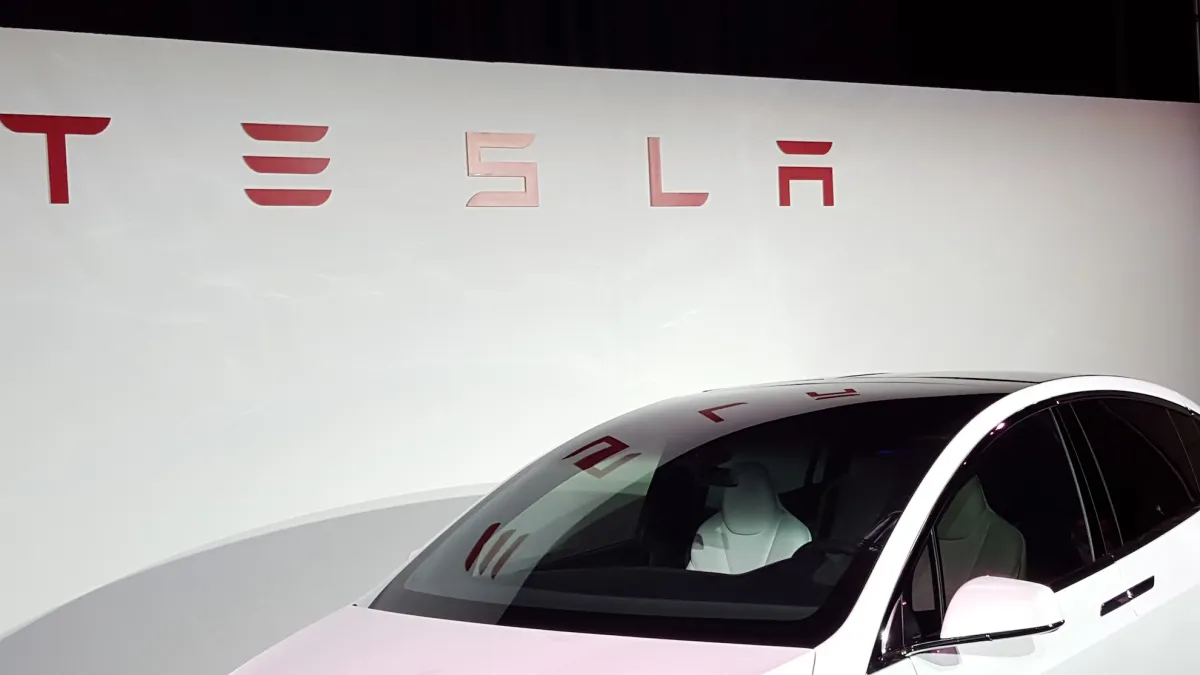

Tesla’s Model S and Model X Era Nears Its End as Musk Pivots to AI-Driven Future
In a move that marks the end of an era for Tesla, the company has officially ceased custom orders for its flagship Model S sedan and Model X SUV, with only a few hundred units remaining in inventory. The confirmation came directly from Tesla CEO Elon Musk in a post on X, signaling the final chapter for two vehicles that once defined the electric vehicle (EV) revolution. As Tesla shifts its focus toward artificial intelligence (AI) and autonomous mobility, the discontinuation of these iconic models underscores a broader transformation within the company—and the automotive industry at large.
The decision to phase out the Model S and Model X was first announced in January 2026, but the writing had been on the wall for years. Sales of both vehicles have steadily declined since their peaks in 2017, overshadowed by Tesla’s more affordable and mass-market offerings, the Model 3 and Model Y. Combined sales of the Model S and X, categorized under “other models” alongside the Cybertruck, fell from 101,312 units in 2017 to just 50,850 in 2025—a stark contrast to the 1.63 million vehicles Tesla delivered globally last year.
The Rise and Fall of Tesla’s Flagships
The Model S and Model X were instrumental in establishing Tesla as a leader in the EV market. Launched in 2012, the Model S was Tesla’s first volume-electric vehicle, blending luxury with cutting-edge technology to redefine consumer perceptions of EVs. Its success not only disrupted the automotive industry but also forced legacy automakers to accelerate their own electric ambitions. The Model X, introduced in 2015, further cemented Tesla’s reputation for innovation, featuring distinctive falcon-wing doors and advanced driver-assistance features. However, its complexity and production delays earned it mixed reviews, with Musk himself admitting that the vehicle was perhaps overly ambitious.
Despite their groundbreaking contributions, the Model S and X gradually lost relevance as Tesla pivoted toward affordability and scale. The Model 3, launched in 2017, and the Model Y, introduced in 2020, became the company’s best-selling models, appealing to a broader audience and dominating global EV sales. Meanwhile, Tesla’s focus shifted to new frontiers, including AI, robotics, and autonomous vehicles—areas Musk believes will define the company’s future.
Musk’s Ambitious Bet on AI and Autonomy
Rather than replacing the Model S and X with another traditional EV, Musk has chosen to double down on Tesla’s AI-driven vision. Plans for a $25,000 mass-market EV have been scrapped, with resources reallocated to two futuristic projects: the Optimus humanoid robot and the Cybercab autonomous vehicle. Production of the Optimus robot is set to begin at Tesla’s Fremont, California, factory following the cessation of Model S and X manufacturing. Meanwhile, the Cybercab, a two-seater, fully autonomous EV, is scheduled to enter mass production this month at the company’s Austin, Texas, facility.
The Cybercab represents Musk’s boldest gamble yet—a vehicle designed without traditional controls like a steering wheel or pedals, relying entirely on Tesla’s Full Self-Driving (FSD) software to navigate public roads. While the first Cybercab unit rolled off the assembly line in February 2026, the vehicle faces significant regulatory and technical hurdles before it can become a commercial reality. U.S. federal safety standards currently require vehicles to have manual controls, and Tesla has yet to publicly disclose whether it has applied for an exemption.
Challenges Ahead for Tesla’s Autonomous Ambitions
The Cybercab’s success hinges not only on overcoming regulatory barriers but also on proving the reliability and scalability of Tesla’s FSD software. Despite notable improvements, Tesla has yet to demonstrate that its autonomous technology can operate safely at scale under diverse conditions.
Furthermore, the operational complexities of deploying a robotaxi network cannot be underestimated. In states like California, companies must obtain permits to operate driverless vehicles commercially—a process that competitors like Zoox, owned by Amazon, have already begun navigating. Zoox secured an exemption from federal regulators in 2025 to test its custom-built robotaxis on public roads and is now seeking approval to expand its operations to Austin and Miami.
Musk, however, remains undeterred. During Tesla’s January 2026 earnings call, he emphasized his conviction that autonomous vehicles would dominate the future of transportation. “The vast majority of miles traveled will be autonomous in the future,” he stated, predicting that less than 5% of miles driven would involve human drivers.
A New Chapter for Tesla
The discontinuation of the Model S and Model X marks the end of a transformative chapter in Tesla’s history—one that reshaped the automotive landscape and laid the groundwork for the company’s current ambitions. While the move may signal a shift away from traditional car manufacturing, Musk’s focus on AI and autonomy reflects his belief that Tesla’s future lies beyond the wheel.
Yet, as Tesla embarks on this uncharted path, questions linger about the feasibility of its goals and the risks involved. Can the Cybercab overcome regulatory, technical, and operational challenges to become a viable product? Will Tesla’s AI-driven vision resonate with consumers and investors alike?
As the curtain falls on the Model S and Model X, the spotlight now turns to Tesla’s next act—a bold, AI-powered reinvention that could redefine mobility. Whether this gamble pays off remains to be seen, but one thing is certain: Tesla’s journey is far from over.
