



Extreme Weather Grips Greece: Gale-Force Winds, Flooding, and Saharan Dust Storm Create Chaos
Athens, Greece – A powerful convergence of extreme weather events has unleashed havoc across parts of Greece, leaving communities battered by gale-force winds, severe flooding, and a sprawling Saharan dust storm that blanketed the island of Crete. The unprecedented combination of meteorological phenomena has disrupted daily life, damaged infrastructure, and raised urgent questions about the growing frequency and intensity of such events in the age of climate change.
As residents grapple with the immediate aftermath, experts warn that this episode underscores the vulnerability of Mediterranean nations to increasingly erratic weather patterns, with broader implications for global security, migration, and environmental stability.
A Perfect Storm: Winds, Floods, and Dust Collide
The crisis began with a ferocious storm system that swept across Greece, bringing gale-force winds exceeding 100 kilometers per hour (62 miles per hour) and torrential rainfall that triggered widespread flooding. Coastal areas bore the brunt of the winds, which uprooted trees, damaged buildings, and left thousands without power. Inland regions, meanwhile, faced rivers bursting their banks, submerging roads and farmlands.
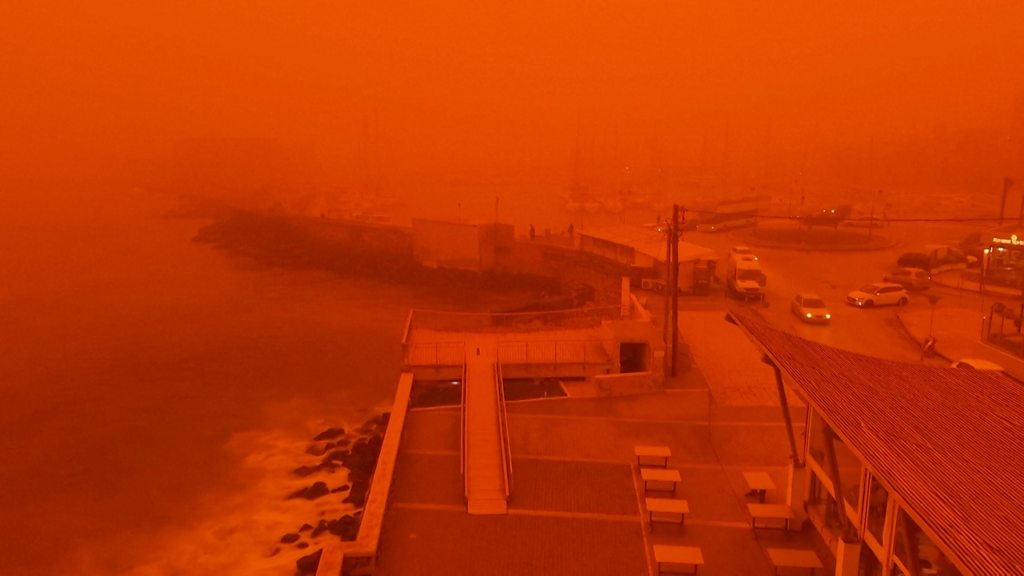
Adding to the chaos, a massive Saharan dust storm descended upon Crete, turning skies an eerie orange and significantly reducing air quality. The dust, carried by southerly winds from North Africa, coated streets, vehicles, and buildings, creating hazardous conditions for residents, particularly those with respiratory issues. The convergence of these events has left emergency services stretched thin as they respond to multiple crises simultaneously.
Global Context: Climate Change and Mediterranean Vulnerability
The extreme weather in Greece is not an isolated incident but part of a broader trend affecting the Mediterranean region and beyond. Climate scientists have long warned that rising global temperatures are intensifying weather extremes, including storms, heatwaves, and dust storms. The Mediterranean, a hotspot for climate change, is particularly susceptible due to its unique geographical and climatic characteristics.
In recent years, similar events have struck neighboring countries, from devastating wildfires in Turkey and Italy to catastrophic flooding in Libya. These disasters strain national resources, displace communities, and exacerbate existing socio-economic challenges. Moreover, the Mediterranean’s role as a migration route means that environmental crises can have far-reaching geopolitical consequences, influencing migration flows and regional stability.
The Saharan dust phenomenon, while not uncommon, is becoming more frequent and intense due to desertification and changing wind patterns driven by climate change. Such events have implications not only for local air quality but also for global ecosystems, as dust particles travel across continents, affecting weather systems and even fertilizing distant rainforests.
Why It Matters: A Global Wake-Up Call
The turmoil in Greece serves as a stark reminder of the interconnectedness of environmental and human systems. Extreme weather events disrupt economies, displace populations, and strain infrastructure, all of which can have cascading effects on global security. For Greece, a country still recovering from a decade-long financial crisis, the financial toll of this disaster could be significant, potentially requiring international aid and support.
Globally, the increasing frequency of such events highlights the urgent need for comprehensive climate action. Without significant efforts to reduce greenhouse gas emissions and adapt to changing conditions, the world can expect more frequent and severe disruptions, with dire consequences for food security, public health, and geopolitical stability.
Furthermore, the human cost of these disasters cannot be overstated. Families displaced by flooding, farmers watching their livelihoods wash away, and individuals struggling to breathe in dust-choked air—these are the faces behind the headlines. Their experiences underscore the moral imperative to address the root causes of climate change and support vulnerable communities in adapting to its impacts.
Response and Recovery: Challenges Ahead
Greek authorities have mobilized emergency response teams to assist affected areas, focusing on restoring power, clearing debris, and providing aid to those displaced by flooding. Meanwhile, health officials have issued warnings about the risks posed by the dust storm, urging vulnerable individuals to stay indoors and avoid strenuous activity.
The broader recovery effort, however, will require sustained investment and international cooperation. Experts emphasize the need for improved infrastructure, early warning systems, and community preparedness to mitigate the impact of future events.
Conclusion: A Call to Action in a Changing World
As Greece contends with the aftermath of this extreme weather episode, the world watches and reflects. The convergence of gale-force winds, flooding, and a Saharan dust storm is not merely a regional catastrophe but a global wake-up call. It highlights the escalating risks posed by climate change and the urgent need for collective action to safeguard our planet and its inhabitants.
In an era defined by environmental uncertainty, the events in Greece remind us that no nation is immune to the forces of nature. The choice before us is clear: act now to mitigate the worst impacts of climate change or face a future where such disasters become the norm. The time to act is not tomorrow but today, for the sake of Greece, the Mediterranean, and the world.
