



Hungary’s Ghosts of Revolution Resurface Amid Rising Political Tensions
A Nation’s Cry for Freedom Echoes Once More
On a crisp autumn day in Budapest, an estimated quarter of a million Hungarians gathered at Heroes’ Square, their collective voices rising in defiance against the shadows of their country’s past. The occasion was the reburial of Imre Nagy, the iconic leader of Hungary’s 1956 uprising against Soviet domination—a revolution crushed by tanks and bloodshed. Yet, as the crowd stood in solemn remembrance, another voice pierced the silence. Viktor Orbán, then a young reformist, seized the moment to deliver a seven-minute speech that electrified the masses. “If we believe in our own power, we are able to finish the communist dictatorship,” he declared, his words resonating with the hopes of a nation yearning for freedom.
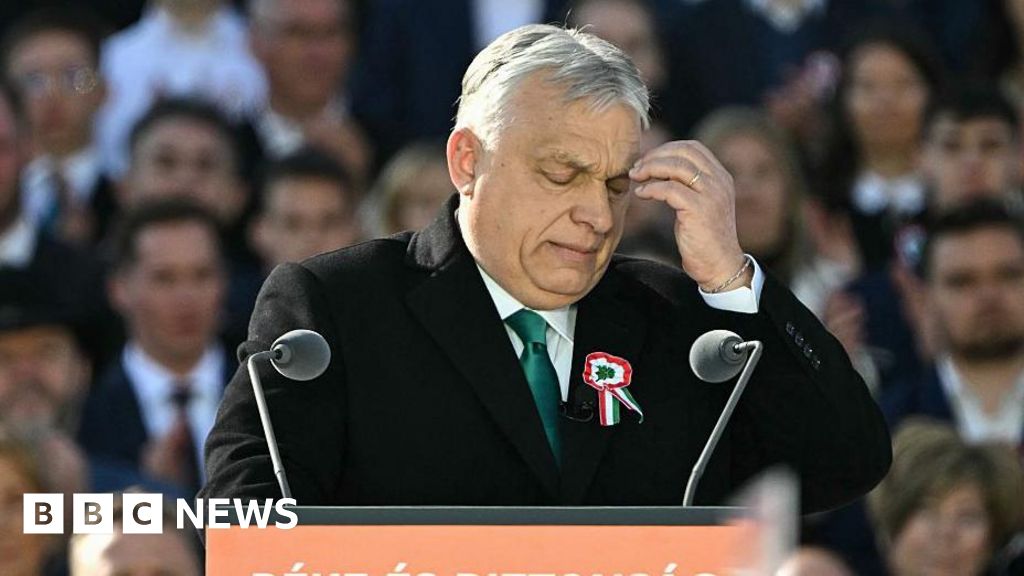
This moment, etched in Hungary’s history, was not just a tribute to Nagy but a rallying cry against authoritarianism. Today, as Orbán leads Hungary as its prime minister, his own political trajectory has drawn comparisons to the very system he once denounced, raising profound questions about democracy, freedom, and the fragile balance of power in Europe.
Historical Roots: The 1956 Uprising and Its Legacy
The Hungarian Revolution of 1956 was a watershed moment in Cold War history. Imre Nagy, a reformist leader, briefly steered Hungary toward independence from Soviet control, only to see his efforts brutally suppressed by Soviet forces. Nagy was executed in 1958, and his legacy became a symbol of resistance. Decades later, as the Iron Curtain crumbled, Nagy’s reburial in 1989 served as a powerful statement of Hungary’s break from its communist past.
For many, the event symbolized the triumph of democracy over dictatorship. Yet, it also marked the emergence of Viktor Orbán as a political force. His fiery speech that day catapulted him into the national spotlight, positioning him as a champion of reform. However, Orbán’s subsequent shift toward authoritarianism has left many questioning whether the promises of 1989 have been betrayed.
Global Context: Hungary’s Role in Europe’s Shifting Landscape
Hungary’s political evolution holds significant implications beyond its borders. As a member of the European Union (EU) and NATO, Hungary plays a crucial role in shaping regional security and stability. Under Orbán’s leadership, the country has increasingly embraced illiberal policies, clashing with EU values of democracy and rule of law. His government has curtailed press freedom, undermined judicial independence, and fostered a culture of nationalism that alarms many in Brussels.
This shift is emblematic of broader trends in Europe and beyond. From Poland to Turkey, populist leaders have risen to power, challenging the post-Cold War liberal order. Hungary’s trajectory underscores the fragility of democratic institutions and the persistent threat of authoritarianism. In a world grappling with rising geopolitical tensions—from Russia’s invasion of Ukraine to China’s growing influence—Hungary’s alignment with Moscow and Beijing further complicates the global security landscape.
Why It Matters: Democracy’s Precarious Future
The significance of Hungary’s political transformation extends far beyond its borders. As democracies worldwide face mounting pressures—from disinformation campaigns to economic instability—Hungary serves as a cautionary tale. Orbán’s erosion of democratic norms has emboldened autocratic regimes while undermining efforts to promote global governance and human rights.
For the EU, Hungary’s defiance represents a critical test of unity. Efforts to hold Orbán’s government accountable have been met with resistance, exposing the limitations of EU mechanisms designed to safeguard democratic values. This internal discord weakens the bloc’s ability to address external challenges, from migration crises to energy security.
Moreover, Hungary’s alignment with Russia and China has raised alarms among Western allies. As Moscow seeks to divide Europe and Beijing expands its influence, Hungary’s embrace of these powers undermines transatlantic solidarity. This realignment threatens to reshape the global balance of power, with far-reaching consequences for international security.
A Nation at a Crossroads
As Hungary commemorates its revolutionary past, it stands at a crossroads. The ideals championed by Imre Nagy and echoed in Orbán’s 1989 speech remain fiercely contested. The resurgence of authoritarianism within Hungary’s borders serves as a stark reminder that the struggle for freedom is never truly over.
For the international community, Hungary’s trajectory is a call to action. As democracies worldwide grapple with internal and external threats, the lessons of Hungary’s history underscore the need for vigilance, resilience, and solidarity. The echoes of Heroes’ Square remind us that the fight for democracy is both a national and global endeavor—one that demands our collective commitment to a future defined not by tyranny, but by freedom.
In the words of a young Orbán, “If we believe in our own power…” It is a sentiment that resonates now more than ever, as the world watches Hungary navigate its complex and contested path toward a new era.
