


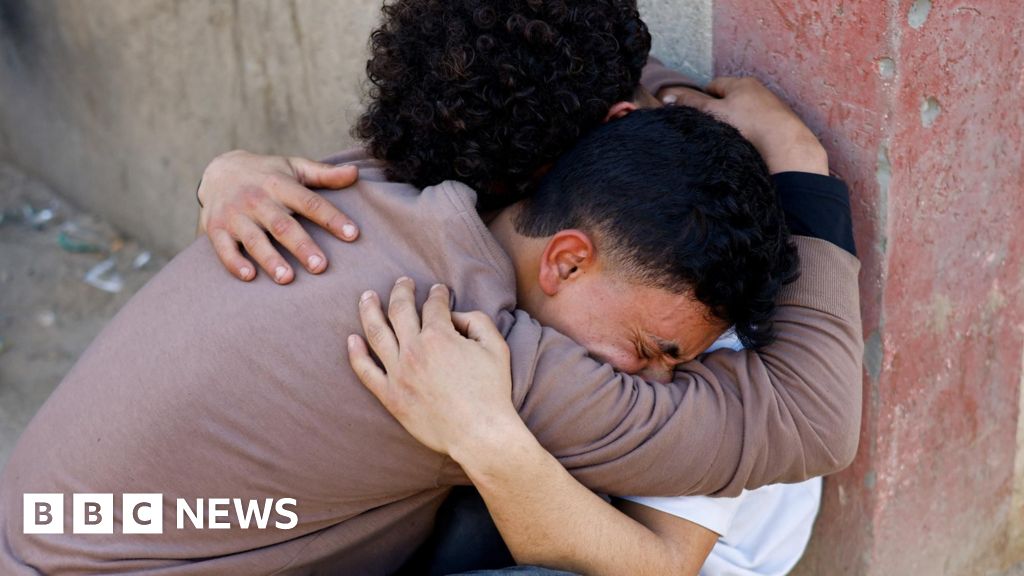

Escalation in Gaza: Israeli Strikes Target Hamas After Clashes Near Maghazi Camp
A New Flashpoint in a Decades-Long Conflict
The Gaza Strip erupted in violence once again as Israeli airstrikes targeted Hamas security personnel following a deadly clash near the Maghazi refugee camp. The confrontation, which involved an Israeli-backed militia, marks yet another dangerous escalation in a conflict that has claimed thousands of lives and destabilized the region for decades. With tensions already at a boiling point, this latest incident raises fears of a broader military confrontation—one that could draw in regional actors and further complicate international peace efforts.
What Happened?
According to reports, the violence began when Hamas security forces clashed with an Israeli-supported armed group near the Maghazi camp, a densely populated area in central Gaza. The exact circumstances remain unclear, but witnesses described heavy gunfire before Israeli warplanes struck Hamas positions.
The Israeli military has not issued an official statement, but sources suggest the operation was a direct response to the skirmish. Hamas, meanwhile, has condemned the strikes as a “blatant aggression” and vowed retaliation. The exchange highlights the fragile nature of the current ceasefire, which has been repeatedly violated since the 2023 war.
Why This Matters Globally
The Gaza conflict is not an isolated crisis—it has far-reaching implications for regional and global security.
- Risk of Wider War – Any major escalation in Gaza could draw in Hezbollah in Lebanon, Iranian-backed militias in Syria and Iraq, or even direct intervention from Tehran. The U.S. and other Western powers have repeatedly warned against further destabilization.
- Humanitarian Catastrophe – Gaza’s 2.3 million residents, already suffering under a blockade, face worsening conditions with each flare-up. The UN has warned of famine-like conditions if aid access remains restricted.
- Impact on Diplomacy – The U.S. and Arab states have been pushing for a long-term solution, including normalization deals between Israel and Saudi Arabia. Renewed violence could derail these efforts.
- Global Security Concerns – Extremist groups often exploit instability in Gaza for recruitment, posing a threat beyond the Middle East.
Historical Context: A Cycle of Violence
The Israeli-Palestinian conflict has seen repeated cycles of violence since Hamas took control of Gaza in 2007. Israel maintains a strict blockade, citing security concerns, while Hamas and other militant groups launch rockets and attacks. Past wars in 2008, 2012, 2014, and 2021 have resulted in heavy civilian casualties, drawing international condemnation but little lasting resolution.
The current tensions stem from the October 2023 war, which left over 1,200 Israelis and more than 11,000 Palestinians dead. Despite intermittent ceasefires, sporadic clashes continue, with both sides accusing the other of provocations.
International Reactions
- United States: Calls for restraint but reaffirms support for Israel’s right to self-defense.
- Egypt & Qatar: Mediating behind the scenes to prevent further escalation.
- United Nations: Urges de-escalation and warns of a humanitarian disaster.
- Iran & Hezbollah: Condemn Israeli actions and threaten retaliation if attacks continue.
What Comes Next?
The immediate concern is whether this incident spirals into another full-scale war. Both Israel and Hamas have shown they are willing to engage in limited clashes, but neither side appears eager for a prolonged conflict—at least for now. However, miscalculations or further provocations could quickly change that calculus.
Diplomatic efforts remain critical. The U.S. and regional allies are likely to intensify pressure on both sides to avoid escalation. Meanwhile, Gaza’s civilians—trapped in the middle—will once again bear the brunt of the violence.
A Conflict With No Easy End
As the world watches, the latest flare-up near Maghazi camp serves as a grim reminder that the Gaza conflict remains unresolved—and that peace is as elusive as ever. With global powers deeply invested, regional tensions high, and civilians paying the highest price, the stakes could not be higher. Until a lasting political solution is reached, the cycle of violence will continue, leaving destruction in its wake and the world on edge.
