


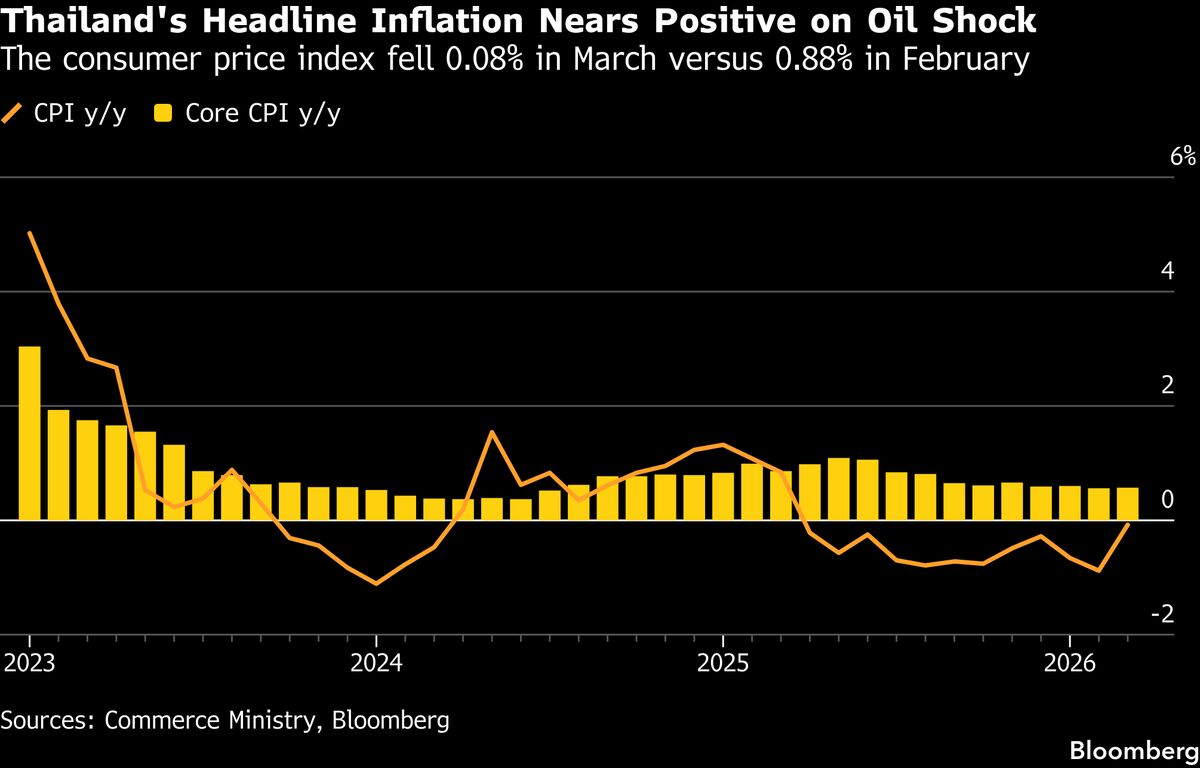

Thailand’s Prolonged Deflationary Trend Nears End as Global Oil Shocks Fuel Inflation
Bangkok, Thailand – October 2023
Thailand’s economy, which has been grappling with a year-long deflationary slump, is now on the brink of a significant shift as rising global oil prices and geopolitical tensions in the Middle East begin to exert upward pressure on inflation. The Southeast Asian nation, known for its vibrant tourism sector and export-driven economy, has witnessed a prolonged period of falling prices since late 2022. However, economists and policymakers are now warning that 2023’s deflationary trend may soon reverse, raising concerns about the broader economic implications for businesses and consumers alike.
The backdrop to this development is a complex interplay of global and domestic factors. Thailand’s economy, heavily reliant on energy imports, has felt the immediate impact of escalating crude oil prices, which surged in recent months due to supply disruptions in the Middle East. OPEC+ production cuts, coupled with geopolitical instability in regions such as the Persian Gulf, have tightened global oil supplies, pushing prices to their highest levels in nearly a year. For Thailand, a net importer of fuel, this has translated into higher transportation and manufacturing costs, which are now beginning to filter through to consumer prices.
A Year of Deflation
Thailand’s extended deflationary phase began in late 2022, driven by a combination of weak domestic demand, subdued global trade, and the lingering effects of the COVID-19 pandemic. Consumer prices in the country fell for 12 consecutive months, with September 2023 marking the latest decline, albeit at a slower pace of 0.3% year-on-year. While falling prices might seem beneficial to consumers at first glance, prolonged deflation can stifle economic growth by discouraging spending and investment. Businesses, facing declining revenues, often cut costs by reducing wages or delaying expansion plans, which can exacerbate unemployment and weaken consumer confidence.
The Thai government and central bank have implemented a series of measures to stimulate the economy, including interest rate hikes and fiscal stimulus packages. However, these efforts have yielded mixed results, as external shocks and structural challenges continue to weigh on growth.
Global Oil Prices: A Turning Point
The recent surge in global oil prices, which climbed above $90 a barrel in October, has emerged as a critical factor influencing Thailand’s inflationary outlook. The country’s reliance on imported energy makes it particularly vulnerable to fluctuations in global fuel markets. Higher oil prices not only increase the cost of transportation and logistics but also drive up expenses for industries such as manufacturing, agriculture, and tourism, which are central to Thailand’s economy.
Analysts note that the inflationary pressures are further compounded by supply chain disruptions linked to the ongoing conflict in the Middle East. The region, a key supplier of crude oil, has seen heightened tensions in recent months, raising fears of potential escalations that could further destabilize global energy markets. For Thailand, these developments pose a dual challenge: while rising prices may help lift the country out of deflation, they could also erode purchasing power and dampen consumer spending.
Implications for Consumers and Businesses
The potential reversal of Thailand’s deflationary trend carries significant implications for both consumers and businesses. On the one hand, moderate inflation is often seen as a sign of a healthy economy, encouraging spending and investment. On the other hand, rapid price increases could strain household budgets, particularly for low- and middle-income families already grappling with high levels of debt.
Businesses, meanwhile, face the challenge of balancing rising input costs with the need to remain competitive. Small and medium-sized enterprises (SMEs), which form the backbone of Thailand’s economy, are especially vulnerable to price shocks. Inflation could lead to higher borrowing costs, squeezing profit margins and limiting growth opportunities.
Policymakers’ Response
Thai authorities are closely monitoring the situation, with the Bank of Thailand (BOT) expected to adjust its monetary policy in response to changing inflationary dynamics. While the central bank has maintained a hawkish stance in recent months, raising interest rates to curb inflationary pressures, further rate hikes could risk stifling economic recovery.
Economists suggest that policymakers will need to strike a delicate balance between supporting growth and controlling inflation. Fiscal measures, such as targeted subsidies for vulnerable groups and investments in energy efficiency, may also play a crucial role in mitigating the impact of rising prices.
Broader Economic Context
Thailand’s inflationary shift is unfolding against a backdrop of global economic uncertainty. Many countries are grappling with similar challenges, as rising energy prices, supply chain disruptions, and geopolitical tensions weigh on recovery efforts. The International Monetary Fund (IMF) has warned of persistent inflationary pressures in emerging markets, urging governments to adopt proactive measures to safeguard economic stability.
For Thailand, the path forward will depend on its ability to navigate these external shocks while addressing long-standing structural issues, such as income inequality and an aging population. The country’s resilience will be tested in the coming months, as it seeks to transition from deflation to sustainable growth.
Conclusion
As Thailand stands on the cusp of an inflationary turnaround, the economic landscape remains fraught with challenges and opportunities. While rising oil prices and global uncertainties threaten to erode purchasing power, they also signal a potential end to the deflationary stagnation that has weighed on the economy for the past year. Policymakers, businesses, and consumers alike will need to adapt to this new reality, balancing short-term pressures with long-term goals. In a world increasingly shaped by volatility, Thailand’s ability to chart a stable course will be critical to its economic resilience and prosperity.
