


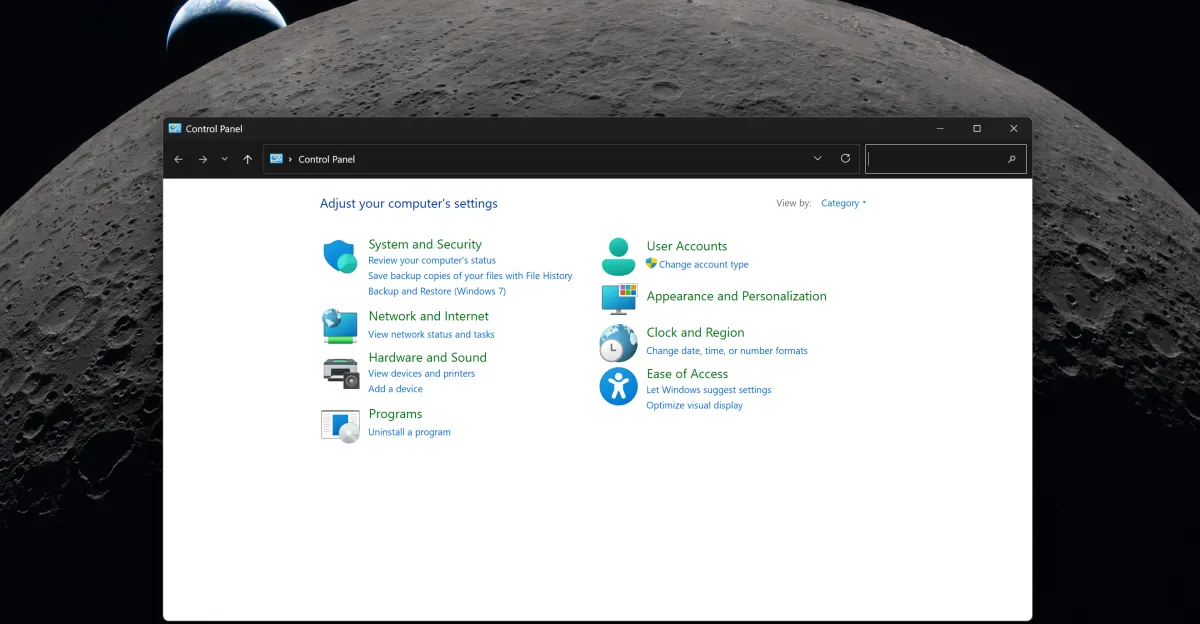

Microsoft’s Decade-Long Struggle to Phase Out Windows Control Panel
By [Your Name]
June 10, 2024
For over a decade, Microsoft has been locked in a delicate balancing act—attempting to retire the aging Windows Control Panel while ensuring millions of users and devices aren’t left in disarray. What began as a gradual transition with Windows 8 in 2012 has evolved into a slow, methodical migration, with the tech giant still cautiously moving settings into the modern Windows 11 interface.
Despite recent signs that the Control Panel’s days were numbered, Microsoft has confirmed that the process remains ongoing, citing concerns over legacy hardware compatibility and system stability. The company’s reluctance to fully eliminate the decades-old utility underscores the challenges of modernizing an operating system used by over a billion people worldwide.
A Slow and Deliberate Transition
Microsoft first signaled its intent to deprecate the Control Panel with the launch of Windows 8, introducing a touch-friendly Settings app as its replacement. Yet, more than 12 years later, the Control Panel persists—albeit in a diminished role—as Windows 11 continues to absorb its functions into a redesigned Settings interface.
“We’re doing it carefully because there are a lot of different network and printer devices & drivers we need to make sure we don’t break in the process,” said March Rogers, partner director of design at Microsoft, in a recent social media post. His remarks provide rare insight into why the transition has taken so long, acknowledging the delicate ecosystem of third-party hardware and enterprise configurations that still rely on legacy systems.
Earlier this year, speculation mounted that Microsoft was finally preparing to remove the Control Panel entirely after a support note hinted at its imminent deprecation. However, the company quickly clarified that it was still in the process of migrating remaining functions, emphasizing that no final cutoff date had been set.
Why Can’t Microsoft Just Kill the Control Panel?
The Control Panel’s resilience stems from its deep integration into Windows’ architecture. Over the years, it has served as the primary hub for system configurations, from display settings to device management. While Microsoft has steadily shifted these controls into the Settings app—most recently moving clock settings, keyboard repeat rates, and mouse cursor adjustments—some advanced functions remain tied to the old interface.
One major hurdle is backward compatibility. Enterprises, IT administrators, and power users often depend on scripts and legacy tools that interact directly with Control Panel components. A sudden removal could disrupt workflows, particularly in industries reliant on specialized hardware drivers.
Additionally, user habits play a role. Many longtime Windows users still instinctively navigate to the Control Panel for certain tasks, despite Microsoft’s efforts to streamline access in the Settings app. “I can’t remember the last time I used the Control Panel,” admits one tech journalist, “but for many, it’s simply more familiar.”
The Push for a Modern Windows Experience
Microsoft’s persistence in retiring the Control Panel aligns with its broader push to refine Windows 11’s design and usability. Rogers noted that the company is currently “focusing on design craft in Windows,” with ongoing updates to the Settings interface aimed at improving clarity and accessibility.
Recent changes have already made significant strides. The latest Windows 11 updates allow users to adjust mouse sensitivity, keyboard inputs, and regional formatting entirely within Settings—functions that once required a trip to the Control Panel. Yet, some niche configurations, particularly for networking and printers, still default to the legacy system.
The company has also pledged to enhance Windows 11’s overall stability and performance, addressing long-standing complaints about bloat and inefficiency. Part of that effort involves consolidating system tools into a single, cohesive interface—finally rendering the Control Panel obsolete.
What Comes Next?
While Microsoft has not announced a definitive timeline for the Control Panel’s removal, its gradual erosion suggests the end is near. The company’s cautious approach reflects the immense complexity of overhauling an operating system as deeply entrenched as Windows.
For now, users can expect further migration of settings in upcoming Windows 11 updates, with Microsoft likely testing each change extensively to avoid disruptions. When the Control Panel does eventually vanish, it will mark the end of an era—one defined by Windows’ evolution from a static desktop OS to a dynamic, cloud-connected platform.
As Rogers succinctly put it: “We’re getting there—just carefully.” And for millions of Windows users, that careful progress may be exactly what’s needed.
