



Israel Launches Heaviest Bombardment on Lebanon in Escalating Conflict, Killing 182
Beirut, Lebanon – The skies over Lebanon turned into a warzone Wednesday as Israel unleashed its most intense aerial assault since the outbreak of hostilities, raining down more than 100 strikes in just 10 minutes. The bombardment left entire neighborhoods in ruins, with at least 182 dead and over 800 wounded, according to Lebanon’s health ministry. The attack marks a dangerous escalation in a conflict that risks spiraling into a wider regional war, drawing in global powers and destabilizing an already volatile Middle East.
A Relentless Onslaught
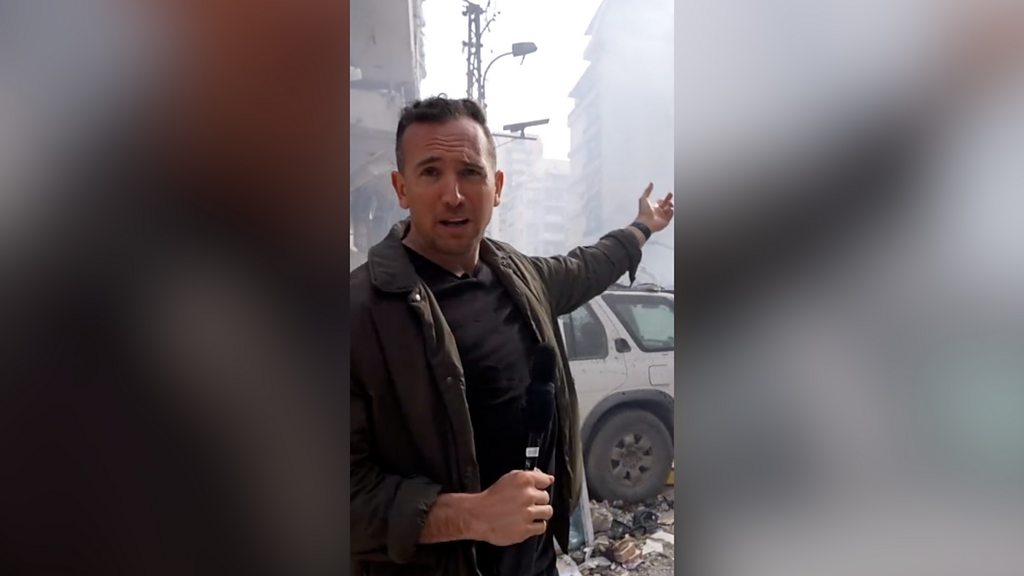
Wednesday’s strikes were unprecedented in their scale and ferocity, targeting multiple locations across Lebanon. Eyewitnesses described scenes of chaos as explosions rocked residential areas, sending plumes of black smoke into the sky. The BBC’s Middle East Correspondent Hugo Bachega, reporting from Beirut, witnessed the aftermath of one strike, where emergency crews scrambled to pull survivors from the rubble.
Israel’s military confirmed the operation, stating it was a direct response to rocket attacks launched from Lebanese territory by Hezbollah, the Iran-backed militant group. The Israeli Defense Forces (IDF) claimed the strikes neutralized key Hezbollah positions, including weapons depots and command centers. However, Lebanese officials condemned the assault as disproportionate, accusing Israel of targeting civilians.
A Conflict with Deep Roots
The latest violence is part of a long-standing and deeply entrenched conflict between Israel and Hezbollah, which has simmered since the 2006 Lebanon War. Hezbollah, designated as a terrorist organization by the U.S. and several Western nations, has entrenched itself in southern Lebanon, using the area as a launchpad for attacks against Israel. In recent months, cross-border skirmishes have intensified, raising fears of a full-scale war.
The broader context involves Iran’s regional influence, with Tehran providing Hezbollah with arms and funding. Israel views Hezbollah as an existential threat and has repeatedly warned it will not tolerate a militant buildup along its northern border. The U.S. and European powers have urged restraint, but diplomatic efforts have so far failed to de-escalate tensions.
Global Implications: Why This Matters
The escalation carries grave implications far beyond the Middle East. A full-blown Israel-Hezbollah war could:
- Destabilize the Region: Lebanon, already crippled by economic collapse and political dysfunction, could descend into further chaos, triggering a new refugee crisis.
- Drag in Iran and the U.S.: Iran may retaliate through proxy forces in Syria, Iraq, or Yemen, while the U.S. could be pressured to intervene militarily to defend Israel.
- Disrupt Global Energy Markets: Any conflict involving Iran risks disrupting oil shipments through the Strait of Hormuz, sending fuel prices soaring worldwide.
- Undermine Middle East Diplomacy: The violence complicates efforts to normalize relations between Israel and Arab states, including Saudi Arabia.
Human Toll and International Response
The human cost of Wednesday’s strikes is staggering. Hospitals in Lebanon, already struggling with shortages of medicine and electricity, are overwhelmed. The Lebanese Red Cross reported that many of the wounded are women and children, caught in the crossfire of a conflict they did not choose.
The United Nations called for an immediate ceasefire, with Secretary-General António Guterres warning that “the cycle of violence must end before it engulfs the entire region.” The U.S. State Department issued a cautious statement, affirming Israel’s right to self-defense while urging “all parties to avoid civilian casualties.” Meanwhile, Russia and China blamed Western policies for inflaming tensions, highlighting the geopolitical divide over the crisis.
What Comes Next?
With both sides vowing to retaliate, the risk of further escalation remains high. Analysts warn that Israel may launch a ground incursion into Lebanon if Hezbollah continues its attacks, a move that could trigger a prolonged and bloody conflict. Hezbollah leader Hassan Nasrallah has previously threatened to unleash the group’s vast missile arsenal on Israeli cities, raising the specter of mass casualties on both sides.
Diplomatic channels remain open, but prospects for a swift resolution appear dim. The international community faces a critical test: whether it can prevent another devastating war in a region already scarred by decades of conflict.
A Region on the Brink
As night fell over Beirut, the echoes of explosions gave way to an eerie silence, broken only by the wails of sirens and grieving families. The world watches nervously, knowing that the next move—whether a ceasefire or another barrage—could determine the fate of millions. In a conflict where every strike deepens the cycle of vengeance, the only certainty is that without urgent intervention, the consequences will be felt far beyond Lebanon’s shattered streets.
—Reporting by Hugo Bachega in Beirut; additional analysis from global security experts.
